

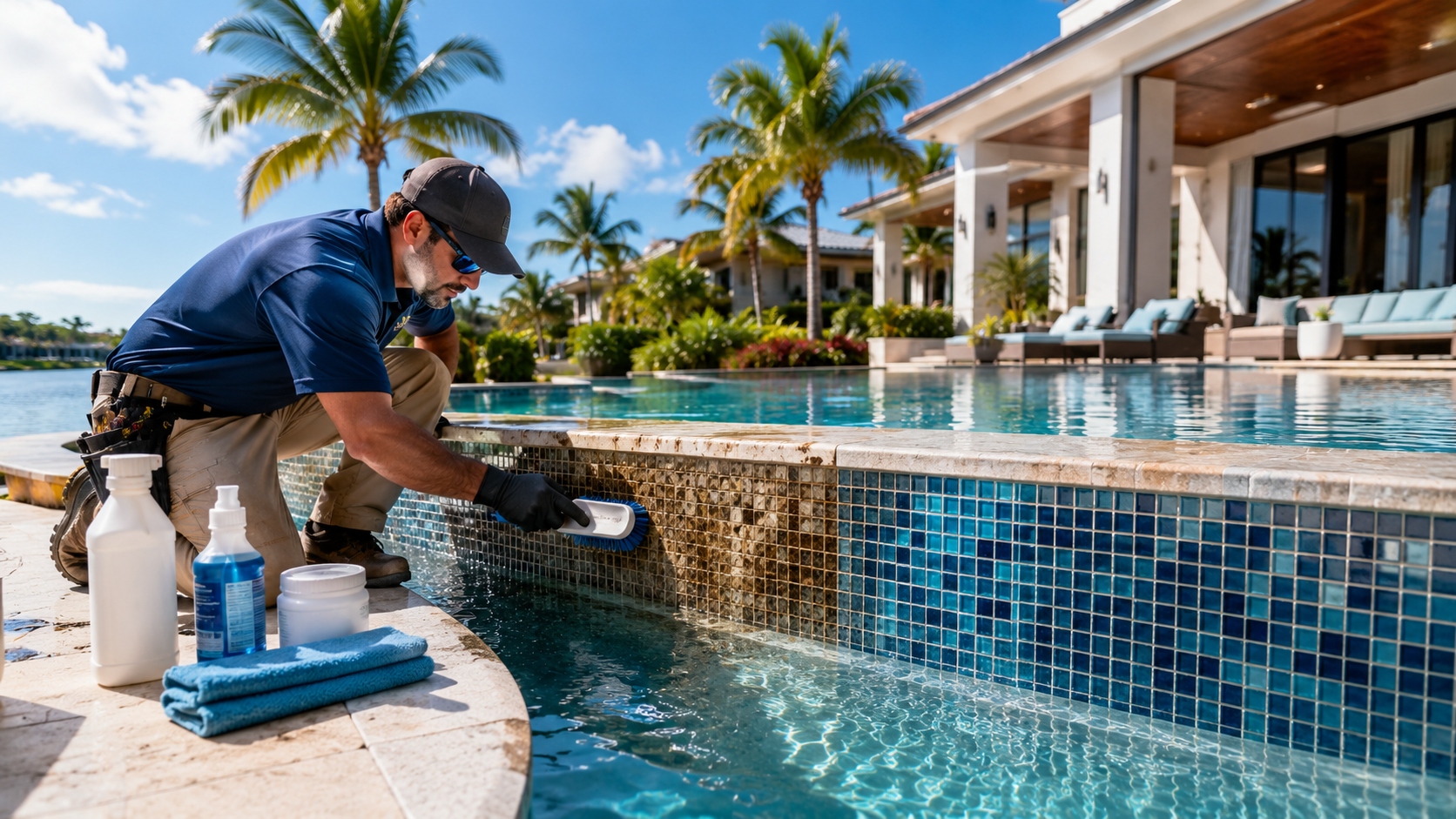
The Complete Guide to Pool Tile Maintenance in Southwest Florida
If you own a pool in Southwest Florida, you already know the region’s water and climate can be tough on more than just your patience. Between the hard, mineral-rich water, the relentless sun, and the near-constant humidity, pool tile maintenance here requires a different approach than it does in drier, milder climates. Whether you’re in Naples, Fort Myers, Cape Coral, or Sarasota, keeping your pool tiles clean and pristine is one of the best ways to protect your investment and keep your backyard oasis looking its best year-round.
This guide walks you through everything you need to know about pool tile care in Southwest Florida, from understanding why local conditions accelerate buildup to the best techniques for calcium removal from pool tiles.
Why Southwest Florida Is Especially Hard on Pool Tiles
Southwest Florida’s water supply tends to be naturally high in calcium and other dissolved minerals. When that water evaporates from your pool’s surface (which happens quickly given the region’s heat and humidity), it leaves behind mineral deposits along the waterline. Over time, these deposits harden into the chalky white or gray buildup known as calcium scale.
Add in the area’s intense UV exposure, frequent rain, and the organic matter blown in from nearby vegetation, and you have a perfect storm for grime, algae, and scale accumulation. This is why generic pool care advice often falls short here. Effective Florida pool maintenance has to account for these regional realities, not just generic best practices designed for other climates.
The Basics of Pool Tile Cleaning
Routine pool tile cleaning is the foundation of any good maintenance plan. Here’s what a solid routine should include:
- Weekly Waterline Wipe-Downs The waterline is where scale and grime build up fastest because it’s exposed to air, sun, and the constant rise and fall of water levels. A quick wipe with a non-abrasive pool tile brush or a magic eraser-style sponge once a week can prevent minor buildup from turning into a stubborn problem.
- Brushing the Full Tile Line Beyond the waterline, brush the entire tile perimeter at least once every two weeks. This helps dislodge algae spores and organic debris before they have a chance to take hold, especially in shaded areas where algae growth tends to be more aggressive.
- Balancing Your Water Chemistry Proper pool tile care starts with the water itself. Keeping pH levels between 7.4 and 7.6 and maintaining proper alkalinity and calcium hardness levels will dramatically reduce the rate at which new scale forms. Test your water weekly, especially during Southwest Florida’s rainy season, when heavy downpours can quickly throw off your pool’s chemical balance.
- Rinsing After Rainstorms Florida’s afternoon thunderstorms can wash pollen, dirt, and organic matter into your pool. A quick rinse of the tile line after major storms helps prevent staining before it sets in.
Tackling Calcium Removal from Pool Tiles
Even with the best routine maintenance, calcium scale is nearly unavoidable in Southwest Florida. Here’s how to handle it once it appears:
Identify the Type of Scale There are two types of calcium buildup: calcium carbonate (white, flaky, and easier to remove) and calcium silicate (gray, glassy, and much more stubborn). Knowing which type you’re dealing with will determine your approach.
For Calcium Carbonate:
- A mixture of water and mild vinegar can help dissolve light buildup.
- Pumice stones (safe for use on tile, never on fiberglass or vinyl) can gently scrub away moderate deposits.
- Specialized calcium remover products, available at most pool supply stores, are formulated specifically to break down these deposits without damaging grout or tile finishes.
For Calcium Silicate: This type of scale usually requires a stronger acid-based cleaner and more elbow grease. Because these products can be harsh, many homeowners in Southwest Florida choose to bring in a professional pool tile cleaning service to handle heavy silicate buildup safely, particularly on natural stone or glass tile, which can scratch or etch easily if handled incorrectly.
Prevention Is Cheaper Than Removal The best way to manage calcium scale is to stop it before it forms. Lowering your pool’s calcium hardness level (when it’s on the high end), maintaining consistent water chemistry, and keeping the water level stable all reduce the mineral deposits left behind on tile surfaces.
Choosing the Right Tools and Products
Not all tiles are created equal, and using the wrong tool can do more harm than good. Here’s a quick breakdown:
- Ceramic and Porcelain Tile: Generally durable and can handle nylon-bristle brushes and most commercial descalers.
- Glass Tile: Beautiful but more delicate. Stick to soft brushes and pH-neutral cleaners to avoid scratching or dulling the surface.
- Natural Stone (Travertine, Slate): Porous and prone to etching from acidic cleaners. Use specialized stone-safe cleaning products and avoid high-pressure scrubbing.
When in doubt, always test any cleaning product on a small, inconspicuous section of tile first.
When to Call in the Professionals
While regular upkeep can be a DIY job, some situations call for professional help:
- Heavy calcium silicate buildup that hasn’t responded to home remedies
- Cracked, loose, or missing tiles that need regrouting or replacement
- Pools that haven’t been properly maintained in a long time and need a deep restoration
- Natural stone or glass tile that requires specialized care to avoid damage
A professional pool tile maintenance service will have access to industrial-grade descaling tools and techniques, like soda blasting or specialized acid washes, that aren’t practical or safe for most homeowners to attempt on their own.
Building a Maintenance Schedule That Works
Given Southwest Florida’s climate, here’s a simple schedule to keep your tiles in top shape:
- Weekly: Wipe down the waterline, test water chemistry
- Bi-weekly: Brush the full tile line
- Monthly: Inspect for early signs of scale or staining
- Quarterly: Deep clean with a calcium remover or schedule a professional cleaning
- Annually: Full inspection for grout damage, cracked tiles, or areas needing resealing
Final Thoughts
Consistent pool tile care doesn’t just keep your pool looking beautiful, it also protects your tile investment and helps you avoid costly repairs down the road. Southwest Florida’s unique combination of hard water, heat, and humidity means staying proactive is key. With a regular cleaning routine, smart calcium management, and the occasional help from a professional when needed, your pool tiles can stay bright, clean, and scale-free for years to come.
Whether you’re tackling a weekend cleaning session yourself or bringing in a professional team, understanding these fundamentals of Florida pool maintenance will help you make informed decisions and keep your pool looking its absolute best all year long.

0 Comments