

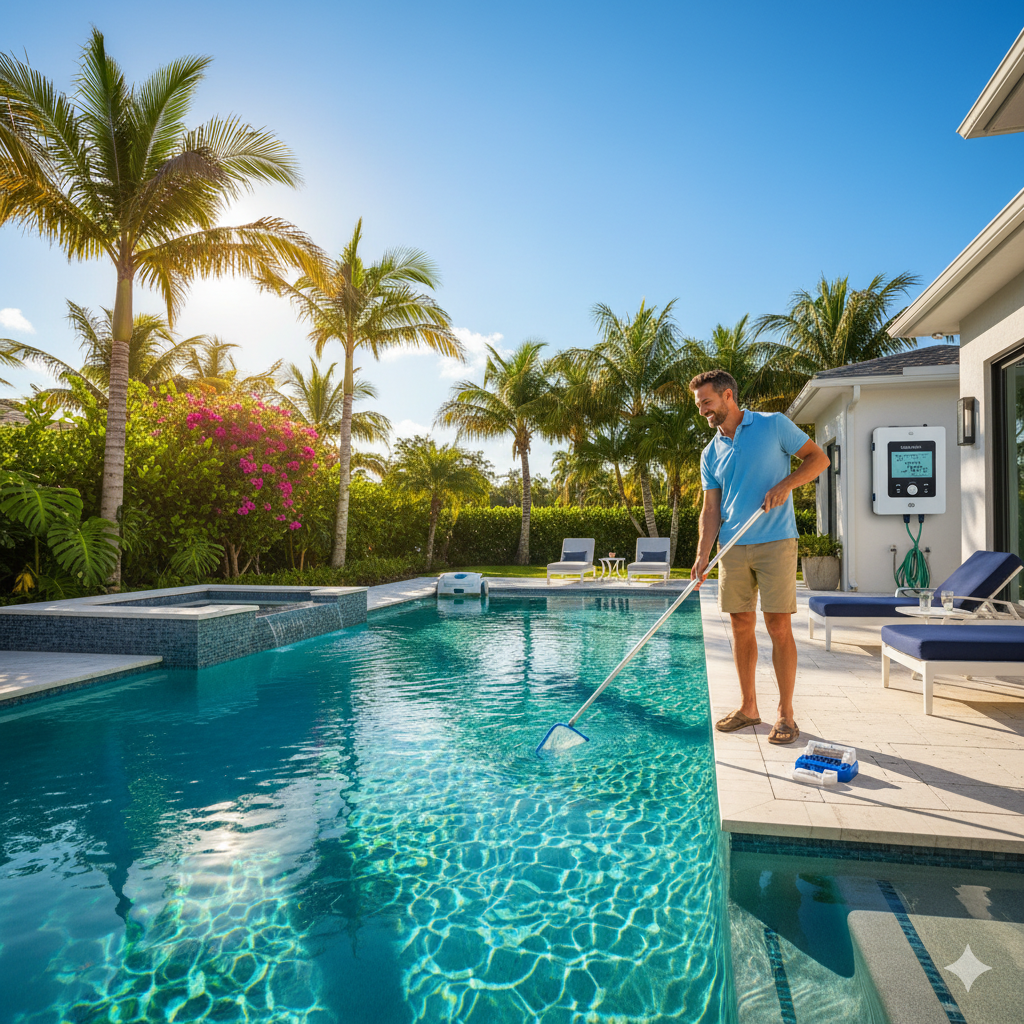
Saltwater Pool Maintenance Guide for Florida Homeowners
Florida living comes with undeniable perks, sunshine nearly year-round, warm evenings, and for many homeowners, the luxury of a backyard pool. But that same sunshine, heat, and humidity that makes the Sunshine State so appealing also creates a uniquely demanding environment for pool care. If you own a saltwater pool, you already know the benefits: softer water, gentler chlorination, and less skin irritation. What you may not know is exactly how to keep it performing at its best in Florida’s extreme climate. This complete guide covers everything you need to know about saltwater pool maintenance Florida homeowners rely on to keep their pools clean, safe, and resort-quality all year long.
Why Florida Pools Demand More Attention
Florida’s climate is not average by any stretch. With intense UV radiation, temperatures regularly climbing past 90°F, heavy rainfall from June through September, and a near-constant bather load during summer, your pool’s chemistry is always under pressure. Saltwater pools in particular are sensitive to these fluctuations. Heat accelerates salt cell wear, heavy rain dilutes your salinity levels, and prolonged sun exposure burns off free chlorine faster than in cooler climates. Simply put, saltwater pool care tips that work in Ohio or Colorado will not fully apply here.
Understanding Your Salt Chlorine Generator
The heart of your saltwater system is the salt chlorine generator (SCG), also called an electrolytic cell. It converts dissolved sodium chloride (salt) into hypochlorous acid, the active sanitizing form of chlorine, through a process called electrolysis. Florida’s year-round swimming season means your SCG runs far more hours per year than in northern states, which accelerates calcium buildup on the cell plates and shortens the lifespan if not maintained properly.
Here’s what to do:
- Inspect the cell every 3 months. In Florida, calcium scale builds up quickly due to hard water and high mineral content. Remove the cell and rinse it with a mild acid solution (one part muriatic acid to eight parts water) to dissolve deposits.
- Check cell output regularly. Your generator should be producing chlorine within its rated range. A declining output often signals a worn or scaled cell.
- Replace the cell every 3–5 years. Florida’s heavy usage will typically put you at the lower end of that range.
Saltwater Pool Care Tips for Florida’s Climate
Keeping your saltwater pool in peak condition requires attention to a handful of critical chemical parameters. Here are the most important saltwater pool care tips tailored for Florida’s environment:
1. Monitor Salinity Weekly
Ideal salinity levels sit between 2,700–3,400 ppm (parts per million). Florida’s frequent rainstorms will dilute your salt levels, while evaporation concentrates them. Test weekly during summer and after heavy rain events. Add pool-grade salt (non-iodized) in small increments and allow it to dissolve fully before retesting.
2. Balance Your Chemistry
Beyond salt levels, you need to keep a close eye on:
- Free chlorine: 1–3 ppm
- pH: 7.4–7.6 (Florida’s warm water and off-gassing from salt systems tends to push pH upward)
- Total alkalinity: 80–120 ppm
- Cyanuric acid (stabilizer): 70–80 ppm (critical in Florida’s UV-heavy environment to protect chlorine from burning off)
- Calcium hardness: 200–400 ppm
Test all parameters at least twice a week during summer months.
3. Run Your Pump for Longer Hours
In Florida’s heat, most experts recommend running your pool pump 10–12 hours per day during summer, compared to the 8-hour standard in cooler regions. Adequate circulation keeps your salt cell working efficiently and prevents algae from taking hold.
4. Shock the Pool Monthly
Even saltwater pools benefit from a monthly shock treatment, especially after heavy pool parties, thunderstorms, or particularly hot stretches. Use a non-chlorine shock or calcium hypochlorite shock to oxidize contaminants and reset your water clarity.
Chlorine vs Salt Pool Maintenance in Florida
One of the most common questions Florida homeowners ask is whether to go with a traditional chlorine system or a saltwater setup. In terms of chlorine vs salt pool maintenance, the difference comes down to convenience, cost, and long-term care.
Traditional chlorine pools require the frequent purchase and handling of chlorine tablets, granules, or liquid chlorine, and in Florida’s heat, you’ll go through significantly more product to maintain adequate sanitizer levels. Saltwater pools automate that production through the SCG, reducing the hands-on chemical work week to week.
However, saltwater pools are not maintenance-free. The SCG itself requires regular cleaning, the water chemistry still needs balancing, and the salt environment is harder on certain pool materials, particularly metal fixtures, grout, and some types of pool heaters. That said, most Florida homeowners who make the switch report greater water comfort and lower ongoing chemical costs, even accounting for the occasional SCG maintenance.
Pool Maintenance Cost Florida Homeowners Should Expect
Understanding pool maintenance cost Florida homeowners face is important before diving into saltwater ownership. Here’s a realistic breakdown:
| Service | Estimated Annual Cost |
| Professional pool service (weekly) | $1,800 – $3,600 |
| Chemical supplies (DIY) | $400 – $800 |
| Salt cell replacement (every 3–5 years) | $200 – $700 |
| Equipment repairs/maintenance | $150 – $500/year |
| Electricity (pump operation) | $400 – $900/year |
Compared to chlorine pools, saltwater pool owners typically save $200–$400 per year on chemical costs, but factor in the SCG maintenance and occasional cell replacement when doing your annual budget.
How to Maintain a Luxury Pool Year-Round
If you’re wondering how to maintain a luxury pool to the standard your investment deserves, consistency is the key. Luxury pools, whether they feature beach entries, infinity edges, integrated spas, or water features, often have more complex plumbing and equipment, which means more points of failure if neglected.
Follow this monthly maintenance checklist:
- Week 1: Test and balance all chemistry parameters; check salt levels; brush walls and floor
- Week 2: Inspect and clean skimmer and pump baskets; check cell output; test pH and chlorine
- Week 3: Backwash or clean filter (sand, DE, or cartridge); check for algae along tile line
- Week 4: Inspect all equipment, salt cell, pump, heater, automation system; test stabilizer levels
Additionally, schedule a professional inspection of your entire system twice per year, once before the height of summer and once before any extended period of reduced use.
Common Florida Saltwater Pool Problems (and How to Fix Them)
Green or cloudy water: Usually caused by low chlorine output, imbalanced pH, or algae growth. Shock the pool, check your SCG output, and test cyanuric acid levels.
Salt cell scaling: A telltale sign of hard water deposits. Clean the cell immediately with a dilute acid wash.
Rising pH: Extremely common in saltwater pools. Add muriatic acid in small doses to bring pH back to 7.4–7.6.
Staining on pool surfaces: Often a sign of metal imbalance or high mineral content. Use a metal sequestrant and consult a pool professional if stains persist.
Final Thoughts
Owning a saltwater pool in Florida is one of life’s genuine pleasures, but it rewards those who stay on top of maintenance. Between the relentless sunshine, summer storms, and year-round swim season, your pool’s needs are constant. By understanding your salt system, staying diligent about water chemistry, and budgeting appropriately for care and equipment, you can enjoy sparkling, resort-quality water every single day. Whether you manage it yourself or work with a professional, the commitment to regular saltwater pool maintenance Florida homeowners put in is always worth it.

0 Comments