

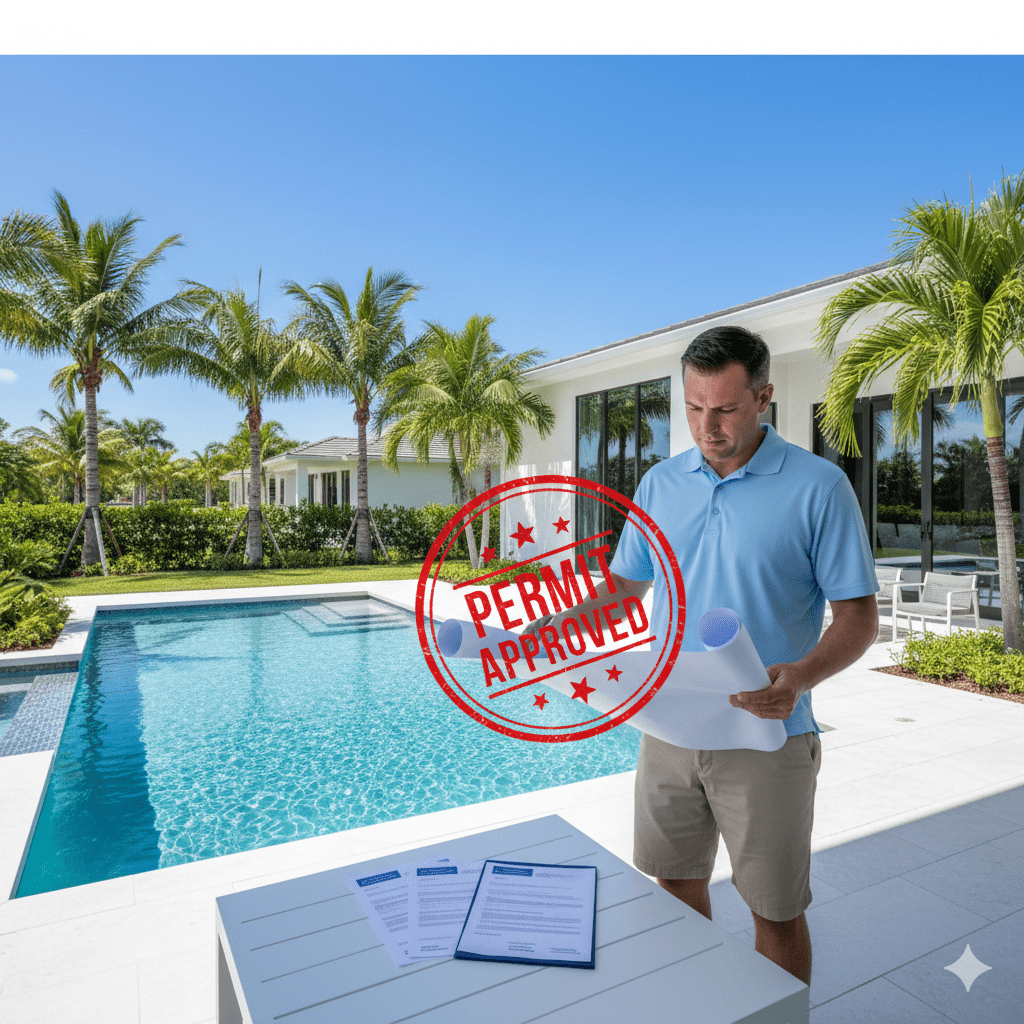
Pool Permits and Regulations in Southwest Florida: What You Need to Know
Building a pool in Southwest Florida sounds like a dream, warm weather, long summers, and a backyard oasis just steps away. But before the first shovel hits the ground, homeowners need to navigate an important layer of bureaucracy: pool permits Florida law requires, along with a web of local and state regulations. Skip this step, and you could face fines, forced removal, or serious liability. Here’s everything you need to know before breaking ground.
Why Pool Permits Matter in Florida
Florida isn’t just any state when it comes to pool construction. With one of the highest rates of residential pool ownership in the country, the state has developed detailed guidelines to ensure every pool is built safely, structurally soundly, and in compliance with public health standards.
Obtaining the proper pool permits Florida authorities require isn’t optional, it’s the law. A permit ensures that your pool design has been reviewed by licensed inspectors, that construction meets Florida Building Code standards, and that safety barriers are properly installed. Homeowners who skip the permitting process can face significant consequences, including stop-work orders, fines reaching thousands of dollars, and complications when selling their home.
In short: no permit, no pool, at least not a legal one.
Understanding Pool Construction Regulations in Florida
Pool construction regulations Florida statewide are governed primarily by the Florida Building Code (FBC), which sets minimum standards for structural integrity, electrical systems, plumbing, drainage, and barrier requirements. These codes apply to all residential and commercial pool construction across the state.
Key requirements include:
Structural and Engineering Standards: All in-ground pools must be designed to withstand Florida’s soil conditions and water table levels, which can vary significantly across Southwest Florida’s coastal and inland areas. Pool shells must meet specific thickness and reinforcement requirements.
Electrical Safety: All pool lighting, pumps, and electrical systems must comply with National Electrical Code (NEC) standards as adopted by Florida. Ground fault circuit interrupter (GFCI) protection is mandatory for all pool-related electrical outlets and equipment.
Drainage and Environmental Compliance: Southwest Florida pools must be designed with proper drainage to prevent flooding and environmental contamination, particularly given the region’s sensitivity to stormwater runoff into estuaries and the Gulf.
Building Permits for Fort Myers Pools: Local Rules Add Another Layer
While statewide codes set the floor, local jurisdictions often stack additional requirements on top. Building permits Fort Myers pools require, for example, are issued through Lee County or the City of Fort Myers depending on your property’s location, and each has its own process.
In Lee County, homeowners must submit a permit application that includes site plans, pool drawings stamped by a licensed engineer or pool contractor, and documentation of contractor licensure. The permit fee is typically based on the value of the construction project, and processing times can range from a few weeks to over a month depending on workload and application completeness.
Within city limits of Fort Myers, Cape Coral, Naples, Bonita Springs, and other Southwest Florida municipalities, you’ll need to check with the local building department for any supplemental requirements. Cape Coral, for instance, has specific setback requirements and rules related to its extensive canal system that can affect pool placement.
Always verify requirements with your local building department before submitting plans. Regulations are updated periodically, and your pool contractor, who should be licensed in Florida, is typically well-versed in local nuances.
Florida Pool Safety Laws: Protecting Lives, Especially Children
Florida has some of the most stringent Florida pool safety laws in the nation, driven by a sobering reality: Florida consistently ranks among the highest states for child drowning fatalities. In response, the Florida Legislature enacted the Residential Swimming Pool Safety Act, which mandates specific safety features for any new residential pool.
Under this law, every new residential pool must include at least one of the following drowning prevention features:
- An enclosure (fence or wall) that isolates the pool from the home and yard, with a self-closing, self-latching gate
- An approved safety pool cover
- Exit alarms on all doors and windows of the home that have direct access to the pool area
- A door alarm on any door that provides direct access from the home to the pool
Most pool safety experts and local inspectors recommend a combination of these features, particularly a perimeter fence plus door alarms, rather than relying on a single measure. The fence must meet specific height requirements (typically at least 4 feet) and cannot have openings larger than 4 inches that a child could squeeze through.
Violations of Florida pool safety laws can result in civil penalties, and homeowners can face liability if an accident occurs on their property involving an improperly secured pool.
Inspection Requirements for Pools in Florida
The inspection requirements pool projects must meet are a multi-stage process in Florida, not a single sign-off at the end. Inspectors from the local building department will typically visit the construction site at several critical phases:
Pre-pour Inspection: Before concrete is poured for an in-ground pool, inspectors examine the excavation, rebar placement, plumbing rough-in, and bonding requirements (the electrical bonding of all metallic components to prevent electrical shock in the water).
In-Progress Inspections: Depending on the jurisdiction, additional inspections may be required during decking, tile work, coping installation, and equipment placement.
Final Inspection: Once construction is complete, a final inspection verifies that all safety barriers are properly installed and functional, electrical systems are compliant, equipment is correctly installed, and the pool matches the approved permit drawings. Only after passing final inspection will a Certificate of Completion be issued.
Homeowners should never fill a pool or allow it to be used before receiving final inspection approval. Doing so can void the permit, create insurance complications, and expose the homeowner to liability.
Working with a Licensed Pool Contractor
Navigating pool permits Florida requires, local ordinances, safety laws, and multi-stage inspections is complex, which is why working with a fully licensed Florida pool contractor is critical. Contractors with a Certified Pool/Spa Contractor (CPC) license are familiar with local permit offices, know how to prepare compliant plans, and will manage the inspection process on your behalf.
Ask any potential contractor for their Florida license number and verify it through the Florida Department of Business and Professional Regulation (DBPR) before signing a contract. An unlicensed contractor may offer a lower bid, but the legal and financial risk falls entirely on the homeowner.
Final Thoughts
A pool is one of the most rewarding investments you can make in Southwest Florida, but only when it’s done right. Understanding pool construction regulations Florida requires, securing proper building permits Fort Myers pools and neighboring jurisdictions demand, complying with Florida pool safety laws, and passing all inspection requirements aren’t just boxes to check. They’re the foundation of a safe, legal, and lasting backyard retreat.
Start the process early, work with licensed professionals, and don’t cut corners on compliance. Your future self, relaxing poolside without worry, will thank you.

This is high-value writing done right. I now turn to this website first.
A very good article that is worth bookmarking. The site is useful and reliable.