
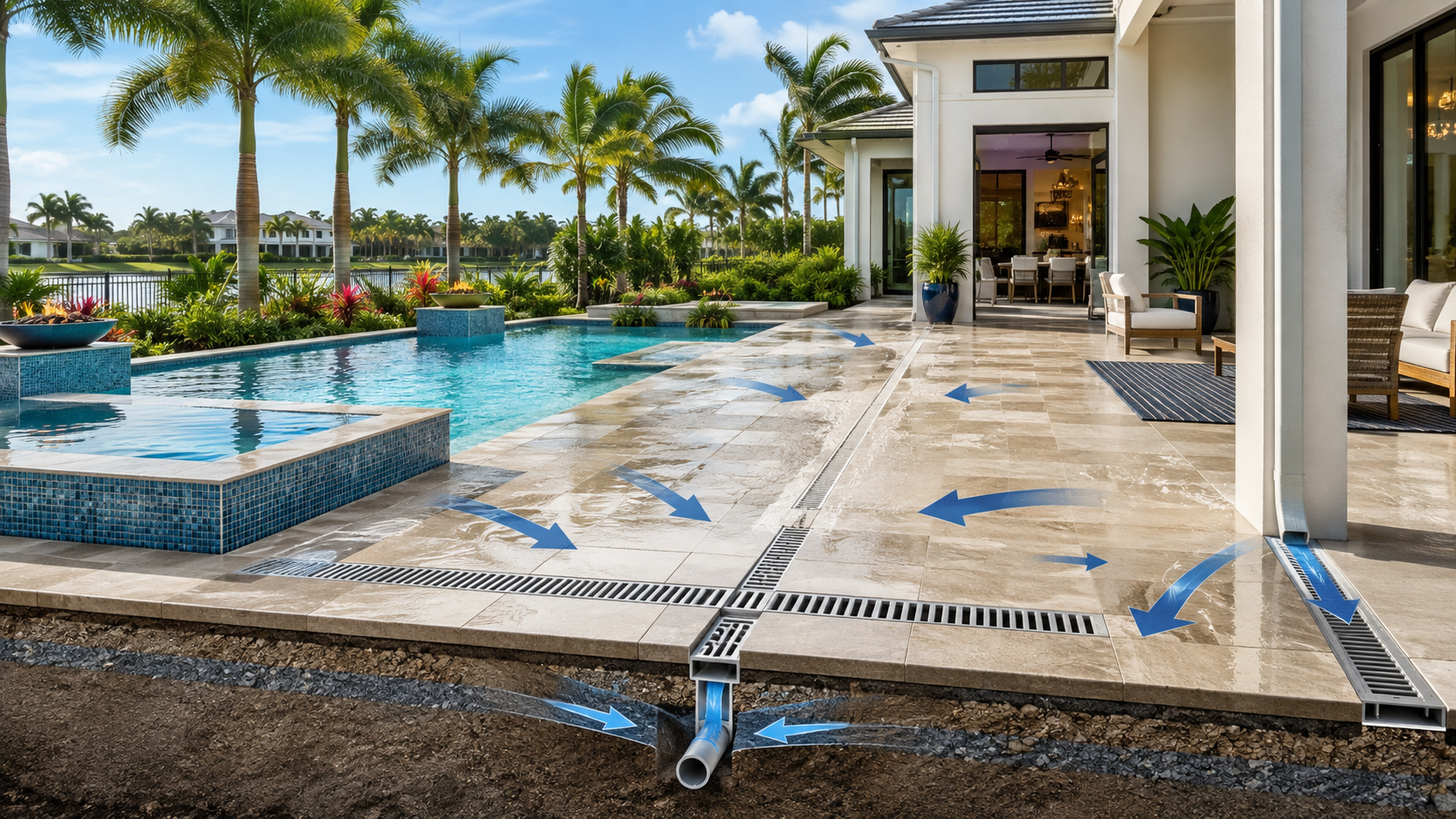
Florida homeowners know that owning a pool means living with rain, a lot of it. Between the summer wet season and the occasional tropical system, your backyard can take on more water in a single afternoon than many parts of the country see in a month. Without the right pool drainage system and properly graded decking, all that water has nowhere to go but toward your home’s foundation, your pool equipment, or straight through the cracks in your deck. Getting drainage and grading right isn’t a cosmetic detail, it’s one of the most important structural decisions in any Florida pool build.
Why Pool Drainage Matters More in Florida
Florida’s combination of heavy seasonal rainfall, high water tables, and mostly flat terrain creates a uniquely challenging environment for pool ownership. In much of the state, water doesn’t drain away naturally the way it might in a hillier region. If your property doesn’t have a deliberate plan for moving water away from the pool structure, that water pools around the shell, saturates the soil beneath the decking, and creates pressure that can shift pavers, crack concrete, and even destabilize the pool wall over time.
Florida pool drainage isn’t a one-size-fits-all solution. It has to account for your specific soil type, the slope of your lot, your proximity to a canal or retention area, and local water table depth. A pool builder who treats drainage as an afterthought is setting you up for expensive repairs down the road, often just a few years after the pool is installed.
Understanding Pool Deck Drainage
Your pool deck is more than a place to put your lounge chairs. It’s a critical drainage surface that either channels water safely away from your pool or funnels it straight back toward the structure. Effective pool deck drainage relies on a few core elements working together:
Slight, consistent slope. Every properly built pool deck should slope slightly away from the pool and away from the house, typically at a rate of about 1/4 inch per foot. This slope is subtle enough that you’d never notice it while walking or lounging, but it’s enough to keep water moving in the right direction instead of sitting in low spots.
Deck drains and channel drains. In areas where slope alone isn’t enough, such as decks that sit close to a home’s foundation or in low-lying yards, installers often add linear channel drains or point drains that capture water and redirect it through underground piping to a safe discharge point.
Permeable materials. Pavers, in particular, allow some water to filter through joints and into a properly prepared base, reducing the volume of surface runoff that needs to be managed elsewhere.
When these elements are missing or poorly installed, homeowners typically notice standing puddles near the pool’s edge, algae or mold forming in shaded low spots, or water creeping toward the home during heavy storms.
The Role of Pool Grading
Pool grading refers to how the ground itself is shaped and leveled before construction begins. This step happens early in the build process, often before the pool shell is even set, and it has a lasting impact on how well water is managed for the life of the pool.
Proper grading accomplishes several things at once. It establishes the overall slope of the yard so water flows toward designated drainage points rather than toward the house or neighboring properties. It also helps stabilize the soil around the pool structure, reducing the risk of settling or shifting after installation. In many Florida neighborhoods, grading has to work in coordination with community stormwater systems, swales, or retention ponds, which means your builder needs to understand not just your yard but the broader drainage plan for your area.
Skipping or rushing the grading phase is one of the most common, and most costly, mistakes in pool construction. A pool that looks beautiful on installation day can develop serious water issues within a single rainy season if the grading underneath wasn’t done correctly.
Backyard Water Management: The Bigger Picture
Good backyard water management goes beyond the deck and the pool shell. It’s a whole-yard strategy that considers everything from your gutters and downspouts to your landscaping beds and irrigation system. A few practical steps homeowners can take, in partnership with their pool builder or a licensed contractor, include:
- Directing roof downspouts away from the pool area rather than letting them empty near the deck
- Choosing landscaping and mulch that won’t wash into the pool or clog deck drains during heavy rain
- Installing a French drain or dry well in persistently soggy areas of the yard
- Scheduling periodic inspections of drainage channels and deck drains to clear debris before the rainy season
Thinking about water management holistically helps protect not just the pool, but the entire property, your lawn, your foundation, and any structures nearby.
Warning Signs You Shouldn’t Ignore
Even a well-built pool can develop drainage problems over time as soil settles, materials age, or landscaping changes redirect water flow. Homeowners should watch for a few telltale signs: standing water on the deck more than an hour after rain has stopped, cracks or heaving in paver joints or concrete, soil erosion visible near the pool’s edge, or a musty smell suggesting trapped moisture beneath the decking. Catching these issues early, before they compound into structural damage, can save thousands of dollars in repair costs.
Building It Right From the Start
The best time to address pool drainage, deck drainage, and grading is before construction ever begins. A reputable Florida pool builder will evaluate your property’s natural slope, soil composition, and proximity to other drainage systems, then design a plan that channels water away from the pool, the deck, and your home. This isn’t a step to shortcut in the name of saving time or money upfront, it’s the foundation, quite literally, of a pool that will hold up through years of Florida storms.
If you’re planning a new pool or noticing water problems around an existing one, it’s worth having a conversation with a builder who understands the specific drainage challenges of your region. The right combination of grading, deck drainage, and a thoughtful overall water management plan will keep your backyard beautiful, functional, and protected for years to come.
0 Comments