
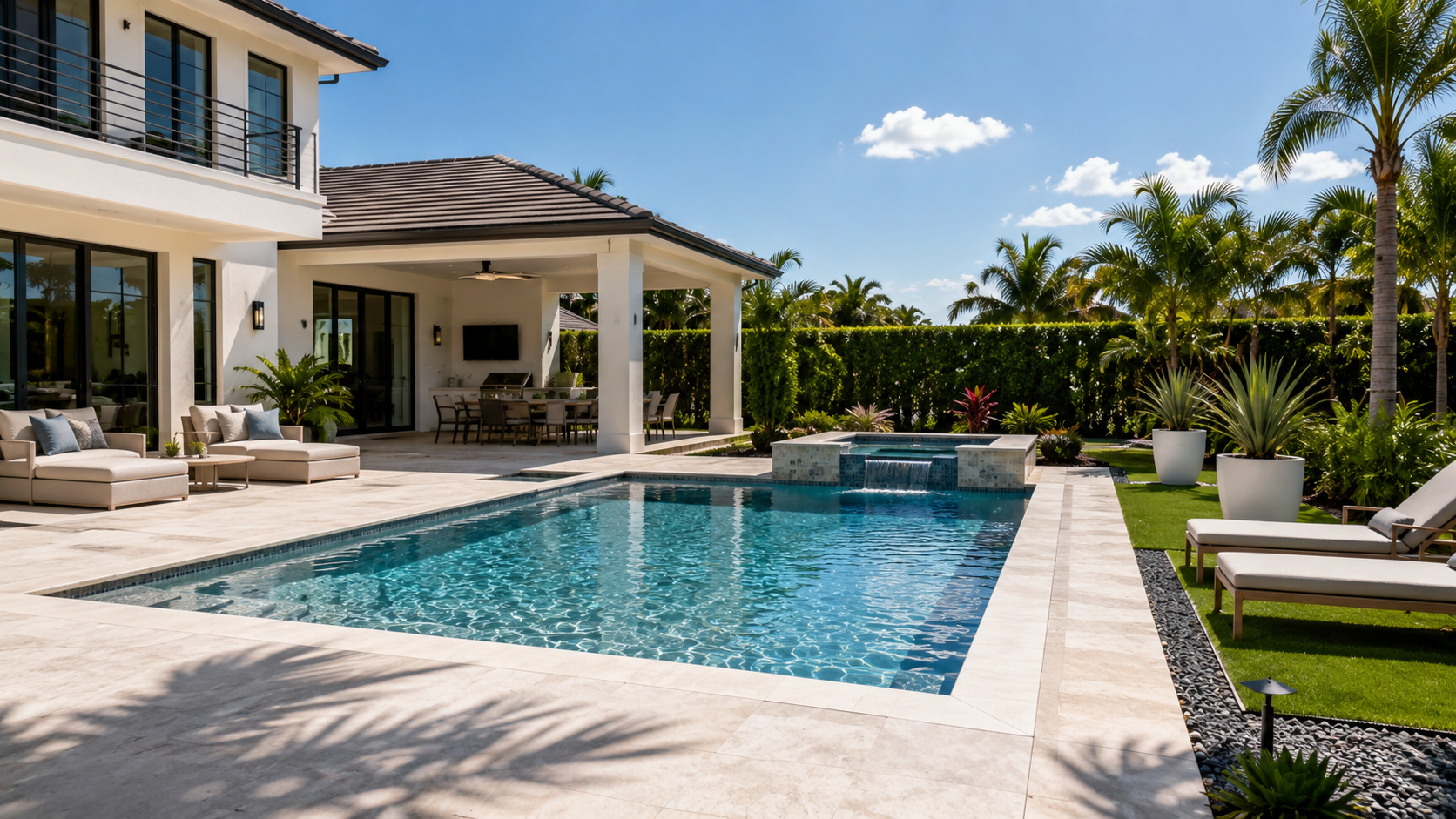
Let’s be honest about owning a vacation home in Florida. You picture sipping a drink by the water, not spending your first three hours back scrubbing a green waterline.
For a lot of folks, though, that dream pool turns into a nagging worry. You’re up in New York or Chicago, and all you can think about is whether the pump failed or if the Florida heat has turned your backyard into a swamp. It’s a headache.
But it doesn’t have to be that way. If you design the pool right from the start, you can have that resort-style look without the endless chore list. You just need to build it smarter, not smaller.
Here’s how to set up a Florida pool that looks incredible and basically runs itself while you’re away.
Why Your Vacation Pool Needs a Different Game Plan
A pool at your full-time house is easy, you walk by it every day. You notice a leaf, you skim it. You see the water getting cloudy, you toss in some shock.
Your vacation home doesn’t work like that. Weeks or months can slip by between visits. And Florida is brutal on an empty pool. Between the scorching sun, the daily thunderstorms, and the pollen that coats everything in yellow dust, an unmonitored pool goes downhill fast.
You can’t just treat a second-home pool like a primary residence pool. It needs to be built from day one to handle neglect. We’re talking remote monitoring, self-adjusting systems, and materials that can take a beating.
Start With the Right Bones: Shell and Finish
The interior finish of your pool is the first line of defense against looking dirty.
– Pebble finishes are the way to go. They are tough as nails and hide debris really well. If you show up after a month away, a little bit of pollen or some leaves on the bottom won’t be glaringly obvious like it would be on a smoother surface.
– Quartz aggregate is another solid choice. It gives you that bright, reflective blue water look but holds up just as well as pebble.
– Skip the plain plaster. I know it looks nice and smooth, but unless you’re paying a service to come out every single week, avoid it. Plaster stains easily and gets etched if the pH drifts while the house is empty.
– Watch the waterline tile. Don’t use natural stone. In Florida’s mineral-heavy water, stone sucks up algae and calcium like a sponge. Stick with glass or porcelain tile instead.
Let Robots Handle the Chemistry
If you’re not there to test the water, automation is your best friend. It’s not a luxury; it’s a necessity.
– Salt chlorine generators are a game-changer. They make chlorine on their own, so you don’t have to manually dump jugs of chemicals in every time you visit.
– Automated feeders and pH controllers act like a cruise control for your water. They monitor the balance and adjust it in real-time. This is huge in Florida because a heavy rainstorm can dilute your water in an afternoon, and these systems fix it automatically.
– Variable-speed pumps run on a schedule. They filter the water without you having to remember to turn them on or off.
– Robotic cleaners are non-negotiable. Put one on a timer. It’ll crawl around the floor and walls picking up debris while you’re back home in another state.
The best part? Most of these systems connect to an app on your phone. You can check your chemical levels from your kitchen table in Ohio and make sure everything is perfect before you even pack your bags.
Work With Florida, Not Against It
You can’t fight the Florida environment. You have to design around it.
– Get a screen enclosure. It’s the single best thing you can do to cut down on leaves, bugs, and pollen. It keeps the pool cleaner and lets you enjoy the patio without getting eaten alive by mosquitoes.
– Ditch the trees near the deck. I know landscaping looks pretty, but deciduous trees near a pool are a nightmare. They drop leaves and their roots mess with the plumbing. Use low-drop palms, ornamental grasses, or potted plants instead.
– Watch your drainage. Florida gets afternoon downpours that can flood a deck in minutes. Make sure your deck slopes away from the house and the pool so you don’t get standing water and stains.
– Pick the right decking. Travertine or finished concrete are great because they resist mildew. Porous pavers get gross and slippery fast in our humidity.
Luxury That Doesn’t Mean More Work
You can have high-end features that actually reduce your workload.
– Sun shelves and infinity edges look like a million bucks but don’t add moving parts that break.
– App-controlled LED lights let you set the mood for a night swim without walking around flipping switches.
– Automatic pool covers are a lifesaver. They keep debris out, stop evaporation, and keep the heat in. If your house sits empty for weeks, this is a must-have.
– Sheer descents or bubblers add a nice visual and help move the water around, which stops algae from forming in dead spots.
These features scream “luxury resort” to your guests, but behind the scenes, they’re just keeping the pool cleaner for longer.
Remote Monitoring Is the Whole Point
If you talk to anyone who has owned a vacation home for a while, they’ll tell you the same thing: you need to know what’s happening at the house without being there.
Modern pool controls let you:
– Check pump status, chemical balance, and heater settings from your phone.
– Get an alert if something breaks or the chemicals are off before it turns into a green monster.
– Schedule cleaning and lighting for when guests are arriving.
That kind of oversight turns your pool from a liability into a genuine asset. You can walk through the door after six months away and jump right in.
Find a Builder Who Gets It
Not every pool guy understands absentee ownership. A lot of them build the same pool they’d build for a full-time resident.
When you’re hiring a contractor, look for someone with experience in vacation properties. They should be recommending specific finishes, automation packages, and climate-specific features for a home that sits empty. If they’re just nodding along and suggesting the standard plaster and a manual vacuum, keep looking.
The Bottom Line
You don’t have to choose between a stunning backyard and a low-maintenance one. In Florida, with the right materials, the right automation, and a design that respects the climate, you can have both.
Whether you’re building new or fixing up an old pool, put your money into durable finishes, smart automation, and remote monitoring. That way, your pool looks resort-ready every single time you show up.
Ready to stop worrying about your pool? Talk to a Florida pool designer who specializes in vacation homes. Build a backyard that takes care of itself so you can actually enjoy your time off.
0 Comments