

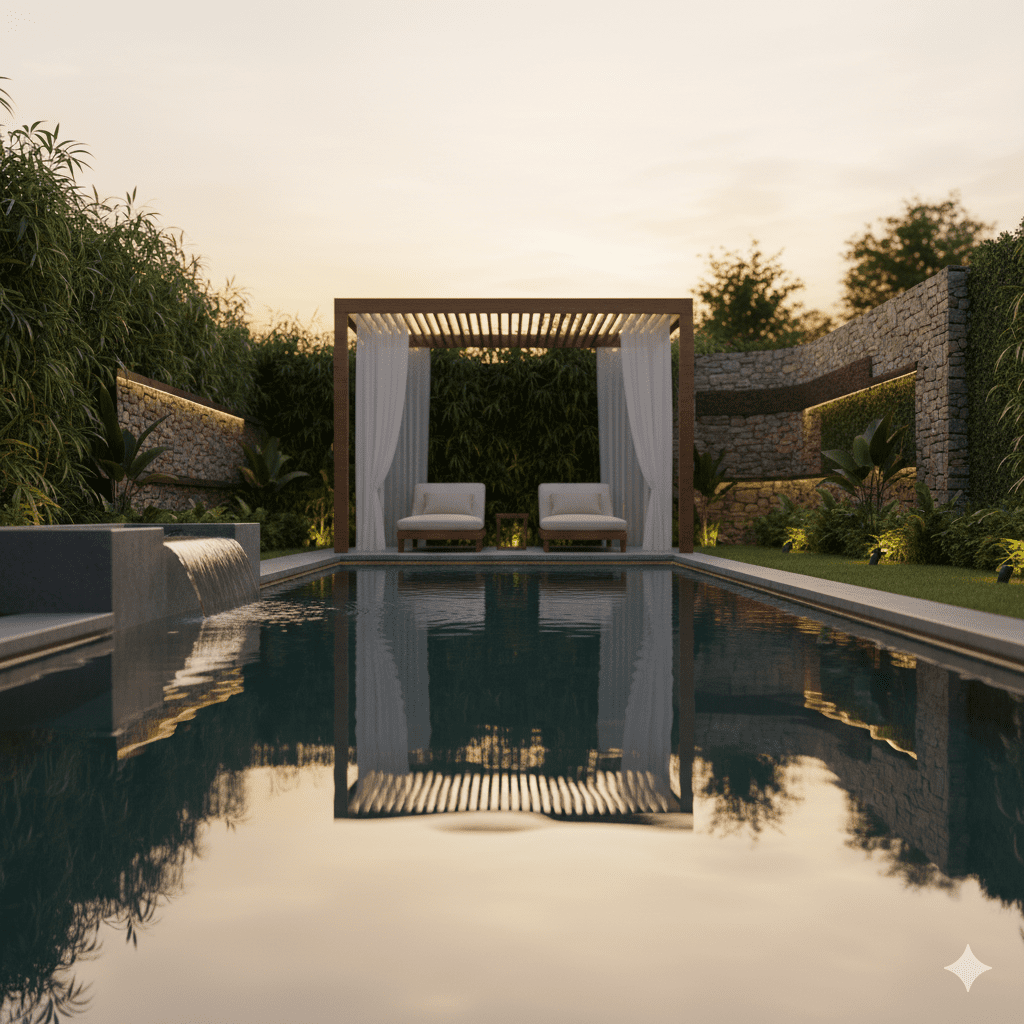
Pool Acoustics: How to Design a Quiet, Relaxing Backyard
There’s nothing quite like stepping into your backyard and being greeted by the gentle sound of water, rustling leaves, and absolute calm. Yet for many homeowners, the reality is far less serene, traffic noise bleeds over the fence, neighbors’ conversations carry across the yard, and mechanical hums from pool equipment disrupt the peace. If you’re dreaming of a true outdoor sanctuary, understanding pool acoustics design is the key that unlocks it.
Designing for sound is just as important as designing for aesthetics. The way noise travels, bounces, and gets absorbed around a pool environment can make the difference between a stressful outdoor space and one that genuinely restores you. Here’s how to approach it with intention.
Why Pool Areas Are Acoustically Challenging
Water is a surprisingly complex acoustic element. Hard pool surfaces, concrete decking, tile, glass fencing, and still water itself, are highly reflective materials. Sound waves bounce off them easily, amplifying noise rather than absorbing it. A pool area without thoughtful acoustic planning can actually feel louder than the rest of your yard.
Add to that the mechanical noise from pumps, filtration systems, and water jets, and you have multiple competing sound sources fighting for your attention. This is why noise reduction in the pool area must begin at the planning stage, not as an afterthought once construction is complete.
Start With Strategic Landscaping
One of the most natural and effective tools in your acoustic toolkit is greenery. Dense plantings of trees, hedges, and shrubs act as living sound barriers that absorb and scatter noise before it reaches your pool space. Unlike hard walls, which can reflect sound back into your yard, plants convert sound energy into small amounts of heat as the noise passes through leaves and branches.
For best results, layer your landscaping. A combination of tall trees at the outer boundary, mid-height dense shrubs in the middle, and low ground cover closest to the pool creates a graduated acoustic buffer. Bamboo, arborvitae, and cypress are particularly effective because they maintain density year-round. This approach is a cornerstone of peaceful backyard design, beautiful to look at and functional for sound control.
Choose the Right Hard Surfaces
Not all hardscaping is created equal when it comes to acoustics. Smooth concrete and large porcelain tiles are highly reflective. If you’re building or renovating, consider textured concrete, natural stone, or composite decking materials, which have more surface irregularities to scatter and absorb sound waves.
The pool coping, the edge material surrounding the water, is another consideration. Natural travertine and brushed limestone tend to absorb more sound than polished marble or glass tiles. Small decisions like these compound over the entirety of the space, quietly contributing to a calmer acoustic environment overall.
Master Water Feature Sound Control
Here’s where the magic really happens. Water features are perhaps the single most powerful tool in water feature sound control, not just aesthetically, but acoustically. The sound of flowing or falling water is a form of broadband noise, meaning it covers a wide range of frequencies simultaneously. This is the same principle behind white noise machines: consistent, natural sound effectively masks irregular, jarring noises like traffic, voices, and mechanical hums.
A well-placed waterfall, fountain, or spillover spa can drown out neighborhood noise while simultaneously providing a soothing audio backdrop. The key is calibrating volume and placement. A waterfall positioned at the far end of the pool facing the primary noise source will intercept and mask that noise most effectively. A bubbling urn fountain near a seating area creates intimate acoustic shelter right where you’re most likely to relax.
The flow rate matters too; a gentle cascade sounds elegant and peaceful, while a powerful torrent can become its own source of noise fatigue. Work with a water feature specialist to tune the flow to the right level for your space.
Address Equipment Noise Directly
Pool pumps and filtration systems are often overlooked in acoustic planning, but they run for hours every day and produce a persistent, low-frequency hum that undermines the entire atmosphere. For luxury outdoor ambiance, equipment noise simply cannot be ignored.
First, invest in a variable-speed pump. Not only are they more energy-efficient, they operate at far lower noise levels than single-speed models. Second, enclose your equipment in an acoustic housing, a purpose-built cabinet or enclosure lined with sound-dampening foam can reduce equipment noise by a significant margin. Position equipment as far from seating areas as possible, and place it on rubber isolation pads to prevent vibration from traveling through the ground into your decking.
Incorporate Acoustic Panels and Pergola Structures
Overhead structures are an underrated element of pool acoustics design. A pergola covered in climbing plants absorbs sound from above, reducing the echo that open sky can create in a hard-surfaced pool area. Adding fabric shade sails, particularly heavy, tightly woven materials, provides another layer of sound absorption while also controlling glare and heat.
Purpose-built outdoor acoustic panels are also now available for residential use. Designed to withstand weather exposure, these panels can be integrated into fence lines or freestanding screens. They look like decorative elements but function as sound barriers, contributing meaningfully to noise reduction in the pool area without sacrificing style.
Design the Space as a Whole
The most effective approach to pool acoustics is treating the entire backyard as an integrated acoustic environment. Every element, from the fence height to the plant selection, the equipment placement, to the water feature positioning, plays a role in the final soundscape you experience.
Think in layers: block external noise at the boundary, absorb it in the middle ground with soft landscaping, mask residual noise with water features near seating areas, and eliminate internal mechanical noise at the source. When these layers work together, the result is a backyard that doesn’t just look luxurious, it feels luxurious, deeply and instinctively.
A truly peaceful backyard design is one where you notice what you don’t hear just as much as what you do. No road noise bleeding in. No pump hum underscoring every conversation. Just water, wind, and the kind of quiet that actually lets you breathe.
That is the promise, and the art of thoughtful pool acoustics design.

0 Comments