
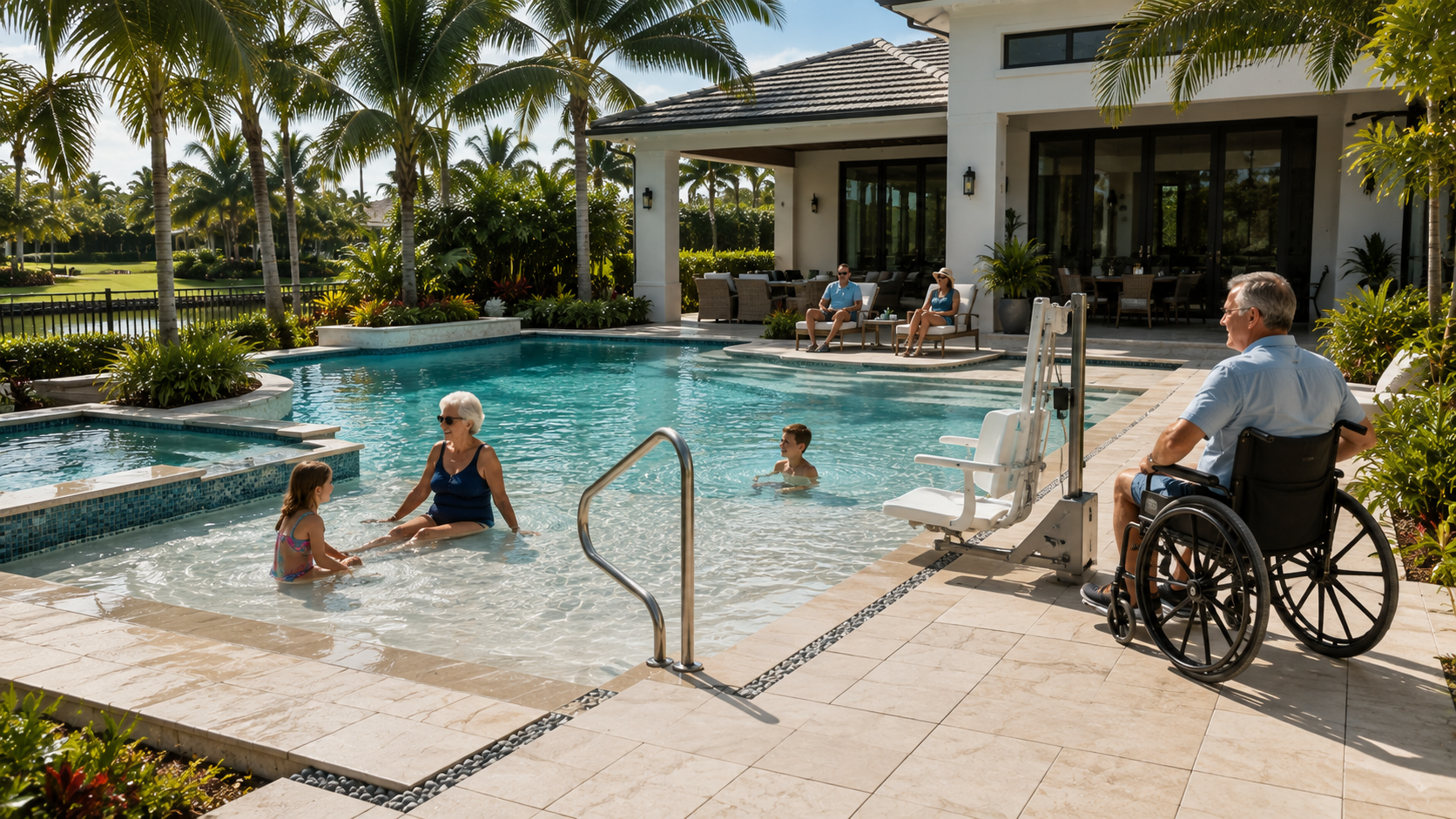
For decades, “luxury” and “accessible” were treated as if they belonged in different conversations, one about aesthetics, the other about accommodation. That thinking is outdated. Today’s most sought-after backyard renovations prove that pool accessibility and high-end design are not competing priorities. They’re complementary ones. A well-designed accessible pool doesn’t just meet a need; it elevates the entire outdoor living experience for every generation and every ability level that uses it.
Whether you’re planning a new pool from the ground up or renovating an existing one, thinking through accessibility early lets you build a backyard that welcomes grandparents, young children, guests with mobility challenges, and everyone in between, without sacrificing the resort-style look you’ve been dreaming about.
Why Accessible Pool Design Belongs in Every Luxury Backyard Plan
Homeowners often assume accessibility features are only relevant if someone in the household currently has a disability. In practice, accessible pool design benefits nearly everyone at some point: aging parents visiting for the holidays, a child recovering from a sports injury, a pregnant family member, or simply guests who feel steadier with a handrail nearby. Building accessibility into your design from day one means you won’t need costly retrofits later.
There’s also a real-estate case to be made. Backyards designed with universal access in mind tend to appeal to a broader pool of future buyers, since they signal thoughtful, forward-looking construction rather than a space that only works for one type of user.
Beyond function, accessibility features have become a genuine design opportunity. Gently sloped entries, integrated seating ledges, and textured, slip-resistant decking all read as intentional, high-end details in the right hands, not compromises.
Key ADA Pool Features to Consider
If you’ve researched ADA pool features for a commercial property, you already know the baseline requirements. Residential pools aren’t legally bound by the same code, but borrowing from ADA principles gives homeowners a proven framework for safety and comfort. Common features include:
- Zero-entry or beach entry design: a gradually sloping entrance that eliminates steps altogether, allowing wheelchairs, walkers, or unsteady feet to enter the water at a comfortable pace.
- Transfer walls and transfer systems: low walls at the pool edge that allow someone to move from a wheelchair onto the deck and into the water with minimal assistance.
- In-pool steps with handrails: wider treads and sturdy rails on both sides make a significant difference for anyone with balance or joint concerns.
- Non-slip decking materials: textured pavers, cool-deck coatings, or brushed concrete reduce slip risk around wet areas without looking institutional.
- Clear, level pathways: from the house to the pool, walkways should be wide, even, and free of abrupt grade changes.
None of these elements require sacrificing style. Many premium builders now offer these features in finishes and materials that match custom tile work, natural stone decking, and other luxury hardscape elements seamlessly.
Pool Lifts: Function Meets Modern Design
Among the most practical additions for full accessibility, pool lifts allow individuals with limited mobility to enter and exit the water safely and independently. Modern lifts have come a long way from the bulky, clinical-looking equipment of the past.
Today’s residential pool lifts are available in sleek, low-profile designs that can be finished in colors and materials matching your pool’s overall aesthetic. Some models are portable and can be stored out of sight when not in use, while permanently anchored options integrate directly into deck design so they read as a built-in feature rather than an add-on.
When selecting a lift, homeowners should consider:
- Weight capacity and seat design for the primary users who will need it
- Battery-powered vs. water-powered operation, depending on maintenance preferences
- Deck anchoring requirements, which your pool builder can plan for during construction
- Portability, if the lift needs to be removed for events or aesthetics at certain times
A knowledgeable pool contractor can help integrate a lift into the deck plan so it complements rather than interrupts the overall design flow.
Designing Accessible Backyard Pools Without Losing the Luxury Feel
The biggest misconception about accessible backyard pools is that accessibility requires a purely utilitarian look. In reality, some of the most striking modern pool designs already lean on the same elements accessibility calls for.
Consider a few ways to blend both priorities:
Zero-entry design as a design statement. A beach-entry pool with a gradual slope, scattered natural stone, and a shallow sun shelf feels like a resort feature first and an accessibility feature second, even though it accomplishes both.
Integrated seating ledges. Wide underwater ledges built into the pool wall provide a resting spot for anyone who needs it while also creating a popular lounging feature for the whole family.
Textured, natural-look decking. Slip-resistant materials like travertine, textured pavers, or knockdown finishes provide safety underfoot while delivering the high-end aesthetic homeowners want around their pool.
Thoughtful landscape lighting. Well-lit pathways and pool edges support nighttime accessibility and safety while adding ambiance and drama to evening entertaining.
Shade structures near entry points. Pergolas or cabanas positioned near ramps and transfer areas offer comfort for anyone who needs to pause, rest, or supervise from a shaded spot.
When these elements are planned together from the earliest design phase, the result doesn’t look like an accessible pool with luxury touches added on, it looks like a luxury pool that happens to work beautifully for everyone.
Planning Your Accessible Luxury Pool
The best outcomes happen when accessibility is part of the initial design conversation, not an afterthought addressed after construction begins. A pool builder experienced in both custom luxury design and accessible features can help you:
- Choose an entry style that fits your yard’s grade and your family’s needs
- Select lift options and plan deck anchoring during the design phase
- Balance material choices for both safety and high-end appearance
- Plan pathways and outdoor living spaces that flow naturally from house to pool
Pool accessibility isn’t a niche request anymore, it’s simply smart, forward-thinking design. Whether you’re building new or renovating an existing backyard, investing in accessible features now means your pool will serve your family well for years to come, no matter how needs change along the way.
Ready to start planning a backyard that’s as functional as it is beautiful? Reach out to a local pool design specialist to discuss how accessible features can be seamlessly integrated into your dream pool.
0 Comments