

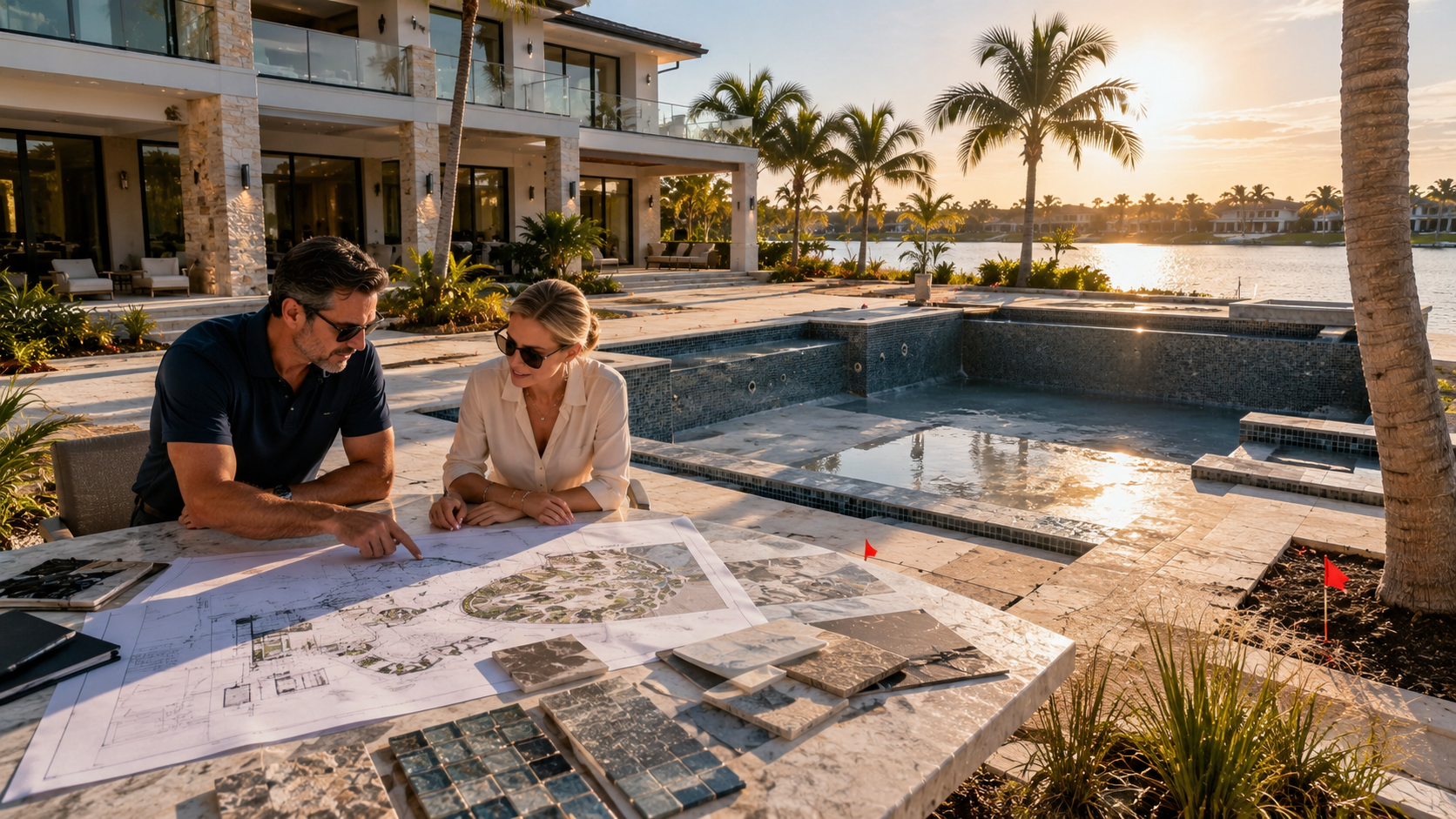
Luxury Pool Design Mistakes Homeowners Make During the Planning Stage
A backyard pool is one of the biggest investments most homeowners will ever make, and when done right, it becomes the centerpiece of outdoor living for decades. But the difference between a pool that feels like a resort and one that becomes a source of regret almost always comes down to what happens before construction ever begins. Understanding the most common luxury pool design mistakes at the planning stage can save you tens of thousands of dollars, months of frustration, and a finished product that actually matches your vision.
Below, we break down the planning-stage errors that trip up even well-intentioned homeowners, along with practical pool planning tips to help you avoid them.
Mistake #1: Skipping the Site Analysis
Many homeowners fall in love with a pool design they saw online or in a magazine without first considering whether it actually suits their lot. Soil composition, drainage patterns, water table depth, existing tree roots, and slope all affect what’s structurally possible and what it will cost. In much of Florida pool construction, for example, sandy soil, high water tables, and hurricane-zone building codes create unique engineering requirements that a generic pool plan simply won’t address.
Before you fall in love with a design, have a qualified builder assess your site. Skipping this step is one of the fastest ways to end up with expensive change orders once excavation begins.
Mistake #2: Designing the Pool in Isolation From the Rest of the Property
A luxury pool shouldn’t feel like an afterthought bolted onto the backyard; it should feel like a natural extension of the home’s architecture and landscape. A common error is designing the pool shape, decking, and water features without considering sightlines from the house, existing landscaping, outdoor kitchens, or future additions like a cabana or fire pit.
Walk through your home and note which windows and rooms will have views of the pool. Consider how the pool area will be used at different times of day and year. This holistic approach is at the heart of any solid custom pool design guide; the pool is one piece of a larger outdoor living puzzle, not a standalone project.
Mistake #3: Underestimating Long-Term Maintenance Costs
It’s easy to get swept up in the excitement of infinity edges, raised spas, and elaborate water features without asking how much upkeep they’ll require. Complex water features, extensive tile work, and non-standard equipment can dramatically increase both maintenance time and ongoing costs.
During planning, ask your builder for a realistic estimate of monthly maintenance, energy costs for heating and pumps, and the expected lifespan of specialty finishes. A beautiful pool that becomes a financial or logistical burden isn’t truly luxurious; sustainable luxury factors in the years after construction, not just the reveal photos.
Mistake #4: Choosing the Wrong Pool Builder
Perhaps the most consequential planning-stage mistake is selecting a builder based on price alone, without vetting their experience with luxury or custom projects. Not all pool contractors have the engineering expertise or design sensibility required for elaborate features like vanishing edges, integrated spas, or advanced automation systems.
Good pool builder advice always starts with due diligence: review a builder’s portfolio of comparable projects, ask for references from clients with similarly complex builds, and confirm they carry proper licensing and insurance for your region. In coastal or hurricane-prone areas, this is especially critical. Florida pool construction requires builders who understand local codes around wind loads, flood zones, and setback requirements. A builder who cuts corners here can create problems that surface years later, from cracked decking to structural failures.
Mistake #5: Ignoring Local Climate and Codes
Related to builder selection is the mistake of designing a pool without fully accounting for regional climate demands. Homeowners in warmer climates often want expansive, open designs with minimal shade, only to discover the pool deck becomes too hot to walk on barefoot for much of the year. Others fail to account for local permitting requirements, HOA restrictions, or setback rules until after they’ve committed to a design.
Research your municipality’s pool codes early, and talk to your designer about shade structures, decking materials that stay cool underfoot, and any regional considerations, like hurricane tie-downs or flood elevation requirements common in Florida pool construction, before finalizing plans.
Mistake #6: Not Setting a Realistic, Comprehensive Budget
Luxury pool projects frequently balloon in cost because homeowners budget for the pool itself but not the surrounding elements: decking, landscaping, lighting, fencing, permits, and equipment upgrades. A shell-and-water budget that doesn’t include these line items will almost always come in over the estimate.
Work with your builder to create a comprehensive budget that includes a contingency of at least 10-15% for unexpected site conditions or design changes. This single step prevents more project disputes and disappointments than almost any other planning decision.
Mistake #7: Failing to Plan for Technology and Automation Early
Many homeowners treat smart pool technology, app-controlled heating, automated chemical balancing, and programmable lighting as an afterthought, only to find retrofitting these systems after construction is far more expensive and invasive than building them in from the start. If automation matters to you, specify it during the planning phase so wiring, conduit, and equipment pads can be positioned the first time correctly.
Bringing It All Together
Avoiding these luxury pool design mistakes comes down to one consistent theme: thorough planning prevents costly correction. Site analysis, holistic design thinking, realistic maintenance and budget expectations, careful builder vetting, and early technology planning all belong at the front end of your project, not somewhere in the middle of construction.
Whether you’re just starting to gather ideas or you’re deep into interviewing contractors, treat the planning stage as the most important phase of the entire build. A little extra time here, reviewing a proper custom pool design guide, gathering solid pool builder advice, and applying smart pool planning tips, is what separates a pool that photographs well on day one from one that still feels like a luxury retreat ten years later.

0 Comments