

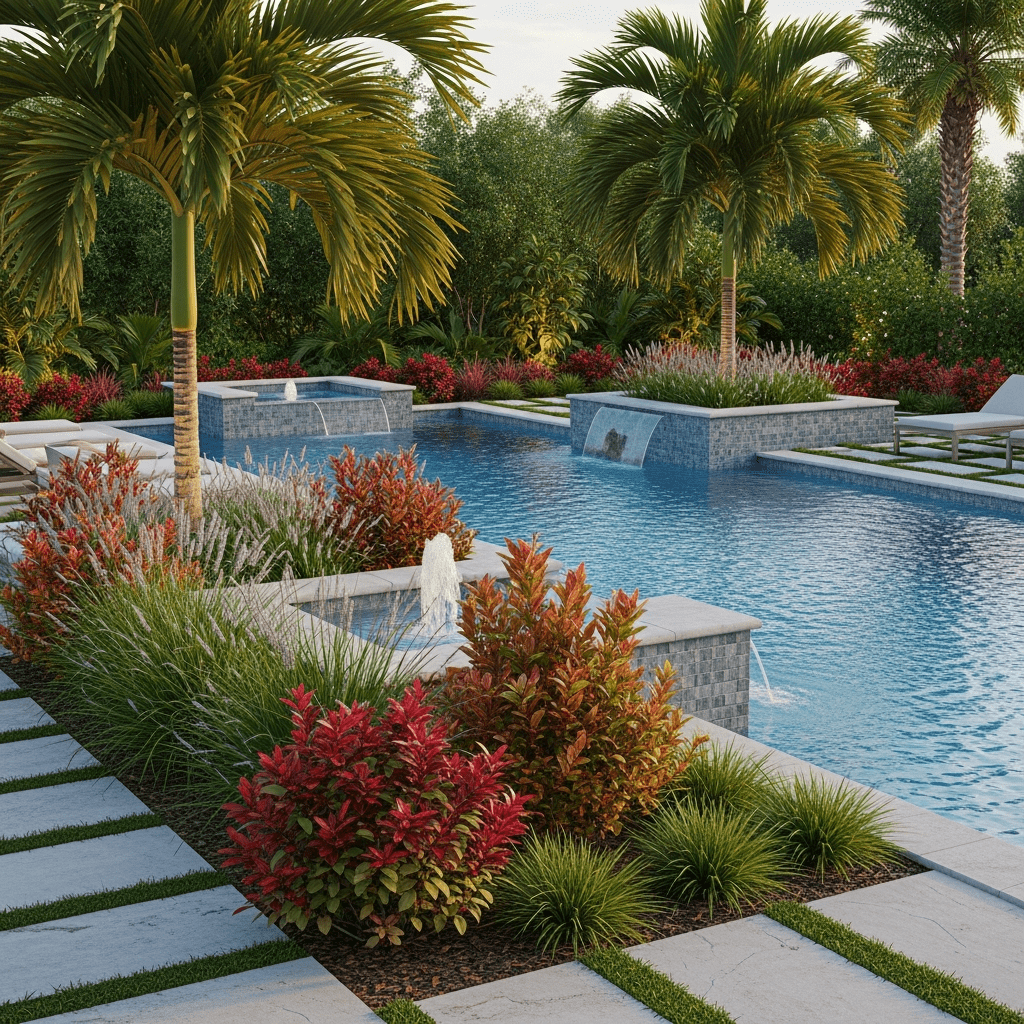
Integrating Native Landscaping Around Custom Pools in Naples, FL
Naples homeowners who build custom pools want two things: a beautiful backyard oasis and a landscape that makes sense for Southwest Florida’s climate. Integrating native plants around your pool delivers both: it creates a sense of place, reduces maintenance, supports local wildlife, and withstands the heat, humidity, salt air, and occasional storms that define the Gulf Coast. Below is a practical, design-forward guide to planning and planting native landscaping that complements custom pools in Naples.
Why choose native plants near your pool?
Native plants are adapted to the region’s soils, rainfall patterns, pests, and salt-laden breezes. That means better survival rates, less fertilizer and pesticide use, and lower long-term maintenance. Native species also attract pollinators and birds, reinforcing the natural character of a Naples yard. For homeowners who want low-input beauty and ecological benefits, natives are a smart choice.
Know your site: microclimates, salt exposure, and hardiness
Before specifying plants, survey the pool area for sun exposure, prevailing winds, salt spray (closer to the shore means more tolerance needed), soil drainage, and how pool water will be managed (splash zones, backwash areas). Naples falls in the warm USDA plant hardiness zones used for plant selection; understanding your specific zone and drainage will help you pick species that thrive year-round.
Design principles for poolside native landscapes
- Layer for depth and function: Use a three-tier approach: taller trees and palms for overhead structure and shade, medium shrubs for screening and privacy, and low-growing groundcovers or grasses for edging and softening hardscape. This layered composition keeps sight lines open while adding lushness.
- Create a buffer zone: Place litter-prone plants (heavy leaf drop, fruit, or sticky sap) away from immediate pool edges to reduce debris in the water. Use grasses, succulents, or small-leaved groundcovers at the immediate pool perimeter.
- Prioritize non-invasive, low-litter species: Even attractive tropicals can cause maintenance headaches if they shed a lot. Opt for natives that are tidy and salt-tolerant in exposed sites.
- Use containers strategically: Potted natives let you experiment with placement, protect certain root zones from pool chemicals, and provide portable color.
- Plan irrigation and drainage: Even drought-tolerant natives need water to establish. A drip system or targeted irrigation reduces runoff to the pool and conserves water. Many poolside landscapes benefit from a separate irrigation zone to avoid wetting sensitive pool equipment areas. (Local landscape pros often recommend custom irrigation loops for poolside plantings.)
Native species well-suited to Naples poolscapes
Below are native and regionally-appropriate options that balance aesthetics with practicality. Always confirm exact species and cultivars with a local nursery or FNPS list for Collier County before planting.
- Sea Grape (Coccoloba uvifera): Iconic coastal tree with broad leaves and salt tolerance; works well as a backdrop or windscreen when spaced correctly.
- Saw Palmetto (Serenoa repens): Low, spreading palm-scrub plant that adds texture and is extremely tolerant of drought and sandy soils.
- Coontie (Zamia floridana): A tidy, slow-growing cycad that’s ideal for low borders and shade pockets; very low litter.
- Simpson’s Stopper (Myrcianthes fragrans): A neat evergreen shrub that provides dense screening and small flowers that attract pollinators.
- Firebush (Hamelia patens): Attracts hummingbirds and adds red-orange seasonal color; use where a mid-height, flowering shrub is wanted.
- Muhly Grass (Muhlenbergia capillaris): Fine-textured grass with airy pink plumes in fall; great along pool edges for soft movement.
- Coastal dune species for very exposed sites: saltgrass and other dune-tolerant groundcovers are appropriate where salt spray is constant.
Practical tips for poolside planting and maintenance
- Distance from pool edge: Keep woody plants a few feet back from the coping to reduce debris and root interference. Use non-root aggressive groundcovers closer to the pool edge.
- Avoid messy fruit and sticky resins near the pool. Fruit can end up in the water, and sticky resins stain surfaces and pool filters.
- Mind the lighting and hardscape integration. Use low-voltage or LED landscape lighting to highlight specimen natives and integrate hardscape transitions from the pool deck to the planting beds. Lighting also improves safety on steps and around planting pockets.
- Mulch and soil amendments: Use clean, washed sand or light mulch that won’t wash into the pool. Amendments should improve root establishment without encouraging excessive growth that will require constant trimming.
- Hurricane preparedness: Choose species that withstand pruning or temporary removal, and prune trees and large shrubs to reduce wind sail. Many natives are resilient, but planning for seasonal storm prep is important in Naples.
Wildlife, conservation, and community benefits
Planting natives does more than beautify: it supports pollinators, songbirds, and butterflies that rely on local flora. Neighborhood-wide adoption of natives improves urban biodiversity and reduces reliance on fertilizers and pesticides, a win for local waterways and the Gulf. Local organizations such as the Florida Native Plant Society and Naples Botanical Gardens provide species lists and planting resources tailored to Collier County.
Working with professionals
Landscape architects and pool designers experienced in Southwest Florida can fuse hardscape geometry with native plant palettes so pools look natural and intentional. They’ll help with microclimate assessment, salt-tolerance selection, irrigation zoning, and maintenance planning. Many local pool builders and landscape companies feature project galleries showing native-integrated designs. Reviewing these examples helps you visualize how plants and pool architecture will interact year-round.
Final thought
A custom pool in Naples is more than a slab of water; it’s the center of your backyard experience. Surrounding that pool with thoughtfully selected native plants turns the yard into a resilient, low-maintenance sanctuary that reflects Southwest Florida’s unique coastal character. With layered planting, careful species choice, and storm-smart planning, your pool area can be a sunny retreat for family and wildlife alike, beautiful, sustainable, and unmistakably Neapolitan.

0 Comments