

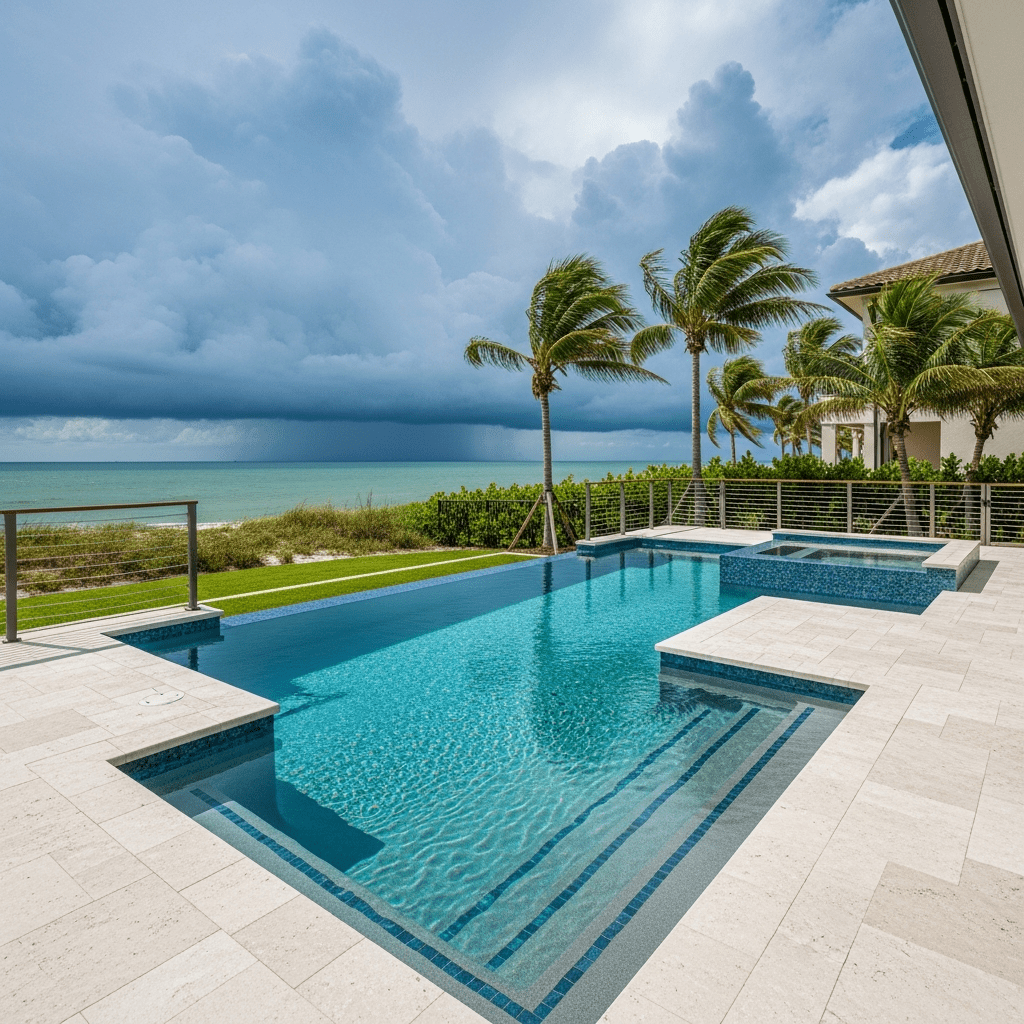
If you’re putting in a pool around Bonita Springs or anywhere near Estero Bay, you already know the view is worth it. But that same salt air, humidity, and storm season that make this place beautiful can absolutely wreck a poorly planned pool. I’ve seen it happen. A pool that looks great for two years and then starts falling apart because nobody thought about corrosion, drainage, or where the equipment sits.
So let’s talk about what it really takes to build a pool that holds up here. Not just for a season or two, but for the long haul.
First, understand what you’re up against
Bonita Springs isn’t just hot. It’s humid. Like, 70% humidity on a regular day. Summers are wet, storm season is no joke, and if you’re close to the water, you’ve got salt spray and tidal flooding to think about. That combination speeds up corrosion, grows algae faster, and puts stress on every material you use.
You can’t design a pool here the same way you would in Orlando or even Naples. The coast has its own rules.
Pick materials like your pool depends on it, because it does
This is the decision that matters most. Salt and humidity will eat through the wrong metals and finishes faster than you’d believe.
For anything metal, ladders, handrails, whatever’s visible, go with marine-grade stainless steel. We’re talking 316L or better. Anything less and you’ll be replacing it in a few years. Rinse those metals with fresh water regularly to keep salt from building up.
For the shell, you want dense concrete with a low water-to-cement ratio. Add corrosion inhibitors to the mix if you’re doing gunite or shotcrete. Seal it with something breathable but waterproof, not just any sealer off the shelf.
Finishes? Skip the porous stuff. Polished plaster or high-performance tile made for marine environments holds up way better. Use epoxy grout or polymer-modified mortar for tile work. It’s worth the extra cost.
Don’t let your equipment become a casualty
Pumps, heaters, electrical panels, these are the first things to go when salt and water get to them.
Put your equipment uphill if you can. Keep it as far from the shoreline as the property allows. If you’re in a flood zone, elevate everything on concrete pads above where storm surge might reach.
Use NEMA-rated enclosures for electrical gear. Choose corrosion-resistant motors, valves, and heat exchangers. Variable-speed pumps rated for saltwater are a smart move.
And make sure you can shut things off and drain the lines easily. Saltwater sitting in pipes is a problem waiting to happen.
Build for storms, not just sunny days
You’re in hurricane territory. That means wind, flying debris, and a lot of rain.
Reinforce the shell and coping connections so they can handle uplift and lateral loads. If you’re seaward of the coastal construction line, you might need pilings. That’s not a DIY call, get a licensed coastal engineer involved.
Use removable or breakaway fences, shades, and pergolas. Keep tiles, coping, and decking materials that can take a hit or are easy to swap out.
Plan for water. Perimeter drains, scuppers, overflow gutters, whatever it takes to move stormwater away from the pool and your foundation. Make sure the yard slopes away from the house, too.
Salt systems are popular, but know what you’re signing up for
Salt chlorination means less daily chlorine handling. But it also means more chloride in the air around your pool. That accelerates corrosion on nearby metal if you didn’t plan for it.
If you go salt, upgrade your metallic fittings. Rinse them with fresh water regularly. Check sacrificial anodes if you have them.
Design your plumbing with redundant valves and bypasses so you can service equipment without shutting everything down. And consider automated monitoring for water level, salt, pH, and leaks. In a corrosive environment, catching a problem early saves you thousands.
Decking and landscaping matter more than you think
What’s around the pool affects how long the pool lasts.
Use non-porous, slip-resistant decking, porcelain pavers, sealed aggregate concrete, or high-density composites. Stay away from softwoods. They rot fast in sea air.
Plant salt-tolerant stuff for windbreaks: palm species, sea grape, mangrove buffers where allowed. That cuts down on salt spray and debris. But check local rules first. Coastal areas have strict setback and native vegetation protections.
Shade helps too. Cantilever umbrellas or pergolas with stainless anchors reduce UV damage and slow evaporation.
Permits and codes aren’t optional here
Bonita Springs falls under Florida’s coastal planning rules and the Florida Building Code. If you’re near Estero Bay or seaward of the coastal construction line, you may need coastal-engineer-stamped plans and environmental reviews.
Start the permitting process early. It shapes what you can and can’t do, and the last thing you want is to redesign after you’ve already broken ground.
Think about maintenance before you build
A coastal pool costs more to maintain than an inland one. That’s just reality.
Plan on annual inspections of metalwork, anodes, pump seals, and finishes. Rinse the pool perimeter after storms. Budget for more frequent touch-ups and equipment replacements.
Choose modular, replaceable fixtures where you can. And look for warranties and service contracts that actually cover coastal exposure. Use vendors who know waterfront pools, not just general pool guys.
Quick checklist before you dig
– Site-specific risk assessment (storm surge, tidal flood lines)
– Material schedule with marine-grade metals and durable finishes
– Elevated, easily drained equipment areas with weatherproof enclosures
– Engineered structural plan for wind and wave loads, pilings if needed
– Permit roadmap and environmental compliance checked with local authorities
Building a pool here is a balancing act. You want that relaxed, tropical vibe, but you can’t pretend the environment isn’t going to test everything you put in the ground. Use the right materials, protect your equipment, design for water and wind, and work with people who know coastal construction.
Do that, and your pool will be the kind of place you actually get to enjoy for years, even when the weather decides not to cooperate.

0 Comments