

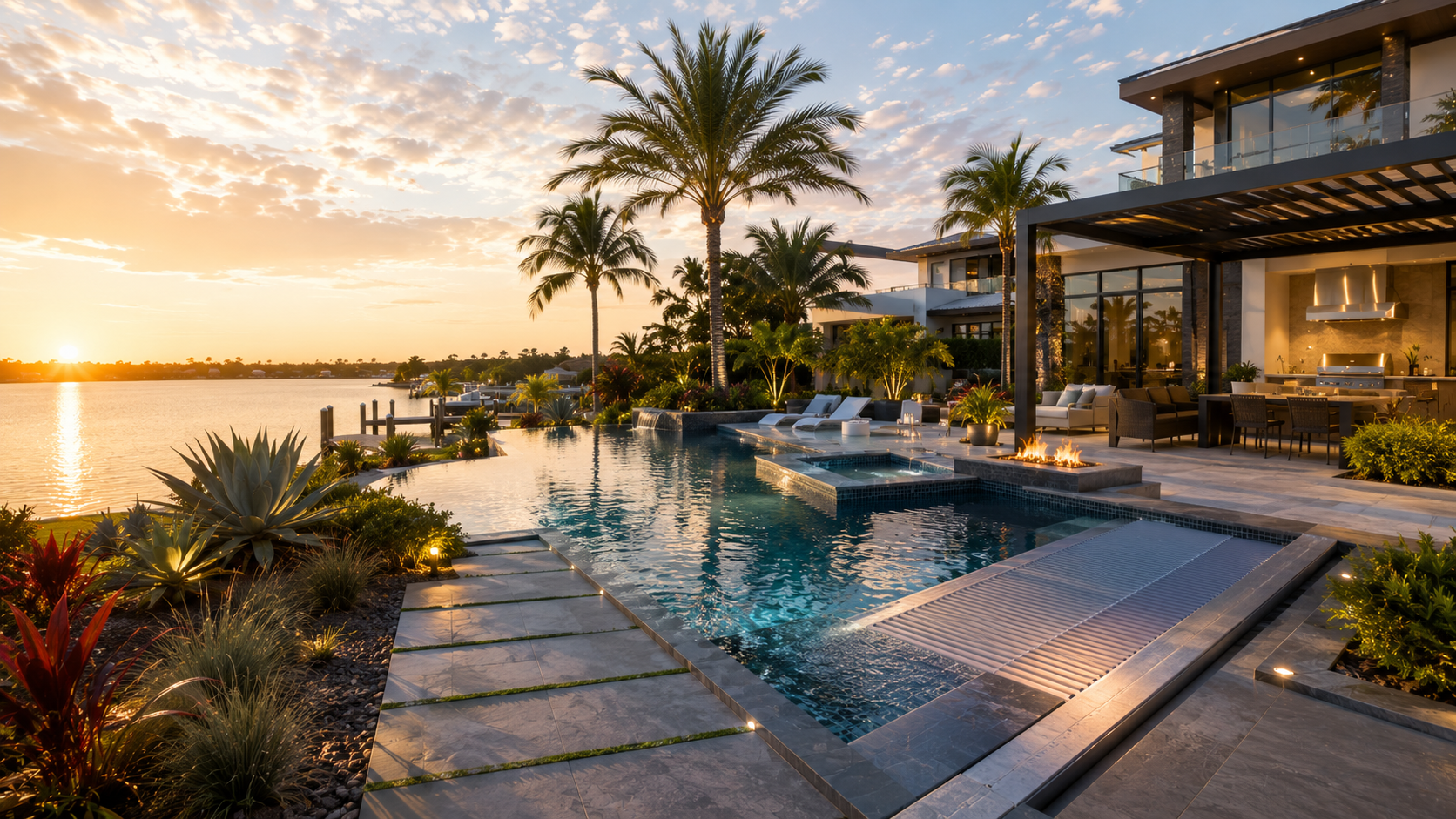
How to Design a Luxury Pool That Requires Less Water and Saves Money
There’s a persistent myth that luxury and conservation can’t coexist, that a truly stunning pool has to be a water guzzler by default. In reality, some of the most striking pools being built today prove the opposite. With thoughtful water-efficient pool design, homeowners can create a showpiece backyard feature that uses less water dramatically, costs less to run, and still delivers every bit of the resort-style experience they’re after.
If you’re planning a new pool or renovating an existing one, here’s how to blend high-end aesthetics with smart conservation, without sacrificing the “wow” factor.
Why Water Efficiency Matters More Than Ever
Traditional pools lose a surprising amount of water to evaporation, splash-out, and backwashing filtration systems. Add in the utility costs of pumps, heaters, and constant refilling, and a poorly designed pool becomes an expensive, resource-heavy fixture rather than the low-maintenance luxury it was meant to be.
As droughts become more frequent and water rates climb in many regions, eco-friendly pools are shifting from a niche preference to a smart long-term investment. The good news: efficiency upgrades often pay for themselves through reduced water bills, lower energy consumption, and less frequent chemical replenishment.
1. Start with Smart Shape and Size
Every additional square foot of surface area increases evaporation. That doesn’t mean you need to shrink your dreams; it means designing intentionally.
- Deeper, narrower designs reduce surface area while maintaining swimmable volume.
- Freeform or geometric shapes with fewer sharp corners and shallow ledges reduce splash-out during use.
- Built-in tanning ledges or spillover spas can be designed to recirculate water internally rather than allowing it to spill onto the deck and evaporate or drain away.
A well-proportioned pool doesn’t feel smaller; it feels more intentional, which is often the hallmark of true luxury design anyway.
2. Invest in a High-Quality Pool Cover
This is arguably the single most effective, budget-friendly tool in sustainable pool design. Up to 95% of water loss in an uncovered pool comes from evaporation. A quality cover, whether automatic, solar, or a sleek retractable design, can cut that number dramatically.
Modern automatic covers have come a long way from the clunky vinyl sheets of decades past. Many luxury installations now feature:
- Motorized retractable covers that tuck away into a hidden housing, preserving clean sightlines.
- Solar covers that double as passive heating, reducing the need for gas or electric heaters.
- Safety covers rated to support weight, adding a family-safety benefit alongside water conservation.
For a design-forward homeowner, a cover no longer means compromising on visual appeal.
3. Choose Water-Saving Filtration and Circulation Systems
Traditional sand filters require regular backwashing, which can waste hundreds of gallons of water per cycle. Upgrading to more efficient systems is one of the easiest ways to build genuinely water-saving pools.
Consider:
- Cartridge filters, which don’t require backwashing and only need periodic rinsing or replacement.
- Variable-speed pumps, which reduce both energy use and the wear that leads to leaks and part replacements.
- Smart circulation systems that adjust flow based on usage patterns, rather than running at full capacity around the clock.
These upgrades quietly work behind the scenes, meaning your pool stays pristine and dazzling without the constant water turnover of older equipment.
4. Add Energy-Efficient Heating and Automation
Water and energy efficiency are deeply connected. Heating a pool is often one of the largest ongoing costs, and it can also drive additional evaporation, since warmer water evaporates faster than cooler water.
For genuinely energy-efficient swimming pools, look at:
- Heat pumps instead of traditional gas heaters, they use ambient air rather than combustion, sharply cutting energy use.
- Solar heating panels, which are increasingly sleek and can be integrated into a home’s existing solar array.
- Smart automation systems that let you schedule heating, filtration, and lighting to run only when needed, rather than continuously.
Pairing a heat pump with a quality cover creates a compounding effect: less heat loss, less evaporation, and lower bills across the board.
5. Rethink Water Features
Waterfalls, fountains, and infinity edges are hallmarks of luxury pool design, but they can also be significant sources of water loss if not engineered carefully.
- Recirculating designs ensure that water cascading over an edge or through a feature returns to the main pool rather than misting away or draining outward.
- Wind-shielded placement for waterfalls and fountains reduces evaporation and splash loss caused by breezes.
- Timers on decorative features allow you to enjoy the visual drama during entertaining hours while conserving water and energy the rest of the time.
None of this requires giving up the feature, it just requires smarter engineering behind it.
6. Choose Climate-Appropriate Landscaping
The area surrounding your pool matters just as much as the pool itself. Thirsty, high-maintenance landscaping often demands irrigation that indirectly strains the same water budget you’re trying to protect.
Pairing your pool with drought-tolerant plants, permeable hardscaping, and windbreaks (like hedges or privacy screens) not only completes the luxury aesthetic but also reduces evaporation by shielding the pool surface from wind, one of the biggest hidden contributors to water loss.
7. Monitor and Maintain
Even the most efficient system loses its edge without maintenance. A slow leak, a cracked tile, or a poorly sealed skimmer can waste far more water than any evaporation ever would.
- Schedule regular leak detection checks.
- Monitor water levels weekly to catch irregularities early.
- Keep filtration and automation systems updated and calibrated.
The Bottom Line
Designing a luxury pool no longer means choosing between beauty and responsibility. By combining smart shape and sizing, high-performance covers, efficient filtration, and thoughtful landscaping, you can create a stunning backyard retreat built on genuinely water-efficient pool design principles.
The result is a pool that feels indulgent every time you step into it, while quietly saving water, energy, and money in the background, proof that eco-friendly pools, sustainable pool design, water-saving pools, and energy-efficient swimming pools aren’t a downgrade from luxury. They’re simply what luxury looks like now.

0 Comments