

The Truth About Building a Pool in Southwest Florida (It’s Not All Sunshine)
Okay, pull up a chair. Let’s have a real talk about putting a pool in down here. You’re dreaming of those perfect, still evenings, right? The water was like glass, a cold drink in your hand, not a single mosquito in sight because of that blessed screen cage.
I get it. It’s why I built mine.
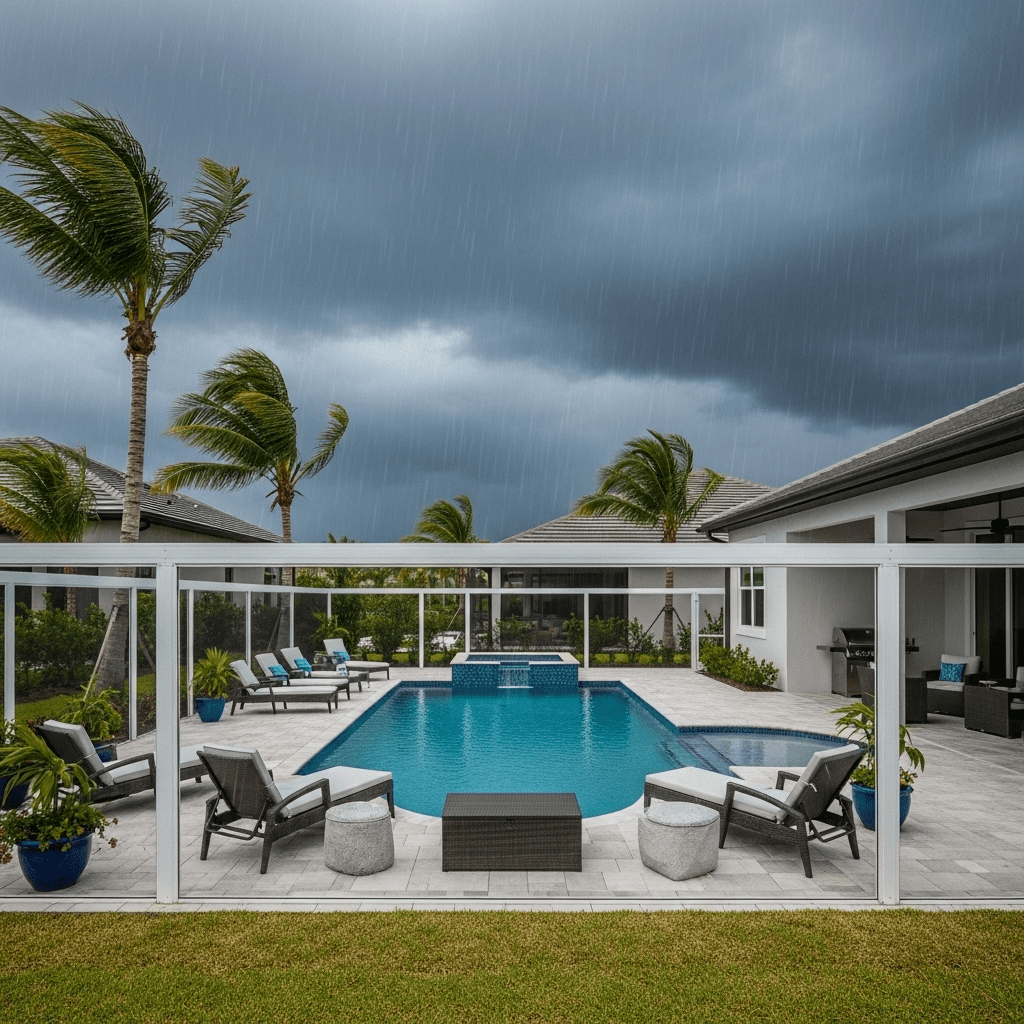
But then there’s the other six months of the year. The ones where we all get a little twitchy watching The Weather Channel. Where your phone blasts those emergency alerts that make your heart skip a beat. Hurricane season. And let me tell you, if you’re thinking about a pool, you’d better be thinking about that, too. It changes everything. You’re not just building a pool; you’re investing in hurricane-resistant pools in Florida.
I learned the hard way. My first pool, back in ’04, wasn’t built by a “hurricane guy.” After Charley came through, I spent days fishing pieces of my neighbor’s fence out of the water, and my pump was a lost cause. It was a mess. So when I rebuilt, I did it the right way. The Florida way. Here’s what that means.
First, Build a Bunker, Then Make It Pretty: The Best Pool Materials for Hurricanes
Forget anything that sounds flimsy. The debate of gunite pools vs fiberglass in Florida isn’t really a debate for us. In this climate, you want gunite. It’s basically a giant concrete bathtub they spray into your backyard. It becomes part of the earth. When the ground gets saturated and wants to shift, a gunite pool just says, No, sir. I’m staying right here. It’s the undisputed champion for durability.
And that pretty deck around it? It can’t be for show. That poured concrete stuff cracks if you so much as frown at it. You want paver pool decks in Florida. The good, heavy ones. Because when the ground underneath gets soft, the whole deck can settle. With pavers, you don’t get cracks. You just get a guy with a machine to lift them, re-level the sand, and put them back. It’s the difference between a quick fix and a total, ugly repair job.
The Cage: Our Best Frenemy
That screen enclosure is everything. It’s the reason we can actually enjoy our pools without being eaten alive. But in a storm, it’s a giant sail waiting to get torn to shreds.
The new ones aren’t like the old ones. The aluminum frames are thicker—you can feel the heft. The screens are a tighter mesh. And the real pros are installing systems where the screens can be removed or rolled up before a storm hits. It’s a bit of work, but it’s cheaper than watching your entire cage end up in a ball in the corner of your yard.
Hide the Guts. Seriously
Your pump, filter, and heater are the heart of the whole operation. And nothing kills it faster than floodwater and power surges.
You’ll see the savvy setups: the equipment isn’t just sitting on the dirt. It’s up on a raised concrete pad that looks like a little island. Some folks even build a cute little reinforced shed around it. The goal is to keep it high, dry, and protected from flying junk. And listen to me on this: get a surge protector. A lightning strike half a mile away can send a jolt through the lines that’ll fry your control system. Ask me how I know.
It’s All About the Water… And Where It Goes
You think you’ve seen rain? You haven’t. Hurricane rain is a whole other beast. It comes down in sheets for hours, and your pool will fill up and spill over in a heartbeat. If you’re not smart, all that water is headed straight for your house’s foundation.
A good builder is part pool artist, part drainage engineer. They’ll slope your **paver pool deck in Florida** away from the house, toward drains that can handle a torrent. They might even put a simple overflow drain in the pool wall itself. It’s not glamorous, but it’s the kind of thing you’ll thank them for when you’re dry inside and your neighbor is mopping out their garage.
The Cover-Up
That flimsy blue solar cover? That’s for calm days. For a storm, you need the big guns: a heavy-duty safety cover that anchors into the deck. It’s a chore to put on, but it’s like putting a giant lid on your pool. It keeps out so much debris that your post-storm cleanup goes from a nightmare to a minor annoyance.
Don’t Plant a Missile Garden
Landscaping matters. That beautiful but brittle royal poinciana? In a storm, it becomes kindling aimed at your screen. You learn to plant things that know how to hunker down. Sabal palms, native grasses, stuff that can bend without breaking. And for goodness’ sake, have a plan for your patio furniture. Those cute chairs and tables need to go in the garage, not become part of the problem.
The Ritual
It becomes second nature. When a storm’s brewing, you don’t panic. You prep. You lower the water level a few inches, not too much, or the pool can literally pop out of the ground. You add extra chlorine to super-chlorinate and give the water a fighting chance. You power everything down.
Afterwards, it’s a muddy, sweaty job of cleaning. But there’s a weird satisfaction to it. Skimming out the leaves, running the filter for a day straight, slowly bringing the water back from a murky green to that perfect, clear blue. It’s the first step back to normalcy. Back to paradise.
Building a pool in Southwest Florida is a declaration of hope. It’s you saying you believe in the hundreds of beautiful days enough to prepare for the few scary ones. Do it smart with the right materials and design, and you’ll have your hurricane-resistant oasis for a long, long time.

0 Comments