

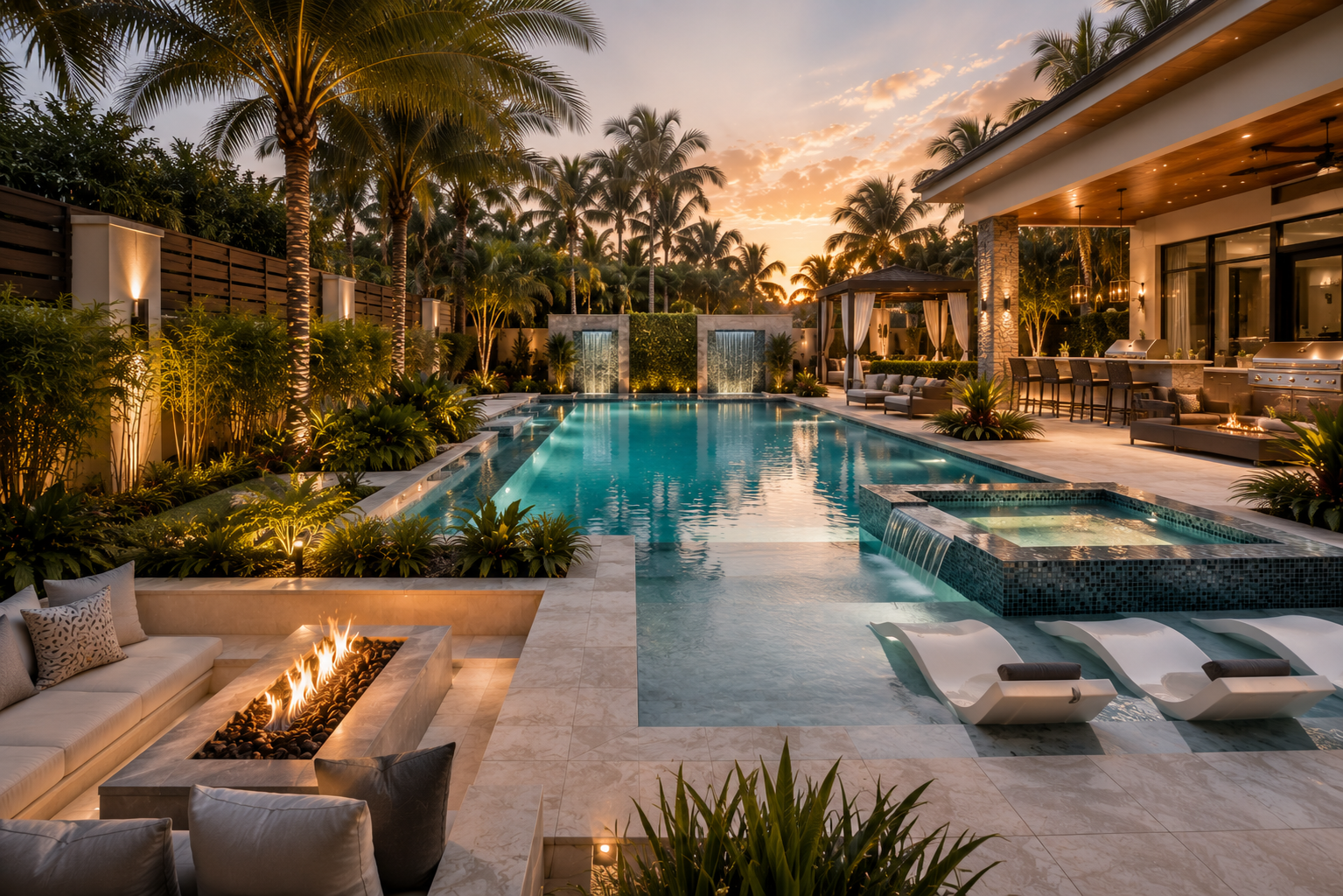
How Custom Pool Design Can Improve Outdoor Privacy Without Sacrificing Style
There was a time when backyard privacy meant a plain wooden fence and not much else. Today, homeowners expect more, a retreat that feels shielded from the outside world while still looking like it belongs in a design magazine. That balance is exactly what thoughtful private pool design delivers. With the right combination of structure, planting, and materials, you can create a backyard that feels like your own private resort, without giving up an ounce of visual appeal.
Why Privacy Matters More Than Ever
Outdoor living has become an extension of the home itself. People are entertaining, relaxing, and even working from their backyards more than ever before. But an open, exposed pool area can make it hard to fully unwind. Neighboring windows, passing foot traffic, and sightlines from upper-story homes can all chip away at the sense of escape a pool is supposed to provide.
This is where smart backyard privacy ideas come in. The goal isn’t to wall yourself off completely, it’s to create a sense of enclosure that still feels open, airy, and connected to nature. Done well, privacy elements become part of the design story rather than an afterthought bolted on at the end.
Designing Privacy Into the Pool From the Start
The best results happen when privacy is considered during the initial design phase, not added later. A custom pool designer will look at sun exposure, sightlines from neighboring properties, prevailing wind patterns, and the natural contours of the yard before ever breaking ground. This allows privacy features to be woven into the layout itself.
For example, positioning the pool slightly off-center, sinking it into a gentle grade change, or orienting it around an existing tree line can dramatically reduce visibility from the street or adjacent homes. These are subtle architectural decisions, but they make a significant difference in how secluded the space feels once construction is complete.
Privacy Screens: Function Meets Form
One of the most effective tools in a designer’s toolkit is privacy screens for pools. Gone are the days of harsh, industrial-looking barriers. Modern screening options include:
- Slatted wood or composite panels that filter light and views while adding warmth and texture
- Frosted or fluted glass panels that maintain an open, modern feel while blocking direct sightlines
- Decorative metal screens with laser-cut patterns that double as art pieces
- Retractable or louvered screens that can be adjusted based on the time of day or occasion
The key is choosing a screen material and pattern that complements the home’s architecture. A mid-century modern house might pair beautifully with horizontal wood slats, while a Mediterranean-style home could call for wrought iron or stucco-clad walls. When screens are selected with intention, they read as a design feature rather than a defensive measure.
Landscaping as a Living Privacy Wall
Plants remain one of the most elegant ways to create seclusion. Luxury pool landscaping uses layered greenery, tall trees for canopy coverage, dense hedges at eye level, and ornamental grasses or flowering shrubs closer to the ground to build a natural buffer that shifts and grows over time.
Bamboo, clumping varieties in particular, is a popular choice for fast-growing, dense screening. Italian cypress trees add a vertical, formal elegance often seen in high-end resort landscaping. For a softer look, ornamental grasses like feather reed grass sway gently in the breeze and add movement without feeling heavy or closed-in.
The advantage of landscaping over hard structures is that it can be layered for both privacy and aesthetics simultaneously. A well-planned planting scheme frames the pool, softens hardscape edges, and creates depth, all while shielding the space from prying eyes.
Combining Elements for a Seamless Look
The most successful projects rarely rely on a single privacy solution. Instead, they layer multiple elements: a low retaining wall topped with plantings, a pergola with climbing vines overhead, and a slatted screen along one property line. This layered approach avoids the feeling of being boxed in while still achieving genuine seclusion.
Water features can also play a role. The sound of a fountain or sheeting waterfall helps mask conversation and outside noise, adding an auditory layer of privacy that complements the visual barriers. Combined with strategic lighting, these elements extend the usable hours of the space and reinforce the feeling of a secluded outdoor living environment, even after the sun goes down.
Material and Color Choices Tie It All Together
Privacy structures should never feel like an add-on. Matching fencing materials, screen finishes, and hardscape colors to the home’s existing palette creates cohesion. A pool deck in warm travertine, paired with wood-tone screens and stone planters, feels intentional and elevated. Mismatched materials, on the other hand, can make even well-placed privacy features look like an afterthought.
Lighting design also matters here. Uplighting on trees and screens creates dramatic shadows at night, while soft path lighting keeps the space feeling inviting rather than fortress-like.
Working With a Designer Who Understands Both Goals
Achieving privacy and style simultaneously takes coordination between landscape architects, pool builders, and sometimes structural engineers, especially on sloped lots or properties with limited space. A designer experienced in both disciplines can propose solutions that a generic contractor might miss, such as recessed planting beds that double as structural retaining walls, or screen placements that also block prevailing winds to keep the pool area more comfortable.
Final Thoughts
Privacy and beauty are not competing priorities in pool design; they’re complementary goals that, when approached thoughtfully, reinforce one another. Whether through architectural placement, decorative screens, layered landscaping, or a combination of all three, it’s entirely possible to build a backyard retreat that feels both secluded and stunning. The right private pool design turns an ordinary backyard into a private sanctuary, one where style and seclusion work together, rather than in opposition.

0 Comments