

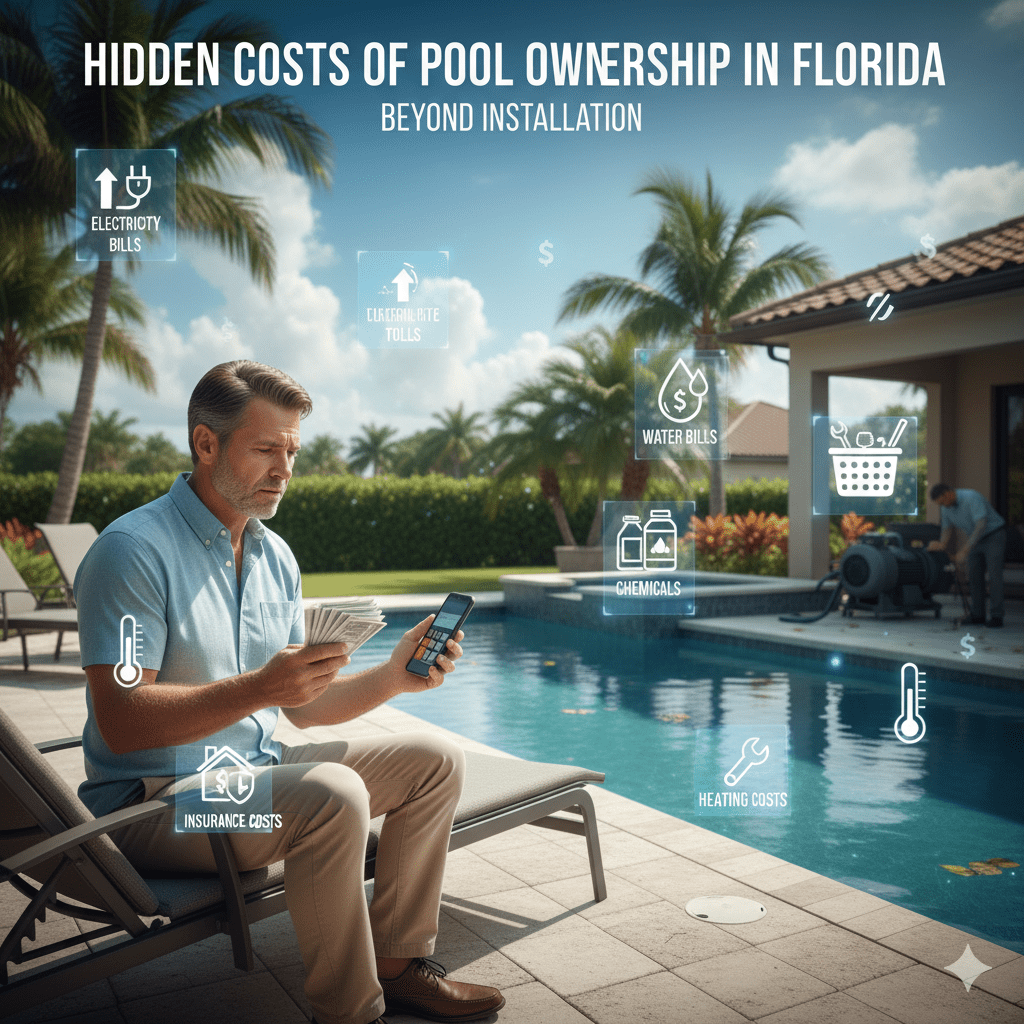
Hidden Costs of Pool Ownership in Florida (Beyond Installation)
So you’ve finally decided to take the plunge, and a sparkling backyard pool under the Florida sun sounds like pure paradise. And it is. But here’s what most pool companies won’t tell you upfront: the installation price tag is just the beginning. The real financial story of pool ownership unfolds over months and years, in the form of recurring bills, unexpected repairs, and ongoing upkeep that can quietly drain your wallet if you’re not prepared.
Before you sign anything, let’s talk about what pool maintenance cost Florida homeowners actually face once the construction crew packs up and leaves.
The Monthly Reality: Chemicals, Cleaning & More
Florida’s warm, humid climate is beautiful, and brutal on pool water chemistry. The heat accelerates algae growth, UV rays chew through chlorine, and frequent afternoon rainstorms constantly dilute and unbalance your water. Keeping your pool safe and swim-ready is a year-round job here, unlike in northern states, where pools go dormant for months.
Professional pool service in Florida typically runs $100–$200 per month, depending on pool size and service frequency. That’s $1,200–$2,400 annually just for routine chemical balancing, brushing, skimming, and equipment checks. If you handle it yourself, you’re still spending $600–$1,200 a year on chemicals alone, and spending every weekend testing and treating the water.
This is the most overlooked line in any pool upkeep guide: routine maintenance is not optional. Skip it, and you face algae blooms, equipment damage, or health hazards that cost far more to fix.
Long-Term Pool Expenses That Sneak Up on You
When budgeting for ownership, most homeowners think short-term. The smarter approach is to project your long-term pool expenses over a 10-to-15-year horizon. Here’s what that timeline looks like:
Resurfacing ($5,000–$15,000 every 10–15 years): Pool interiors, plaster, pebble, or tile, wear down over time. In Florida’s harsh UV environment, this timeline can be shorter. Resurfacing is inevitable and expensive.
Deck Maintenance ($1,000–$5,000 every few years): Concrete pool decks crack, shift, and stain. Pavers loosen. Pressure washing, sealing, and occasional replacement add up steadily over time.
Liner or Interior Repairs ($500–$3,000): Cracks, staining, and surface blistering can occur before full resurfacing is needed, requiring spot repairs that add to your cumulative costs.
Equipment Replacement: Pumps, heaters, filters, and automation systems don’t last forever. Even with great maintenance, you’ll face full replacements on a 7-to-12-year cycle.
Planning for these costs from the start, rather than being blindsided by them, is the mark of a financially prepared pool owner.
Pool Repair Costs in Florida: Expect the Unexpected
Florida’s environment is uniquely punishing on pool infrastructure. Sinkholes, shifting sandy soil, tree root intrusions, and hurricane-season storms all contribute to pool repair costs Florida homeowners face more often than residents in other states.
Some of the most common surprise repairs include:
- Pump failure: $300–$800 for repair; $800–$1,500 for full replacement
- Filter replacement: $200–$600 depending on type
- Heater repair or replacement: $500–$3,500
- Plumbing leaks: $300–$2,000+ depending on location and severity
- Structural crack repair: $1,000–$5,000+, and sometimes significantly more for major structural issues
- Pool light replacement: $100–$700 per light
A single bad storm season can stack multiple repairs at once. Many experienced Florida pool owners recommend setting aside a dedicated repair fund of $500–$1,000 per year, treating it like an insurance premium for your backyard investment.
The Energy Cost of a Swimming Pool
Here’s a number that genuinely shocks first-time pool owners: your electricity bill.
The energy cost swimming pool equipment generates is substantial. Your pool pump is the main culprit; a single-speed pump running 8 hours a day can add $100–$150 per month to your electric bill. In Florida, where pumps often run year-round, that’s $1,200–$1,800 annually from the pump alone.
Add in:
- Pool heaters (gas or electric heat pumps): $50–$200/month during cooler months
- Pool lights (especially older incandescent models): $20–$50/month
- Automation systems, cleaners, and fountains: Variable, but real
Upgrading to a variable-speed pump is one of the smartest investments a Florida pool owner can make. These energy-efficient models can reduce pump-related electricity costs by 50–70%, paying for themselves within 1–2 years. Many Florida utilities even offer rebates for the switch.
Over a 10-year period, energy costs can easily total $15,000–$25,000 depending on your equipment and usage habits. It’s one of the most significant and most underestimated components of total pool ownership cost.
Insurance, Permits & HOA Fees
Don’t overlook the administrative costs either. Adding a pool typically increases your homeowner’s insurance premium by $50–$100 per month due to increased liability exposure. Over a decade, that’s $6,000–$12,000 in additional premiums.
If you’re in an HOA community, there may be dues, approval processes, and aesthetic requirements tied to pool ownership. Fence requirements (Florida law mandates pool barriers for safety) can add another $1,500–$5,000 to your initial setup costs if not already budgeted.
The Bottom Line: What Does Pool Ownership Really Cost?
When you add it all up, routine pool maintenance cost Florida homeowners face, long-term pool expenses, pool repair costs Florida’s environment demands, and energy cost swimming pool equipment generates, the numbers are eye-opening.
Annual ongoing costs typically range from $3,000–$7,000 for most Florida pool owners. Over 15 years, that’s $45,000–$105,000 beyond the original installation price.
None of this is meant to discourage you from owning a pool. A well-maintained pool adds genuine value to your home, your lifestyle, and your family’s quality of life. But going in with clear eyes, armed with a realistic pool upkeep guide mindset, is the difference between a pool that brings you joy and one that becomes a source of financial stress.
Plan ahead. Budget conservatively. And enjoy every swim.

0 Comments