

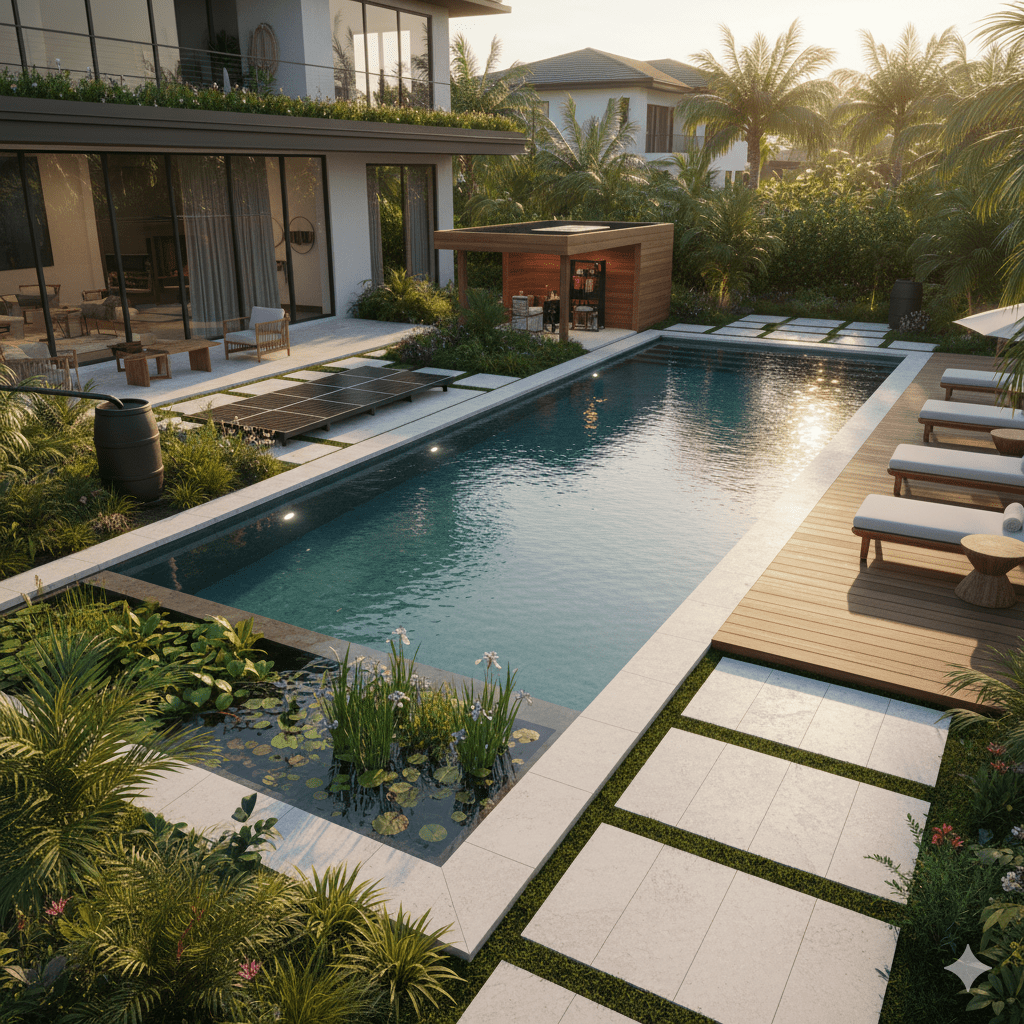
Eco-Friendly Pool Design: Sustainable Options for Modern Homes
As sustainability becomes a priority in modern living, homeowners are increasingly turning to eco-friendly pool design to reduce environmental impact while maintaining luxury and comfort. Traditional swimming pools can consume large amounts of water, energy, and chemicals, but with smart innovations and thoughtful planning, pools can now be both beautiful and environmentally responsible.
In this blog, we’ll explore how eco-conscious homeowners can integrate sustainable pool systems, adopt green pool construction, and invest in low energy pool equipment to create a truly future-ready backyard oasis.
What is Eco-Friendly Pool Design?
Eco-friendly pool design focuses on minimizing energy consumption, conserving water, and reducing chemical usage without compromising functionality or aesthetics. These pools use advanced technologies, natural systems, and sustainable materials to operate efficiently.
Modern designs combine innovation with environmental awareness, ensuring your pool not only looks stunning but also aligns with sustainable living principles.
1. Energy Efficiency: The Core of Sustainable Pools
One of the most important elements of eco-friendly pool design is energy efficiency. Pools traditionally rely on electricity for pumps, heating, and lighting, making them energy-intensive.
Smart Energy Solutions
- Variable-speed pumps consume up to 80% less energy than traditional pumps
- LED lighting uses significantly less electricity and lasts longer than halogen lights
- Automated pool systems optimize energy use by controlling filtration and heating cycles
For homeowners exploring energy-efficient pools Florida, solar-powered systems are especially popular due to abundant sunlight. Solar heaters use renewable energy to maintain water temperature, drastically reducing electricity costs and carbon footprint.
2. Water Conservation Strategies
Water is one of the most critical resources in pool maintenance. Sustainable pools are designed to reduce water waste through innovative features.
Effective Water-Saving Techniques
- Pool covers reduce water evaporation by up to 90–95%
- Rainwater harvesting systems collect and reuse water for pool refilling
- Efficient filtration systems minimize backwashing and water loss
Additionally, opting for smaller or plunge-style pools can significantly reduce water usage while maintaining functionality.
3. Natural Filtration and Chemical Reduction
Traditional pools rely heavily on chlorine and chemicals, which can harm both the environment and swimmers. A major trend in sustainable pool systems is reducing or eliminating chemical use.
Eco-Friendly Alternatives
- Natural swimming pools (bio-pools) use plants and biological filters to clean water
- Saltwater systems reduce the need for harsh chemicals
- Advanced filtration systems improve water quality with minimal additives
Natural filtration not only creates a healthier swimming environment but also mimics the beauty of natural water bodies.
4. Sustainable Materials in Pool Construction
Another essential aspect of green pool construction is the use of eco-friendly building materials. Sustainable materials reduce environmental impact while enhancing durability.
Popular Eco Materials
- Recycled steel and composite materials
- Natural stone and eco-friendly tiles
- Bamboo decking and bio-based materials like hempcrete
These materials are not only environmentally responsible but also add a modern, organic aesthetic to your pool design.
5. Smart Pool Technology and Automation
Technology plays a major role in modern eco-friendly pool systems. Smart systems allow homeowners to monitor and control energy usage efficiently.
Key Smart Features
- Automated temperature and lighting control
- Smart sensors for water levels and filtration
- Remote operation via mobile apps
These technologies ensure that your pool only uses resources when necessary, reducing waste and improving efficiency over time.
6. Solar Energy Integration
Solar energy is one of the most powerful tools in eco-friendly pool design. It provides a clean, renewable source of energy for heating and lighting.
Benefits of Solar Pools
- Lower energy bills
- Reduced reliance on fossil fuels
- Long-term cost savings
Solar heating systems can even pay for themselves over time through reduced operational costs.
7. Low Energy Pool Equipment: A Smart Investment
Choosing low energy pool equipment is one of the easiest ways to make your pool more sustainable.
Essential Equipment Upgrades
- Energy-efficient pumps and heaters
- LED lighting systems
- High-efficiency filters
These upgrades not only reduce environmental impact but also significantly cut down maintenance and electricity expenses.
8. Benefits of Eco-Friendly Pool Design
Investing in eco-friendly pool design offers multiple long-term advantages:
Environmental Benefits
- Reduced water and energy consumption
- Lower chemical pollution
- Decreased carbon footprint
Financial Benefits
- Lower utility bills
- Reduced maintenance costs
- Increased property value
Lifestyle Benefits
- Healthier swimming experience
- Modern and aesthetic design
- Future-proof investment
Sustainable pools prove that luxury and responsibility can go hand in hand.
9. Future Trends in Sustainable Pools
The future of pool design is undeniably green. Emerging trends include:
- AI-powered pool management systems
- Fully chemical-free pools
- Integration with smart homes
- Eco-landscaping around pool areas
These innovations will continue to redefine how pools are designed, built, and maintained.
Conclusion
Eco-friendly pool design is no longer a niche concept; it’s becoming the standard for modern homes. By incorporating sustainable pool systems, adopting green pool construction, and investing in low energy pool equipment, homeowners can create a pool that is both luxurious and environmentally responsible.
Whether you’re building a new pool or upgrading an existing one, sustainability should be at the core of your design strategy. Not only will you reduce your environmental impact, but you’ll also enjoy long-term savings and a healthier swimming experience.
In today’s world, a pool isn’t just a feature; it’s a statement. And choosing an eco-friendly approach ensures that your statement is both stylish and sustainable.

0 Comments