

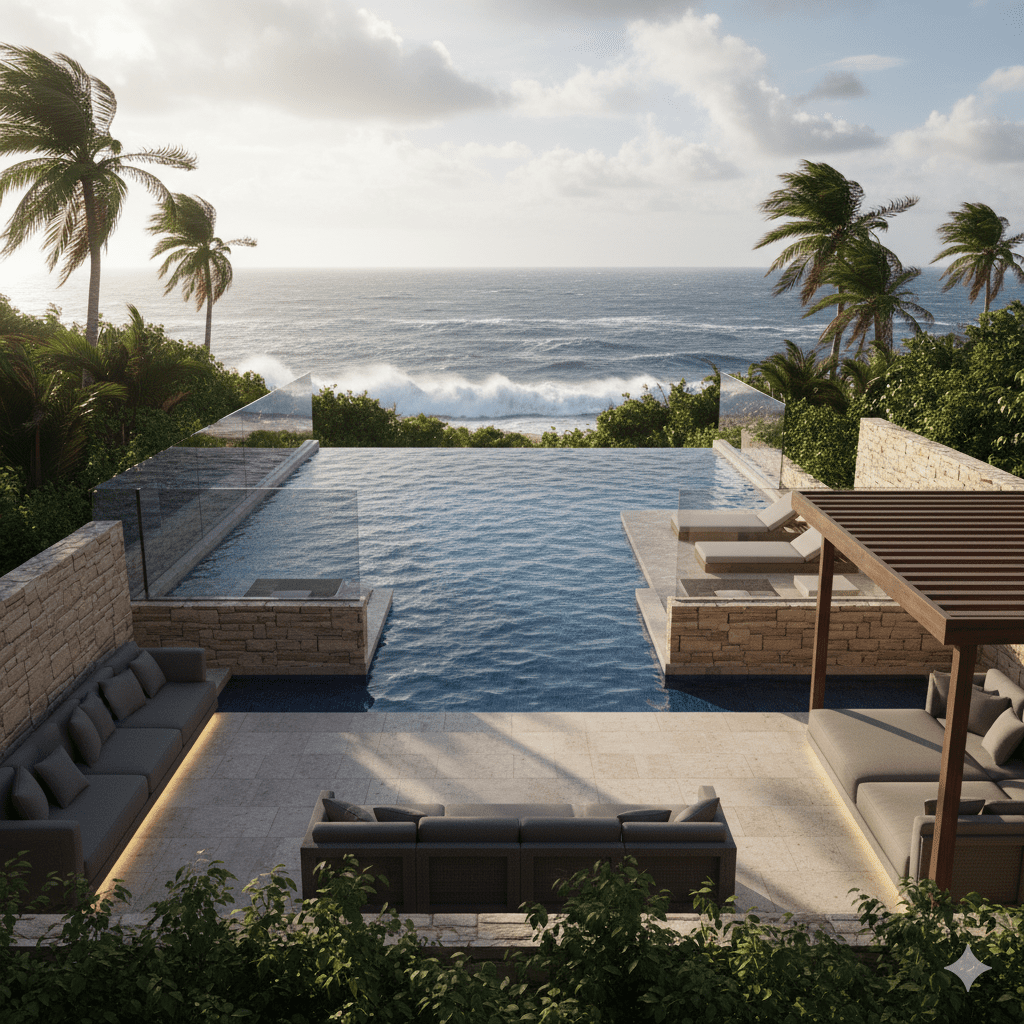
Designing Wind-Resistant Pool Areas for Coastal Homes
If you own a coastal home in Florida, your outdoor living space is one of your greatest assets, and one of your biggest vulnerabilities. Salt-laden breezes, tropical storms, and the ever-looming threat of hurricane season mean that a beautiful poolside retreat can turn into a liability overnight. That’s why wind-resistant pool design Florida homeowners rely on isn’t just a luxury upgrade; it’s a smart, long-term investment in safety and style.
Whether you’re building from scratch or retrofitting an existing pool area, thoughtful design decisions can make the difference between a space that survives storm after storm and one that requires expensive repairs every season. Here’s what you need to know.
Why Coastal Pool Design Demands a Different Approach
Florida’s coastal environment is uniquely challenging. The combination of high humidity, salt air corrosion, sandy soil, and wind speeds that can top 150+ mph during a major hurricane makes standard pool and patio design wholly inadequate. Structures, furniture, landscaping, and even the pool shell itself must be chosen with durability and wind performance in mind.
Beyond the structural risks, there’s an aesthetic and lifestyle consideration: coastal homeowners want to enjoy their pools year-round. A poorly designed pool area that requires hours of pre-storm prep, moving furniture, removing awnings, dismantling shade structures- quickly becomes a burden. The goal is a space that is both beautiful and resilient by default.
Hurricane-Proof Pool Features Worth the Investment
When it comes to hurricane-proof pool features, the pool shell itself is just the starting point. Here’s where smart coastal homeowners focus their attention:
Pool enclosures and screen rooms are among the most popular wind-mitigation strategies in Florida. A properly engineered aluminum screen enclosure, built to local Florida Building Code wind speed requirements, can withstand significant hurricane-force gusts while keeping debris, insects, and UV radiation out of your pool area. Look for enclosures rated to at least 140 mph wind resistance, especially in high-velocity hurricane zones (HVHZ).
Automatic pool covers are another game-changer. A motorized safety cover doesn’t just protect swimmers; it keeps debris out of the water during storms, reduces evaporation, and can even help prevent the pool from becoming a mosquito breeding ground after a storm passes. Look for covers with weighted edges and reinforced anchoring systems designed for coastal applications.
Nautical-grade hardware and fittings matter more than people realize. Standard stainless steel corrodes surprisingly fast in salt air environments. Upgrading to 316-grade marine stainless steel or powder-coated aluminum for ladders, handrails, lighting fixtures, and equipment covers extends the life of your pool system and reduces long-term maintenance costs dramatically.
Coastal Pool Landscaping: Beauty Meets Function
Coastal pool landscaping is where wind resilience and natural beauty meet. The right plant choices and layout decisions can significantly reduce wind speed around your pool area, providing a natural buffer that complements your structural wind barriers.
Native Florida plants are your best allies. Sea grapes (Coccoloba uvifera), sabal palms, muhly grass, and beach sunflowers are not only beautiful but naturally adapted to withstand salt spray, sandy soil, and coastal winds. Unlike exotic species, native plants rarely become projectiles in a storm because they flex rather than snap.
When selecting trees for your pool area, avoid species with weak wood, large root systems, or heavy fruit, these become major hazards in high winds. Instead, opt for native cabbage palms, which have a remarkable ability to bend dramatically without breaking, and plant them away from pool equipment and screen enclosures to minimize debris risk.
Layering your landscaping also helps. Ground cover plants closest to the pool, mid-height ornamental grasses in the middle zone, and taller windbreak species along the property perimeter create a graduated wind buffer that slows gusts before they reach your pool deck.
Wind Barriers for Pools: Structure and Style Combined
Wind barriers for pools don’t have to look utilitarian. Modern coastal design has embraced the need for wind protection and turned it into an opportunity for architectural beauty.
Concrete or masonry privacy walls are the gold standard for wind protection. A well-designed concrete block wall around your pool deck not only deflects wind but also provides privacy, reduces noise, and creates a sophisticated enclosure feel. They must be properly engineered with appropriate footings and reinforcement to resist wind uplift, but the investment pays dividends during every storm season.
Tempered glass panels have become increasingly popular in luxury coastal pool designs. Glass windbreaks offer an unobstructed view of the ocean or waterway while cutting wind speeds dramatically. They must be laminated safety glass with stainless steel or aluminum post systems designed for coastal environments.
Louvered aluminum pergolas represent another excellent solution. Modern motorized pergola systems allow homeowners to adjust louver angles to control sunlight and deflect wind while still enjoying the open-air feel. When storms approach, the louvers can be closed entirely, and the structure’s aluminum construction means no rust, rot, or warping over time.
Avoid canvas awnings, wooden pergolas, and lightweight vinyl structures in coastal wind zones; these are among the first casualties in a storm and can become dangerous projectiles.
Durable Outdoor Structures Florida Homeowners Should Prioritize
Choosing durable outdoor structures Florida conditions demand means thinking beyond aesthetics to materials science. Here’s a quick guide to the best choices for pool area structures:
- Aluminum is the clear winner for pergolas, furniture frames, and fencing. It doesn’t rust, is lightweight yet strong, and can be powder-coated in virtually any color to match your design vision.
- Concrete and fiber cement outperform wood for decking, coping, and wall construction. Both resist moisture, salt corrosion, and impact damage far better than untreated or even treated lumber.
- Porcelain or natural stone pavers for pool decking outshine concrete in terms of slip resistance, heat reflection, and durability. They won’t crack as readily as poured concrete during freeze-thaw cycles (yes, even Florida gets the occasional cold snap), and they’re easier to repair if damage does occur.
- Marine-grade outdoor furniture constructed from teak, powder-coated aluminum, or high-density polyethylene (HDPE), is built to withstand coastal conditions. Pair furniture with weighted or anchored bases to prevent wind displacement during storms.
Permitting and Code Compliance: Don’t Skip This Step
One of the most important aspects of coastal pool area design in Florida is ensuring full compliance with local building codes, particularly in counties and municipalities within HVHZ designations. Broward and Miami-Dade Counties, for example, have some of the most stringent wind load requirements in the nation. Structures that don’t meet code not only pose safety risks, but they can also complicate homeowner’s insurance claims after a storm.
Work with a licensed Florida contractor who specializes in coastal construction and is familiar with the specific wind speed requirements for your zip code. Pull the appropriate permits for enclosures, pergolas, electrical work, and gas lines. It’s a step that protects you legally, financially, and physically.
Final Thoughts
A well-designed coastal pool area is more than a backyard amenity; it’s an extension of your home and a reflection of how thoughtfully you’ve prepared for life on Florida’s coast. By integrating wind-resistant pool design, Florida professionals recommend investing in hurricane-proof pool features, choosing the right coastal pool landscaping, installing smart wind barriers for pools, and selecting durable outdoor structures that Florida’s climate demands, you create a space that serves you beautifully for decades, storm season and all.
The upfront investment in resilience is always less than the cost of repeated repairs. Design it right the first time, and your coastal pool area will be the envy of the neighborhood, and standing long after the next big storm has come and gone.

0 Comments