

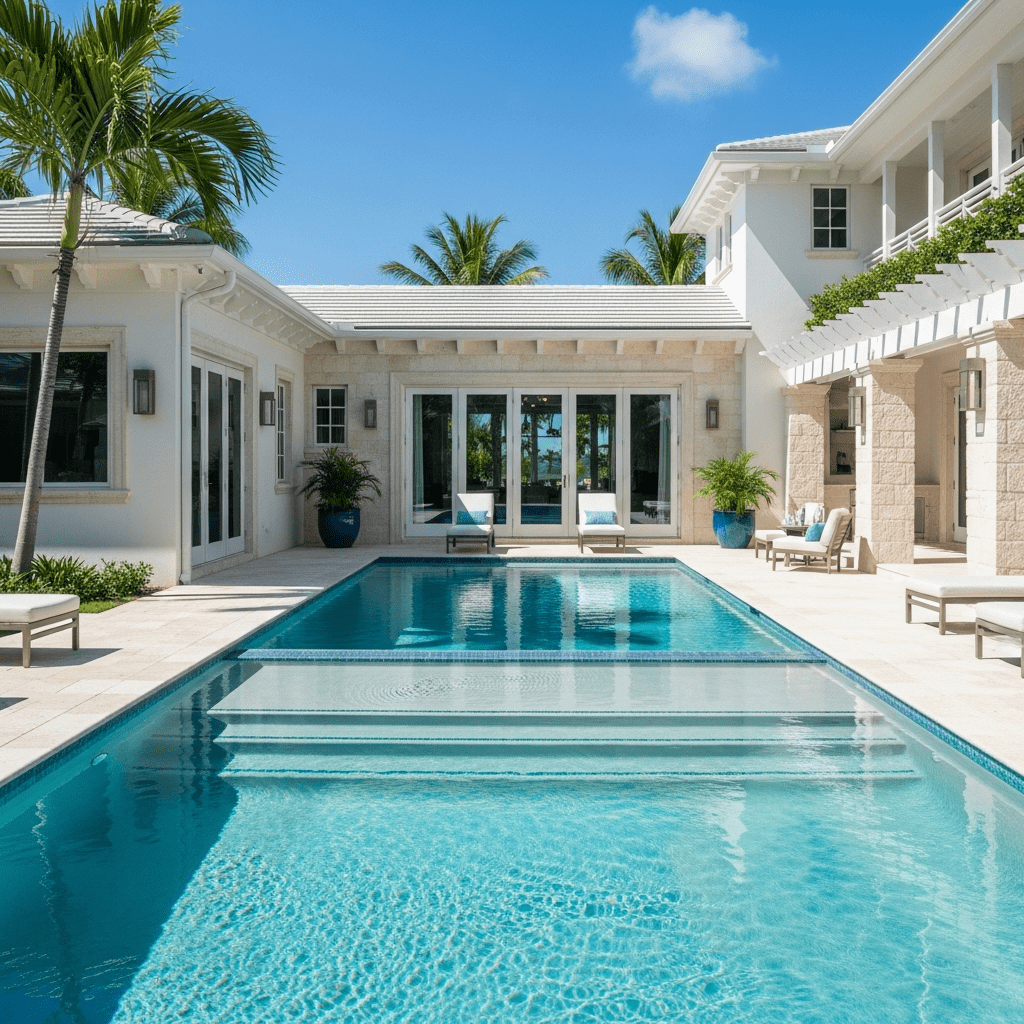
Designing Pools That Complement Naples’ Coastal Architecture
Naples isn’t just a place to put a pool; it’s a place where architecture, landscape, and the Gulf’s light all work together. Whether you’re restoring a Mediterranean Revival villa or building a sleek coastal-contemporary home, a thoughtfully designed pool can feel like a natural extension of the house rather than an afterthought. Below are practical design ideas and guiding principles to create pools that harmonize with Naples’ distinct coastal architecture and lifestyle.
Start with architectural DNA
The first rule of pool design is to listen to the house. Naples’ built environment ranges from Mediterranean Revival and Old-Florida cottages to contemporary coastal estates. Mediterranean Revival homes, characterized by stucco walls, terracotta or red tile roofs, arched openings, and wrought-iron details, call for pools that echo that classic, formal language. By contrast, coastal contemporary properties use clean lines, large expanses of glass, and minimal ornamentation, and their pools benefit from geometric, understated forms. Understanding the prevailing architectural style is the quickest way to choose proportion, materials, and ornament that feel “right.”
Match materials and finishes
A successful pool palette borrows from the home’s exterior materials. For Mediterranean and Old-Florida homes, consider natural stone or light-colored travertine decking and textured, matte finishes that echo stucco and tile roofs. Copper or bronze accents (drains, spouts, decorative grilles) can reference traditional wrought-ironwork without being literal. For coastal contemporary houses, polished plaster, honed stone, and clean porcelain pavers create the minimal look homeowners expect while resisting heat and salt exposure.
Inside the pool, tile selection strongly affects aesthetic and mood: a light shell or sand-colored pebble plaster warms the water’s tone for traditional homes; glass mosaic tiles or darker pebble finishes create the mirror-like, modern water planes favored by contemporary designs. Houzz and local design portfolios show how matching deck and coping materials to the home’s façade creates a seamless transition from house to water.
Let sightlines and indoor–outdoor flow lead the layout
Naples living is about view corridors, glimpses of lawn, garden, or the Gulf. Place the pool to reinforce those sightlines rather than block them. For waterfront or canal properties, consider narrow lap pools or negative-edge pools oriented parallel to the shoreline to preserve views while adding drama. For infill and courtyard-style lots, an L-shaped pool or a central reflecting pool can become a calming focal point that frames views from multiple rooms.
Equally important is the relationship between indoor living spaces and outdoor rooms. Large sliding or folding doors that open onto a covered loggia create opportunities for a pool to feel like an outdoor living room. Align pool edges, steps, or raised spas with architectural axes (a centerline, an arched doorway) so the water reads as part of the home’s geometry. Local builders often emphasize designing pools “to augment your existing architecture” rather than designing them in isolation.
Scale and proportion matter
Naples houses often convey a generous sense of scale; pools should follow suit. Too-small pools look tacked-on; too-large pools can dwarf a backyard. Use architectural cues, roof overhangs, patios, pergolas, and cabanas to determine pool dimensions. An easy rule: a pool’s longest dimension should respect the home’s strongest horizontal or vertical lines (for example, the length of a back façade or the span of a covered terrace). For narrow lots, a lap or channel pool provides functional swim space without overwhelming the yard.
For formal Mediterranean homes, consider classical proportions and symmetry, paired fountains, straight stair runs into the pool, and balustraded terraces. Contemporary homes can experiment with asymmetry, negative edges, and multi-level water planes. Recent Naples projects combine both approaches: a geometric pool next to a formal terrace or a freeform lagoon paired with a contemporary house for a relaxed, layered look.
Integrate landscape and native planting
A pool surrounded by lush, salt-tolerant planting reads as part of the coastal ecosystem. Use native and climate-appropriate species, seagrape, sea oats, clusia, coconut, and other palms, to provide texture, privacy, and windbreaking. Planting should be layered so that larger palms and canopy trees sit back, while lower shrubs and grasses soften pool edges and conceal equipment. Hardscape edges can be softened with climbing vines on trellises or potted palms to echo the tropical gardens common to Naples homes. Local design features in many projects intentionally blur the boundary between garden and pool to cultivate that resort-like feeling.
Use water features and lighting to enhance architecture
Water features are an opportunity to echo architectural details, arched wall scuppers to match arched windows, tiered fountains that step down like terraced roofs, or simple sheet waterfalls for modern facades. Lighting can be equally architectural: uplighting palm trunks and façade details, linear LED accents along pool edges to emphasize geometry, and warm recessed lights in covered terraces to create comfortable night-time interplay between house and water. Thoughtful illumination increases usability and dramatically improves how the pool “reads” from inside the house after dark.
Design for the climate and durability
Naples’ coastal climate brings sun, humidity, and salt air. Choose corrosion-resistant metals (stainless steel, powder-coated aluminum, or marine-grade fixtures) and specify pool equipment with saltwater compatibility if you plan to use salt systems. Proper drainage, non-slip decking, and covered mechanical rooms reduce maintenance headaches. Storm-readiness, raised equipment pads, protected plumbing runs, and resilient planting will help the pool withstand Gulf storms and make recovery easier. Local builders and pool pros emphasize designing with topography and climate in mind so pools aren’t just pretty, but practical.
Add lifestyle elements: cabanas, kitchens, and shade structures
A pool that complements architecture also supports how families use it. A Mediterranean estate might include a tile-roofed cabana with stucco finishes and an outdoor kitchen that matches the home. A modern coastal property may prefer a minimal pavilion with a flat roof, integrated storage, and sleek cabinetry. Shade is crucial: covered terraces, retractable awnings, or pergolas finished in the same material family as the house ensure comfort without breaking style.
Final thoughts: design with intent
Designing a pool for Naples is about more than style; it’s about context. When pool designers start by studying a home’s architectural language, proportions, materials, and the client’s lifestyle, the result is a waterscape that feels inevitable: as if it always belonged there. Whether you’re drawing from Mediterranean tradition or contemporary coastal minimalism, keep scale, materials, sightlines, and climate performance at the heart of decisions. The best Naples pools don’t compete with the architecture; they complete it.

0 Comments