

Designing Pools for Florida’s High Water Table Challenges
Florida’s year-round sunshine and tropical climate make backyard pools a natural extension of everyday life. But beneath the sandy surface of the Sunshine State lies one of the most complex geological environments for pool builders in the country. If you’re planning a pool in Florida, understanding the unique underground conditions isn’t optional; it’s essential. From pool construction high water table Florida considerations to managing hydrostatic pressure pools, successful pool design here demands specialized knowledge, engineering foresight, and the right materials.
Why Florida’s Ground Is Different
Florida sits atop a vast limestone shelf with one of the most active aquifer systems in the world, the Floridan Aquifer. This means groundwater levels are exceptionally high, often just a few feet below the surface, and in some coastal or low-lying areas, the water table can rise to within inches of the ground during the rainy season (June through September).
This reality creates a construction environment unlike most other states. In places like Central Florida, the Tampa Bay area, and South Florida, builders regularly encounter saturated soil before they’ve even excavated to the full pool depth. Without careful planning, these conditions can lead to serious long-term structural problems.
The Core Problem: Hydrostatic Pressure
At the heart of most groundwater pool issues is hydrostatic pressure, the force exerted by groundwater pushing upward against the bottom and sides of a pool shell. When a pool is drained for maintenance or repairs, this upward pressure can become powerful enough to literally lift the entire pool structure out of the ground, a phenomenon known as “pool pop” or hydrostatic uplift.
Even when a pool is filled, imbalanced pressure on the shell walls can cause cracking, bowing, or shifting over time. Hydrostatic pressure pools, those in high water table zones, require specific structural adaptations to resist these forces without compromising the integrity of the shell or the surrounding landscaping.
How Professional Builders Address Florida Soil Pool Construction
Experienced contractors who specialize in Florida soil pool construction know that the design phase is where battles are won or lost. Several key strategies are deployed to protect pools against the region’s unique underground forces.
1. Hydrostatic Relief Valves
One of the most critical tools in a Florida pool builder’s kit is the hydrostatic relief valve, a plumbing component installed at the bottom of the pool shell. When the pool is drained and groundwater pressure rises, the valve opens automatically to allow water to enter the shell in a controlled way, equalizing pressure and preventing the structure from being pushed upward.
Every properly constructed pool in a high water table area should have at least one of these valves. Some builders install multiple valves for added protection on larger structures.
2. Gunite and Shotcrete Shell Construction
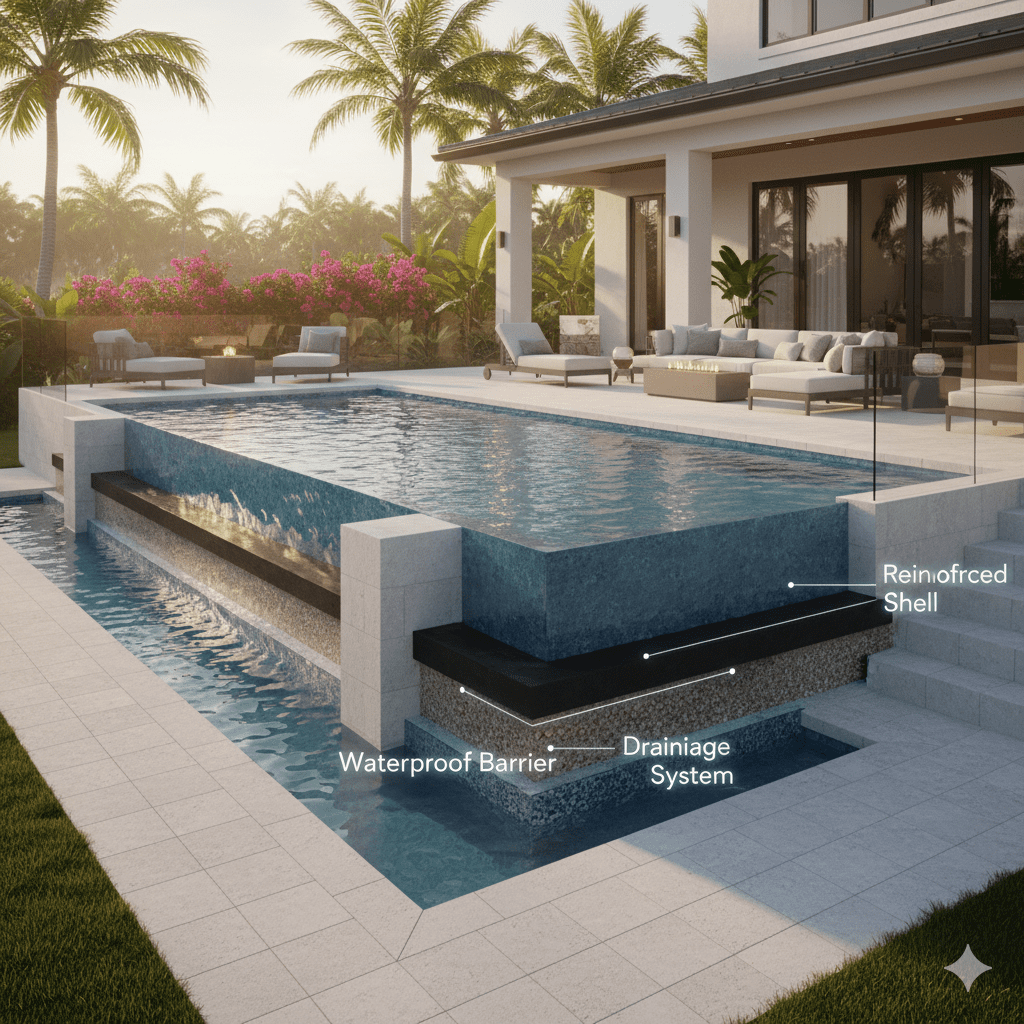
Standard vinyl liner pools are generally unsuitable for high water table environments. Instead, Florida builders favor gunite or shotcrete (pneumatically applied concrete), which creates a thick, rigid shell capable of resisting both internal water pressure and external soil and groundwater pressure. The shell’s structural integrity is further enhanced with steel rebar reinforcement designed specifically for the load calculations of that site.
3. Proper Grading and Site Drainage
Before a single shovel hits the ground, the site must be thoroughly evaluated for drainage patterns. Pool drainage solutions in Florida often involve reshaping the surrounding landscape to direct surface water away from the pool perimeter, preventing rainwater from saturating the immediate soil zone and adding to the groundwater load.
French drains, swales, and permeable decking materials are all tools that help manage water accumulation around the pool area. In some cases, sump pump systems are installed around the pool’s perimeter to actively lower the local water table during construction and ongoing operation.
4. Dewatering During Excavation
In highly saturated areas, builders must actively dewater the excavation site before and during construction. This involves installing temporary well points or submersible pumps to draw groundwater down to a manageable level, allowing the crew to work safely and pour the pool shell without it immediately filling with groundwater.
Skipping or rushing this step is one of the most common causes of early structural failure in Florida pools.
Pool Drainage Solutions That Work Long-Term
Beyond construction-phase management, ongoing pool drainage solutions are essential for a long-lasting structure. Florida pool owners should invest in:
- Automatic water level controllers that prevent accidental overfilling and reduce overflow into surrounding soil.
- Deck drainage channels that route rain and splash water away from the pool edge.
- Regular inspection of hydrostatic valves to ensure they haven’t become clogged or corroded over time.
- Perimeter drainage systems integrated into the patio and deck design.
These systems work together to manage the constant interaction between your pool and Florida’s water-rich underground environment.
Signs Your Pool Is Struggling With Water Table Issues
Even well-built pools can develop problems over time. Watch for these warning signs of groundwater pool issues:
- Cracking or bowing walls: Pressure imbalances can distort even reinforced shells.
- Popping or lifting: Visible rise in the pool shell, especially after draining.
- Persistent leaks: Water table intrusion or shell cracks allowing water to seep in or out.
- Deck heaving: Surrounding concrete or pavers shifting due to groundwater movement beneath them.
- Staining and mineral deposits: High groundwater mineral content leeching through shell cracks.
If you notice any of these symptoms, consult a licensed pool engineer or structural inspector before the problem worsens.
Choosing the Right Builder
Not all pool contractors are equally prepared for Florida’s underground challenges. When selecting a builder, ask specifically about their experience with pool construction high water table Florida conditions. Request to see past projects in similar geological zones, and ask about their dewatering process, shell specifications, and valve installation standards.
A reputable builder will also pull the necessary permits and conduct soil borings or geotechnical surveys before finalizing the design, steps that are non-negotiable in high water table areas.
Final Thoughts
Building a pool in Florida is an investment that can deliver decades of enjoyment, but only when it’s designed and constructed to respect the unique forces at work beneath the surface. From managing hydrostatic pressure pools and selecting the right shell materials, to implementing smart pool drainage solutions and understanding the nuances of Florida soil pool construction, every decision matters.
The good news? Florida has some of the most experienced pool builders in the world, many of whom have developed refined techniques specifically for these conditions. Work with the right team, ask the right questions, and your pool will stand strong, no matter what the water table does.

0 Comments