

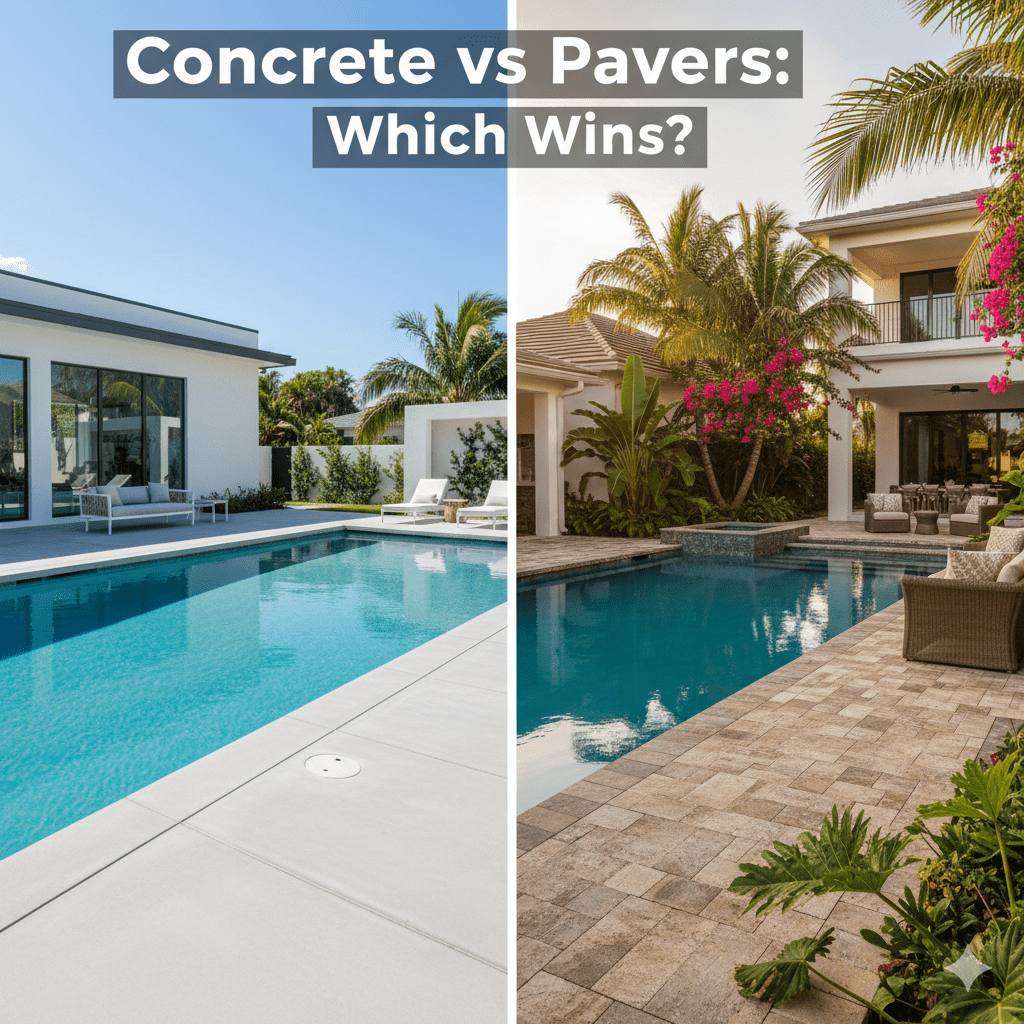
Concrete vs Paver Pool Decks: Which Is Better for Florida Homes?
Your pool deck does more than just look pretty, it takes a daily beating from scorching sun, salt air, chlorine splashes, and barefoot traffic all year long. For Florida homeowners weighing pool deck materials Florida contractors commonly recommend, the debate almost always comes down to two heavyweights: poured concrete and interlocking pavers. Both have earned their place in the Sunshine State’s backyard landscape, but they perform very differently once the temperatures start climbing past 90°F. This guide breaks down everything you need to know so you can make the smartest investment for your home.
Understanding Florida’s Unique Climate Demands
Florida isn’t just “warm”, it’s a relentless combination of UV radiation, high humidity, tropical storms, and daily temperature swings. Any pool deck material you choose must withstand all of it simultaneously. For homeowners searching for the best pool decking for hot climate conditions, this eliminates a surprising number of popular options right off the bat.
Thermal expansion is a silent destroyer of pool decks. When a surface heats up dramatically throughout the day, it expands; when it cools at night, it contracts. Over hundreds of cycles, this movement cracks, chips, and heaves materials that weren’t engineered to flex. Florida’s freeze-free winters actually help here compared to northern states, but the sheer intensity of summer heat more than compensates. A pool deck in Tampa or Jacksonville can exceed 140°F surface temperature on a clear August afternoon, hot enough to blister bare feet in seconds.
This is the backdrop against which both concrete and pavers must be judged.
Concrete Pool Decks: Strengths and Shortcomings
The Case For Concrete
Poured and stamped concrete remains one of the most widely installed pool deck surfaces in Florida, and for good reason. Upfront installation costs are typically lower, with basic broom-finished concrete running significantly less per square foot than a comparable paver installation. The seamless surface creates a clean, modern look that suits contemporary home designs, and when sealed properly, it resists staining from pool chemicals.
Stamped concrete has dramatically improved the material’s aesthetic ceiling. Skilled contractors can mimic the look of slate, travertine, cobblestone, or wood planking at a fraction of the cost of the real thing. This makes it an accessible entry point for homeowners drawn to luxury pool deck ideas without the premium price tag of natural stone.
The Case Against Concrete
Despite its upfront value, concrete carries a serious long-term liability: cracking. Florida’s shifting, sandy soils provide an unstable substrate, and without proper reinforcement and expansion joints, even well-installed concrete will develop cracks within five to ten years. Once cracking begins, water infiltrates, accelerating erosion beneath the slab and compounding the structural damage.
Concrete also absorbs and retains heat at a higher rate than pavers. A plain grey concrete deck in direct Florida sun is genuinely painful to walk on without sandals. While lighter-colored or textured finishes help, they don’t eliminate the issue. Resealing is required every two to three years to maintain both appearance and the slip-resistant pool deck Florida homeowners depend on, and over time, the cost of maintenance begins to erode concrete’s initial price advantage.
Paver Pool Decks: Why They Dominate Florida’s Luxury Market
The Case For Pavers
The paver vs concrete pool deck conversation has shifted noticeably in Florida over the past decade, and pavers are winning it. The primary reason is structural flexibility. Because pavers are individual units set on a compacted sand or gravel base, they can move slightly with the soil without cracking. When a problem does develop, a sunken paver, a tree root pushing through, repairs are surgical: individual pavers are lifted and reset rather than the entire surface being jackhammered and repoured.
Natural travertine and tumbled limestone pavers have become the gold standard for luxury pool deck ideas in Florida. Travertine in particular has earned its reputation for a reason: it stays noticeably cooler underfoot than concrete because its porous surface dissipates heat rather than storing it. It’s also naturally slip-resistant when left with its factory finish, a critical safety feature for any high-traffic wet surface.
Concrete pavers offer a middle ground: engineered in specific shapes and colors, more uniform than natural stone, and more affordable while still delivering the structural benefits of an interlocking system. For homeowners who love a clean, geometric aesthetic, concrete pavers deliver excellent results.
The Case Against Pavers
Pavers carry a higher upfront cost, typically 20 to 40 percent more than a comparable concrete installation, depending on the material selected. Natural travertine commands a premium that puts it out of reach for some budgets. Pavers also require periodic joint re-sanding to prevent weeds and to maintain stability, and in areas with heavy organic debris, the textured surface can trap dirt and require more frequent cleaning than a smooth sealed concrete deck.
Slip Resistance: A Non-Negotiable Factor in Florida
Florida’s pool accident statistics make one thing abundantly clear: slip resistance isn’t optional. Wet feet on a slick surface around a hardscape edge or pool coping represent genuine injury risk, especially for children and older adults.
For a slip-resistant pool deck Florida homeowners can trust, both materials can meet the standard, but they require different approaches. Concrete should be finished with a broom texture or exposed aggregate treatment rather than a smooth trowel finish. Sealed concrete can become dangerously slick if the wrong sealer is applied or if the sealer breaks down. Pavers, especially natural travertine with a tumbled or brushed finish, maintain reliable texture even when wet and are generally considered the safer option without additional treatments.
Long-Term Value: The Real Cost Comparison
When evaluating pool deck materials Florida homeowners should look beyond installation day. Factor in resealing cycles, crack repairs, potential full resurfacing, and curb appeal impact on home resale value. Across a 15-to-20-year horizon, the total cost of ownership for a concrete deck typically approaches, and often exceeds, the cost of a paver installation when all maintenance is accounted for.
Pavers also add measurable value to Florida homes. A well-designed travertine pool deck photographs beautifully and resonates strongly with buyers in the state’s competitive real estate market. If resale is a consideration, pavers offer a clearer return on investment.
So, Which Should You Choose?
There’s no single wrong answer, but Florida’s climate does tip the scales. Here’s a quick summary to guide your decision:
- Choose concrete if: your budget is constrained, you prefer a seamless look, and you’re committed to regular maintenance.
- Choose pavers if: you want a low-maintenance, durable surface that stays cooler underfoot, handles Florida’s soil movement gracefully, and elevates your home’s aesthetic for the long term.
- Choose natural travertine pavers if: you’re aiming for luxury pool deck ideas that combine effortless elegance with practical, climate-specific performance, this is the choice most Florida pool designers recommend without hesitation.
The Bottom Line
Florida demands more from a pool deck than virtually any other state in the country. The combination of heat, humidity, UV exposure, and dynamic soil conditions means that the material you choose will either reward or frustrate you for decades. While concrete remains a serviceable option with the right finishing and maintenance routine, pavers, particularly natural travertine, deliver the heat resistance, structural resilience, and visual sophistication that Florida’s outdoor lifestyle calls for.
When evaluating pool deck materials, Florida professionals consistently steer their clients toward solutions that balance beauty with real-world durability. In most cases, that recommendation lands on pavers. Consult with a licensed Florida pool deck contractor to assess your specific property, soil type, and design goals. The right surface is out there, and it’ll transform your backyard for years to come.

0 Comments