

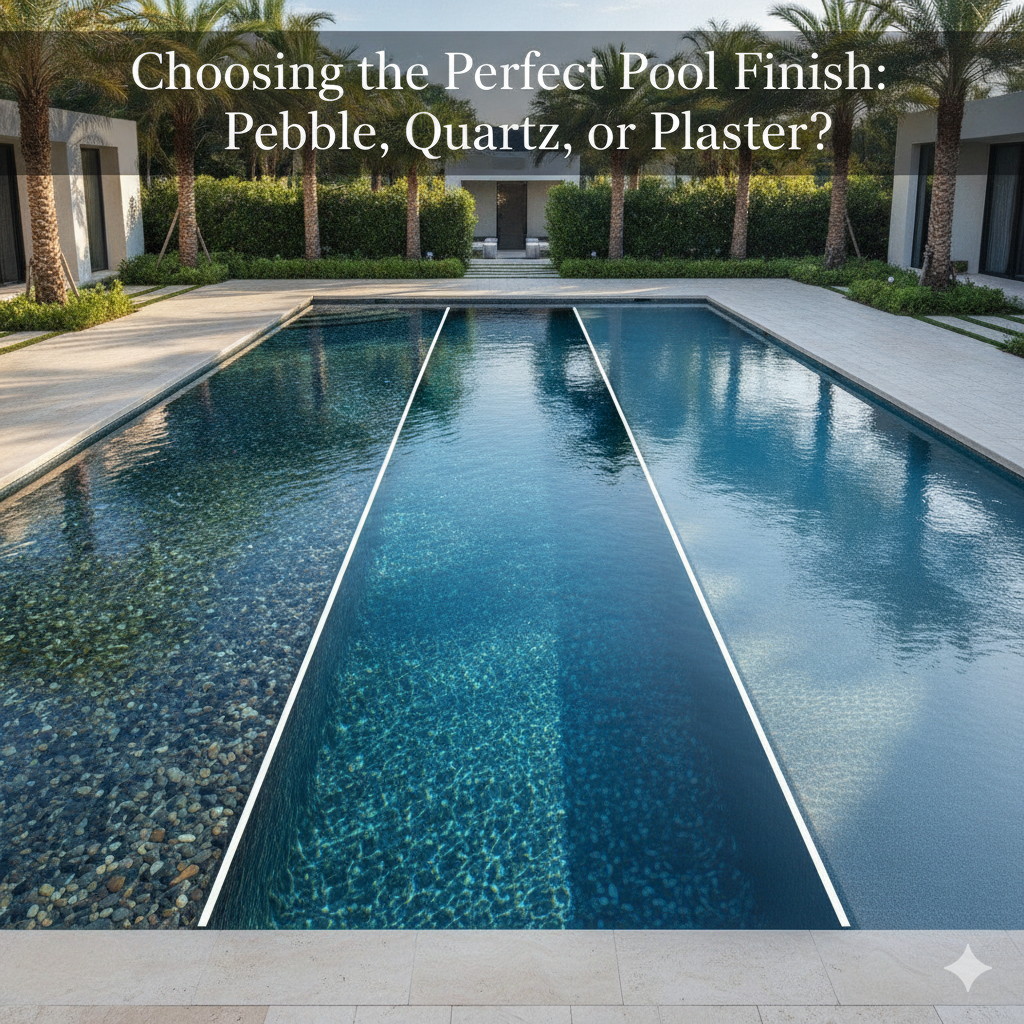
Choosing the Perfect Pool Finish: Pebble, Quartz, or Plaster?
Your pool is the centerpiece of your backyard, a place for summer memories, late-night swims, and weekend entertaining. But once the shell is built and the water starts flowing, one question lingers longer than most homeowners expect: which pool finish options are actually worth your investment?
The finish you choose doesn’t just affect how your pool looks. It determines how it feels underfoot, how long it lasts, how much maintenance it demands, and ultimately, how much it costs you over time. Whether you’re building a brand-new pool or renovating an aging one, understanding the difference between pebble, quartz, and plaster finishes is the first step toward making a decision you won’t regret.
What Is a Pool Finish, Exactly?
A pool finish is the final interior coating applied to the gunite or shotcrete shell of your pool. It’s the surface your feet touch, the layer that holds the water, and the texture that defines your pool’s color and sheen. Pool surface materials vary widely in composition, durability, cost, and aesthetics, and each has a devoted following among pool professionals and homeowners alike.
Let’s break down the three most popular options.
Classic Plaster: The Traditional Choice
Plaster has been the standard pool finish for decades, and it remains one of the most widely used pool surface materials on the market. Made from a mixture of white cement, marble dust, and water, plaster is applied in a smooth coat that gives pools their iconic bright-white appearance.
The appeal: Plaster is the most affordable option upfront, making it attractive for budget-conscious homeowners. It’s easy to apply, readily available, and creates a clean, classic look that complements almost any backyard design.
The drawbacks: Plaster is the least durable of the three main finish types. It typically lasts 7 to 12 years before it begins to show its age through staining, etching, and rough patches. Plaster is also porous, which means it absorbs minerals and algae more readily, leading to more frequent chemical treatments and scrubbing. If you’re sensitive to rough surfaces, you may find a worn plaster pool uncomfortable on bare feet.
For homeowners who plan to resurface on a regular cycle or are working within a tighter budget, plaster is a functional and time-tested starting point. However, if longevity and luxury are priorities, the other pool finish options deserve serious consideration.
Quartz Pool Finish: The Balanced Middle Ground
Sitting comfortably between plaster and pebble on both the price and performance scales, quartz pool finish has become increasingly popular in recent years, and for good reason.
A quartz finish blends white cement with crushed quartz aggregate, creating a surface that’s harder, denser, and more stain-resistant than standard plaster. The quartz crystals give the surface a subtle sparkle and a slightly smoother texture than pebble finishes, while still offering significantly better durability than plain plaster.
Why homeowners love it: A quality quartz pool finish typically lasts 12 to 20 years with proper care. It resists etching and staining better than plaster, holds color more consistently over time, and is available in a wide array of hues, from crisp whites and soft blues to deep charcoals and warm beiges. The surface is also gentler on feet and skin compared to exposed aggregate options.
Things to consider: Quartz finishes cost more than plaster, generally ranging from $5,000 to $10,000 more for an average-sized pool. Some homeowners also find that quartz can develop calcium scaling if water chemistry isn’t carefully maintained. Still, for most residential pools, quartz strikes an ideal balance between affordability, aesthetics, and longevity.
If you’re looking for a dependable upgrade from plaster without fully committing to a premium price point, quartz is a compelling choice.
Pebble Finish Pools: The Premium Experience
When it comes to pebble finish pools, you’re entering the realm of true luxury. Pebble finishes, popularized by brands like Pebble Tec and PebbleSheen, use a blend of small river pebbles, glass beads, or crushed stone set into a cement base to create a richly textured, naturally beautiful surface.
The result is unlike anything else in the pool industry. Pebble finishes create stunning depth and visual complexity, with colors that shift and shimmer as sunlight plays across the water. Each pool looks genuinely one-of-a-kind.
Durability is where pebble truly shines: A properly installed pebble finish can last 20 to 30 years, often outlasting the plumbing and equipment of the pool itself. The hardness of the aggregate makes it highly resistant to chemical erosion, staining, and wear. Many luxury pools and high-end resort installations rely on pebble finishes precisely because of this longevity.
The trade-offs: Pebble is the most expensive option, with premium finishes adding $10,000 to $20,000 or more to the total cost of a pool project. The textured surface can also feel rough on sensitive feet, though smoother pebble blends have been developed to address this concern. Installation requires a skilled crew, and touch-up repairs can be more complex than with smoother finishes.
For homeowners investing in luxury pools, those designed for long-term enjoyment, high resale value, and genuine curb appeal, pebble is the gold standard.
How to Choose the Right Finish for Your Pool
Here’s a simple way to frame the decision:
- Choose plaster if you’re working with a limited budget or planning a short-term renovation before a larger remodel.
- Choose quartz if you want a durable, beautiful finish at a reasonable upgrade cost and plan to keep your pool for 15+ years.
- Choose pebble if you’re building or renovating with a long-term vision, prioritize aesthetics, and want the most durable and visually striking pool finish options available.
Also consider your lifestyle. Families with young children may prefer smoother surfaces. Homeowners in areas with hard water may benefit from the chemical resistance of quartz or pebble. Those building luxury pools for entertaining or vacation rentals will find that pebble finishes command attention, and often, higher property valuations.
Final Thoughts
The right pool finish isn’t just a cosmetic choice, it’s a long-term investment in comfort, maintenance, and enjoyment. Whether you’re drawn to the affordability of plaster, the balance of quartz pool finish, or the breathtaking durability of pebble finish pools, understanding your priorities will guide you toward the right decision.
Take the time to visit showrooms, request material samples, and speak with a certified pool contractor who can assess your specific pool size, location, and usage. The perfect pool finish is out there, and once you find it, your backyard will never look the same.

0 Comments