

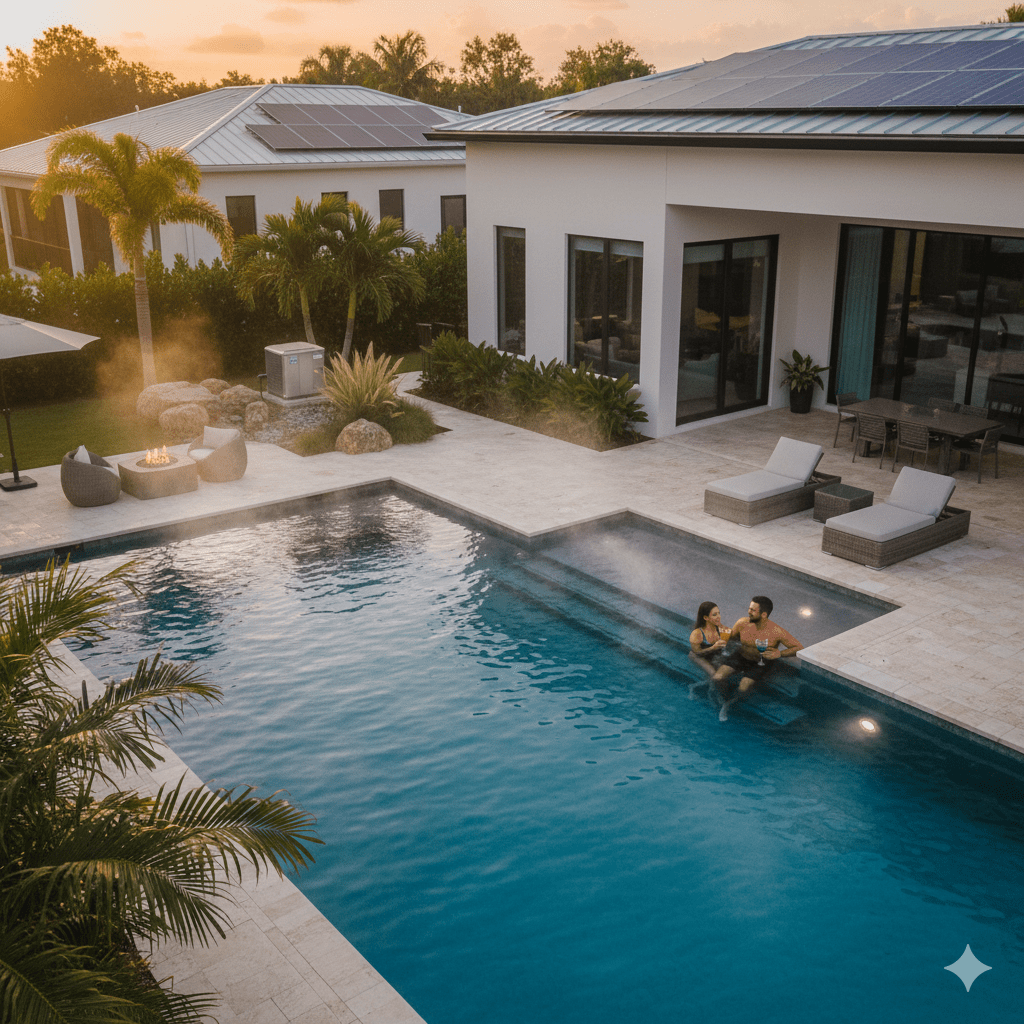
Best Pool Heating Options for Year-Round Swimming in Florida
Florida may be the Sunshine State, but if you’ve ever jumped into your backyard pool on a January morning, you know the water can still feel shockingly cold. Nighttime temperatures regularly dip into the 50s across Central and North Florida from November through March, making pool heating a worthwhile investment for homeowners who want to maximize their swim season. With the right pool heating systems Florida homeowners can enjoy comfortable water temperatures 365 days a year, without breaking the bank.
Whether you’re building a new pool or upgrading an existing one, this guide breaks down the best heating options available, what they cost, and how to choose the system that fits your lifestyle and budget.
Why Pool Heating Makes Sense in Florida
Most people assume Florida’s warm climate eliminates the need for pool heating. In South Florida (Miami, Fort Lauderdale, Naples), that’s largely true for much of the year. But in Central Florida (Orlando, Tampa) and the northern regions (Jacksonville, Gainesville, Tallahassee), water temperatures can drop below 65°F, uncomfortably cold for most swimmers. Even in South Florida, a pool heater extends comfortable swim hours into the cooler evenings and winter months.
The bottom line: pool heating is one of the most practical upgrades a Florida homeowner can make.
1. Solar Pool Heaters, The Florida Favorite
When it comes to a solar pool heater Florida is practically purpose-built for. The state receives an average of 237 sunny days per year, making solar the most cost-effective long-term heating solution available.
How it works: Solar collectors (flat panels or tubes) are mounted on your roof or a nearby structure. Pool water is pumped through these collectors, warmed by the sun, and returned to the pool. A simple valve system allows you to bypass the collectors on warm days.
Pros:
- Lowest operating cost of any system (essentially free energy)
- Long lifespan, quality systems last 15–20 years
- Low maintenance requirements
- Eligible for federal and Florida state tax incentives
Cons:
- Higher upfront installation cost ($2,500–$7,500)
- Dependent on sunlight, less effective on overcast days
- May not raise water temperature as quickly as gas or heat pumps
For Florida homeowners not in a rush to heat the pool overnight, solar is often the smartest long-term investment.
2. Gas vs. Electric Pool Heater, A Common Dilemma
When homeowners want rapid, reliable heating regardless of weather, the debate usually comes down to gas vs electric pool heater systems. Both have clear advantages depending on usage patterns.
Gas Pool Heaters
Gas heaters (natural gas or propane) are the fastest way to heat a pool. They can raise water temperature by several degrees per hour, making them ideal for pools used occasionally or seasonally.
Best for: Vacation homes, pools used a few times a week, or when you need to heat quickly for a party or weekend swim.
Cost: $1,500–$3,500 to purchase and install. Operating costs can run $300–$500/month in heavy use, making them expensive for daily heating.
Electric Resistance Heaters
Electric resistance heaters work similarly to a home water heater, passing water over a heated element. They’re affordable to purchase but costly to operate.
Best for: Small spas or above-ground pools where the volume of water is low.
Cost: $500–$1,500 to install, but monthly electricity costs can exceed $500 for large pools.
For most Florida families using their pool regularly, neither gas nor electric resistance heating is the most economical choice for year-round use. That’s where heat pumps come in.
3. Heat Pump Pool Systems, The Smart Middle Ground
A heat pump pool system is the sweet spot for Florida homeowners who want efficient, consistent heating without the high monthly costs of gas or electric resistance. Heat pumps don’t generate heat, they extract it from the surrounding air and transfer it to the pool water, making them extraordinarily energy-efficient.
How it works: A fan draws in ambient air, which passes over an evaporator coil. The refrigerant inside absorbs the heat, compresses it, and transfers it to the pool water via a heat exchanger. Even when the air temperature drops to 50°F, a heat pump can effectively warm your pool.
Pros:
- 5x–6x more energy-efficient than gas heaters
- Low monthly operating costs ($50–$150/month)
- Long lifespan, 10–15 years with proper maintenance
- Consistent, reliable performance
Cons:
- Higher upfront cost ($2,000–$5,000)
- Slower to heat a cold pool compared to gas
- Efficiency drops slightly in colder temperatures
For year-round pool use in Florida, a heat pump is often the most practical and economical choice outside of solar.
4. The Cost of Heating a Pool in Florida
Understanding the cost of heating pool Florida over the long term helps you make a smarter purchasing decision. Here’s a quick comparison:
| Heating System | Installation Cost | Monthly Operating Cost | Best For |
| Solar | $2,500–$7,500 | $0–$20 | Daily year-round use |
| Heat Pump | $2,000–$5,000 | $50–$150 | Year-round frequent use |
| Gas | $1,500–$3,500 | $200–$500+ | Occasional/fast heating |
| Electric Resistance | $500–$1,500 | $400–$600+ | Small pools/spas |
Pro tip: Many Florida homeowners combine a solar heater with a heat pump backup. Solar handles the majority of heating in sunny weather, while the heat pump kicks in during cloudy stretches or cooler months. This hybrid approach offers the lowest possible annual operating cost with reliable performance.
Choosing the Right System for Your Home
The best pool heating option depends on three key factors: how often you swim, your budget, and your location within Florida.
- Daily swimmers in Central/North Florida: A heat pump or solar + heat pump hybrid is the clear winner.
- Seasonal or occasional swimmers: Gas is convenient and fast.
- South Florida homeowners: Solar alone may be sufficient for most of the year.
- Eco-conscious homeowners: Solar offers the lowest carbon footprint and qualifies for renewable energy tax credits.
Final Thoughts
Florida’s climate gives you a head start on year-round swimming, and the right pool heating system closes the gap entirely. Whether you choose the sun-powered efficiency of a solar pool heater, the rapid warmth of gas, or the balanced performance of a heat pump pool system, investing in pool heating transforms your backyard into a true four-season retreat.
Before making your final decision, get quotes from at least two or three licensed Florida pool heating contractors. They can assess your pool size, roof orientation for solar, and local utility rates to recommend the most cost-effective solution for your specific situation.

0 Comments
Trackbacks/Pingbacks