
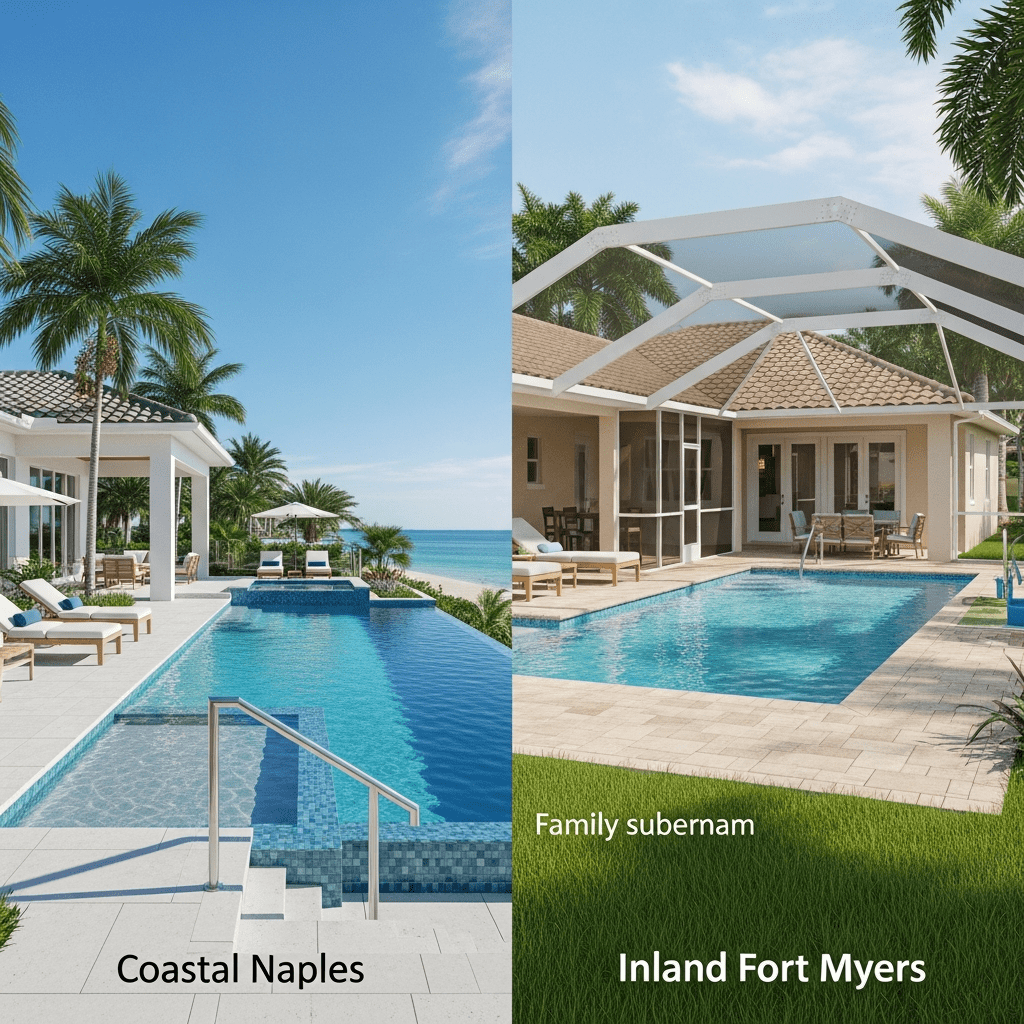
What Makes Pool Design in Coastal Naples Different from Inland Fort Myers Homes
Naples and Fort Myers sit only a short drive apart on Florida’s Gulf Coast, but when it comes to pool design, the differences between coastal Naples homes and inland Fort Myers residences reveal a surprising amount of nuance. From salt-spray resilience to site orientation, homeowners and designers must account for climate, architecture, neighborhood character, and lifestyle. Below, I break down the key factors that shape pool design in these two nearby, yet distinct, parts of Southwest Florida.
1. Exposure & Materials: Salt Air vs. Sheltered Conditions
Coastal Naples pools face direct exposure to salt air and higher humidity. That means materials must be chosen for long-term corrosion resistance: marine-grade stainless steel for railings and fixtures, salt-tolerant pool equipment, ceramic or porcelain tile instead of softer natural stone in exposed locations, and specialist coatings for metal coping. Pumps and heaters need housings and corrosion-resistant components.
Inland Fort Myers homes, particularly those away from tidal influence, enjoy milder exposure. While humidity and occasional storm-driven salt can still be a concern, designers can often choose a wider palette of finishes and metals without the same accelerated maintenance schedule. This flexibility lowers replacement and upkeep costs, and allows for a broader range of aesthetic choices like raw corten steel accents or softer, textured stone finishes that would weather poorly on the shoreline.
2. Wind, Storms, and Hurricane Preparedness
Both cities must design for hurricanes, but coastal Naples properties are often first in the line of storm surge and high winds. Pool designers on the coast prioritize solutions that limit flood damage and reduce debris accumulation: elevated equipment pads, flood-resistant pool pumps, easily removable or lockable screens, and pool-edge designs that can be quickly drained or covered.
Inland Fort Myers homes generally face slightly reduced storm-surge risk, enabling designs that emphasize lower profiles and integrated landscaping without as many protective mitigation measures. That said, standard hurricane-ready practices, reinforcing pool cages, securing outdoor furniture, and planning for rapid chemical stabilization after heavy rains, remain central in both locations.
3. Orientation & View Framing
Coastal Naples pools often have the luxury (and challenge) of spectacular water or sunset views. Designers prioritize framing those vistas: negative-edge (infinity) pools to merge the pool visually with the Gulf, glass railings, elevated terraces, and minimal barriers that keep sightlines open. Orientation also matters to capture sea breezes and dramatic evening light, so lanais and alfresco dining areas are positioned to maximize comfort without blocking the view.
Inland Fort Myers pools focus more on creating private oasis spaces. Landscaping, hedges, and strategic elevation changes are used to craft secluded retreats. While many inland homes still enjoy nice views, lakes, golf courses, or wetlands, the focus is often on creating immersive garden experiences, cabana-style backyard rooms, and swim-up bars or play zones that emphasize family use and entertainment.
4. Style Language: Coastal Chic vs. Tropical Retreat
Aesthetic trends differ by context. Coastal Naples design tends toward refined, contemporary coastal aesthetics: clean lines, light palettes, polished stone, and understated luxury that complements seaside estates. Materials and furnishings favor neutral, sun-faded tones that feel elegant and enduring.
Fort Myers inland homes often lean into a more relaxed tropical or resort-style language, lush plantings, colorful mosaics, bold tile accents, and playful water features. This approach tends to be more eclectic and family-friendly, with emphasis on shade structures, lounge beaches, and integrated outdoor kitchens.
5. Landscaping & Plant Selection
Planting choices must account for salt tolerance and wind exposure on the Naples coast. Designers select hardy, salt-tolerant species (palm varieties, sea grape, and certain ornamental grasses) and use windbreaks to shield pool areas. Soil often requires amendment for drainage and root management where sandy coastal soils prevail.
Inland Fort Myers provides more options: a wider palette of tropical ornamentals, denser shrubs, and shade trees can be used without immediate concerns about salt burn. Designers can create layered landscapes with shade canopies and pergolas that cool the pool area more effectively, which is popular for family homes.
6. Water Management & Sustainability
Coastal properties often prioritize water management strategies that resist saltwater intrusion and limit chemical imbalances caused by occasional tidal or stormwater mix. Saltwater chlorination systems are popular in both markets, but coastal installations require heavy-duty equipment and more frequent monitoring.
Inland Fort Myers designs can more easily integrate rainwater harvesting for landscape irrigation and choose natural filtration elements, such as planted biofilters, without as much concern for seawater contamination. Both markets, however, are seeing increased interest in water-efficient technologies: variable-speed pumps, solar heating, automated covers to reduce evaporation, and smart monitoring systems.
7. Pool Enclosures & Screen Cages
Screen enclosures are common across Southwest Florida, but coastal Naples properties sometimes choose open, cage-free layouts to preserve panoramic views. Where enclosures are used, they’re engineered with hurricane-grade framing and minimal visual impact.
Inland Fort Myers frequently uses full-screen cages to keep mosquitoes, debris, and leaves away, helping maintain cleaner water and extending the usable outdoor season. Cages also allow for ceiling fans, lighting, and integrated heaters with less exposure to corrosive elements.
8. Neighborhood, Regulations & Homeowner Expectations
Naples is known for high-end coastal neighborhoods where clients often expect bespoke, architect-driven pool projects with premium finishes and seamless indoor-outdoor transitions. Local covenants and FEMA flood maps influence allowable pool elevations and equipment locations.
Fort Myers offers a broader mix of lot sizes and budgets, from luxury inland estates to modest family yards. Designers need to balance cost, ROI, and durability. Local permitting, HOA rules, and setback requirements still shape the build, but budget and family-use priorities often have greater influence than coastal view preservation.
9. Maintenance & Long-Term Costs
Maintenance regimes differ. Coastal homeowners should anticipate more frequent checks for corrosion, salt accumulation, and surface wear. Routine flushing of equipment housings, annual inspections for metal fittings, and protective sealants on stone are common.
Inland Fort Myers residents can expect somewhat lower corrosion-related maintenance, but may invest more in landscaping cleanup (leaf and debris removal) and irrigation integration. Choosing the right filtration and automation systems can substantially reduce both labor and chemical costs in either location.
Conclusion: Design with Place in Mind
At first glance, Naples and Fort Myers may seem similar; both soak in Gulf sunsets and warm weather, but the best pool projects are those that respond to their specific setting. Coastal Naples designs prioritize view framing, corrosion-resistant materials, and flood-ready systems; inland Fort Myers projects emphasize privacy, lush landscaping, and family-friendly features. Understanding exposure, neighborhood character, and homeowners’ lifestyles ensures a pool that’s beautiful, durable, and perfectly suited to its place.
If you’re planning a pool in either area, start by asking: what do I want to see from my waterline, the open horizon, or a private garden? That answer will shape everything from material choices to maintenance plans, and help you create a backyard that truly belongs to the Florida landscape.
0 Comments