
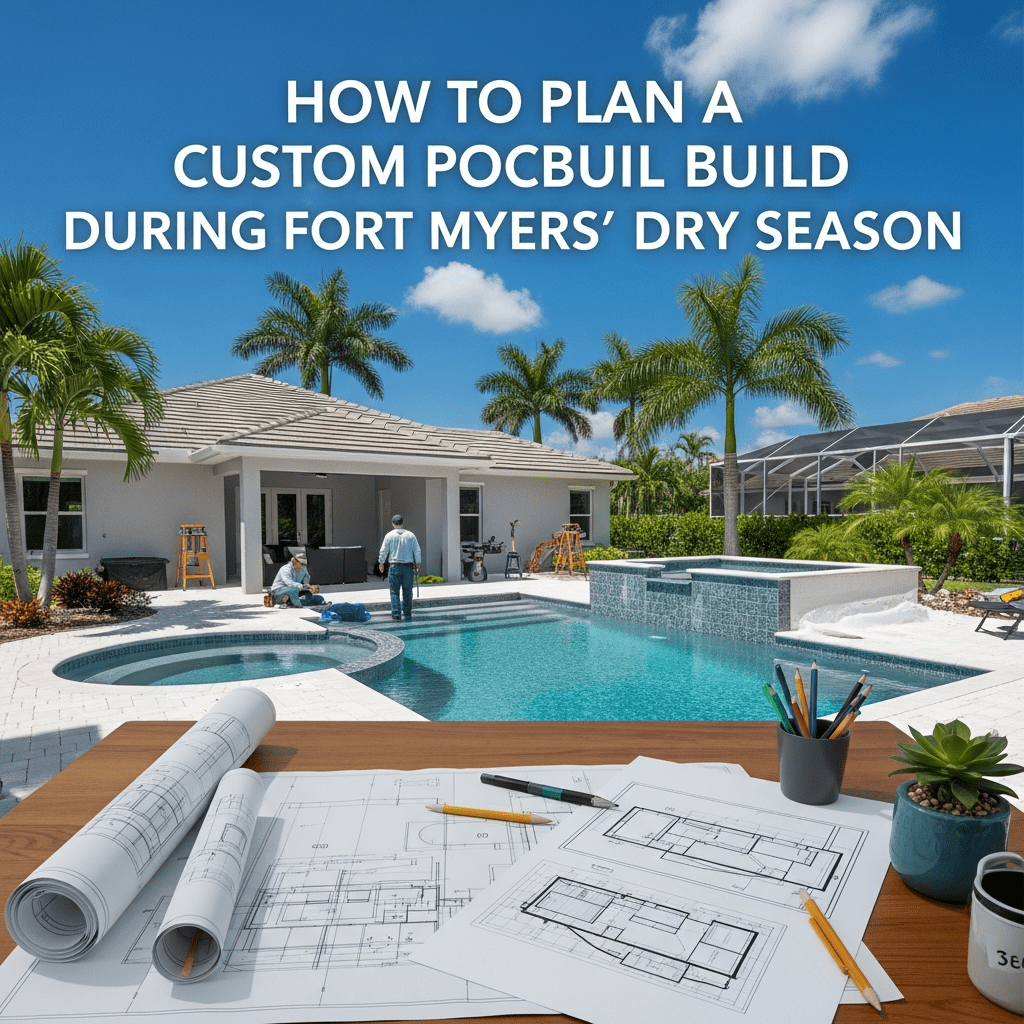
How to Plan a Custom Pool Build During Fort Myers’ Dry Season
Building a custom pool is exciting, and if you live in Fort Myers, timing your project for the dry season gives you real advantages. Fort Myers’ drier months typically run from early October through late May, which brings fewer wet days and more predictable site conditions for excavation, concrete work, and landscaping. Planning carefully during that window can speed construction, reduce weather-related delays, and often lower costs.
1. Start with a realistic timeline and budget
A realistic timeline lets you take full advantage of the dry months. Most custom pool projects take anywhere from 8–16 weeks from groundbreaking to fill, but that depends on design complexity, permitting speed, and subcontractor availability. Build buffer time into your schedule for inspections and any small weather interruptions, and budget a contingency of 10–20% for unexpected costs (soil surprises, utility relocations, upgrades). Off-peak seasons (fall/winter) often bring more competitive contractor pricing and better scheduling availability.
2. Research local permitting and inspection requirements early
Lee County (Fort Myers) requires specific documentation and safety features for residential pools, including barrier details, anti-entrapment drains, and final inspections, and you’ll need to file for the proper permits before work begins. Electronic submission (eConnect) is available, and there are published checklists and an official pool permit application you should review so you can assemble your plans correctly the first time. Note that many local permits have inspection windows and expiration conditions, so missing inspections can void a permit. Starting the permit process before the dry season or very early in it helps avoid delays.
3. Choose the right contractor, vet references, and schedules
A trustworthy pool contractor is the single biggest determinant of a smooth build. Ask for:
- Copies of licenses and insurance.
- Recent project photos and references (ask to visit completed pools).
- A detailed written scope of work (site prep, structural shell, plumbing, finishes, equipment).
- A clear payment schedule tied to inspections/milestones.
Because the dry season is popular for pool builds in Florida, confirm the contractor’s availability and whether they’ll subcontract trades like electricians and landscapers. If you want your pool finished before a specific date (e.g., spring/summer), lock the contract early and get a realistic start date in writing.
4. Design with Fort Myers’ climate in mind
Design decisions should reflect local weather patterns:
- Opt for materials and finishes that stand up to high UV and occasional heavy storms (quality pool plaster, porcelain tile, stainless fixtures).
- Plan drainage and grading to move stormwater away from the pool and house. Fort Myers soils and sudden heavy storms in the wet season can create pooling if not addressed.
- Consider a pool heater or solar heating if you want comfortable shoulder-season swimming; the dry season is cooler at night, but daytime temps are often pleasant. Use shade structures or landscaping to reduce glare and maintain comfort. Climate normals from NOAA and local climate aggregators show distinct wet and dry seasons, so designing with both in mind reduces surprises.
5. Site prep and utility coordination, do it before excavation
Before the backhoe arrives:
- Locate underground utilities (call 811 and local utility providers).
- Clear vegetation and arrange tree removal if needed.
- Confirm access for heavy equipment and staging areas for spoils and materials.
- If your lot has poor drainage or high water table areas, discuss dewatering or amended base options with the contractor.
Good site prep during the dry season minimizes muddy conditions, reduces rework, and protects neighboring landscaping.
6. Material procurement and subcontractor scheduling
Order long-lead items (tile, specialized lighting, heaters, automated equipment) as soon as the design is locked. Off-peak ordering can sometimes reduce lead time, but supply chain issues occasionally pop up, locking in orders early avoids contractor stoppages later. Coordinate electricians, masons, and paver crews to align with the pool shell completion so finishing trades aren’t waiting or double-booked.
7. Work with the permit flow, schedule inspections proactively
Lee County and Fort Myers municipal guides outline the inspections required at different stages (footing, plumbing, structural, and final). Many permits have time limits between issuance and required inspections; for example, some local permit forms state inspection windows after issuance and clauses that can void permits if inspections are not completed in time. Don’t leave inspections to chance: schedule them as milestones in your timeline and keep documentation organized for final sign-off and certificate of completion.
8. Weather contingency, plan for late dry-season surprises
Although the dry season is more predictable, occasional fronts or storms can still happen. Build a short weather contingency into the schedule (a few days per major task) and plan temporary protections: tarps for fresh concrete, covered storage for adhesives and equipment, and a drainage/erosion-control plan to protect exposed soil. If you’re starting in early fall, you also gain time to finish before the wet season intensifies in late spring/summer.
9. Landscaping and outdoor living, sequence it right
Landscaping often waits until after pool construction and final inspections to protect new plants and soil from heavy equipment. Plan hardscape (pavers, decking) and plantings as the last phase, and choose salt- and chlorine-tolerant plants near the pool. If you want a mature look quickly, consider containerized trees and fast-establishing shrubs installed after final grading. Scheduling a landscaper in the dry season makes planting and sod installation far easier and more successful.
10. Final checks and maintenance setup
Before you fill and enjoy:
- Confirm all safety features (fencing, self-latching gates, alarms) are installed per local code.
- Get final inspections and a Certificate of Completion.
- Ask your contractor for a startup walkthrough and water-chemistry lesson.
- Set up a maintenance plan, whether self-care or a service contract, since Fort Myers’ warm climate rapidly ramps up algae/growth if chemistry is neglected.
Final tip
If you want the smoothest build, begin planning 2–3 months before your preferred dry-season start date: lock your contractor, submit permits, and order long-lead materials. The dry season’s lower rainfall and milder nights make it the smartest time to dig, pour, and finish, and with good planning, you’ll be swimming by the warm months.
0 Comments