
Best Pool Designs for Southwest Florida’s Climate: Insights from Naples to Estero
Southwest Florida, from Naples down to Estero, is a dream for outdoor living: long sun-filled days, warm winters, and an easy pool season that stretches most of the year. But that sunny paradise comes with high humidity, intense summer storms (and hurricane season), salty coastal air, and lots of insects. Designing a pool that looks gorgeous and stands up to these local conditions means making choices about materials, equipment, shading, landscaping, and enclosures that are climate-smart from day one. Here’s a practical guide to pool designs that work best in SW Florida, with tips you can use whether you’re planning a new build or renovating an existing backyard oasis.
Start with climate-first design choices
In Naples and Estero, the seasons skew hot and humid, summers bring frequent thunderstorms and high UV exposure, while hurricane season (June–November) adds the risk of wind and debris. That influences every major decision: orientation, coping, deck materials, shade structures, and how you protect equipment. Position seating and tanning shelves to maximize morning and late-afternoon shade; use non-slip, heat-resistant decking so bare feet don’t burn on hot days. For resilience, design for storm drainage and choose a pool shape that won’t collect large floating debris against the skimmer during high winds.
Materials that resist salt, sun, and humidity
Salt air accelerates corrosion. Opt for finishes and fixtures rated for coastal use:
- Gunite/concrete with a high-quality plaster or pebble finish (formed and sealed correctly) gives longevity and design flexibility.
- Fiberglass shells offer fast installation and lower maintenance, but confirm saltwater compatibility with fittings.
- Use 316-grade stainless steel for rails and fixtures where possible; avoid plain steel or low-grade metals near the coast.
- Choose decking materials that reflect heat and resist mildew (e.g., textured pavers, travertine, or porcelain tile).
These choices reduce long-term repair cycles and keep your pool looking newer longer.
Embrace screened enclosures, the Florida superpower
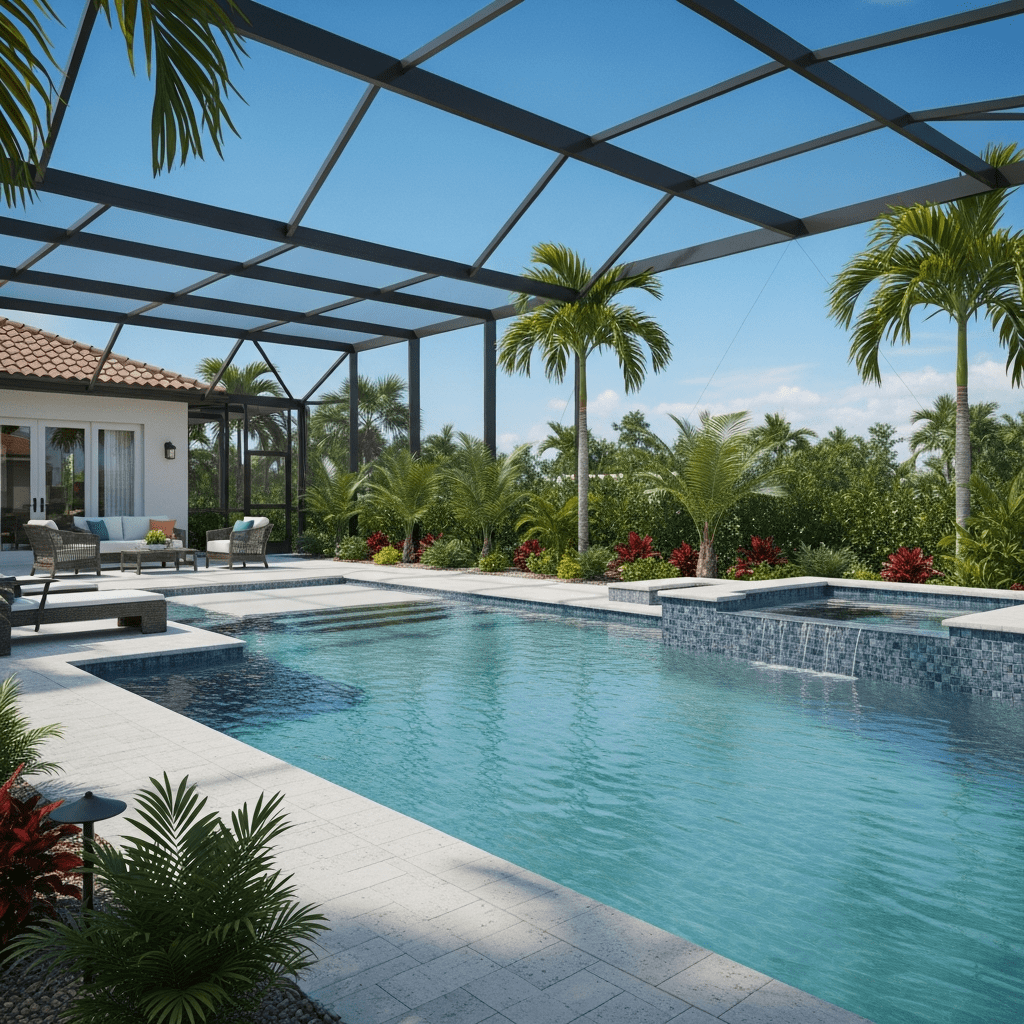
A screened enclosure (lanai or pool cage) is almost a default for many Southwest Florida homes, and for good reasons. Screened enclosures block insects, reduce debris (less skimmer work), provide a modest UV filter, and make your pool usable during humid evenings without fighting mosquitoes. Modern screen fabrics are engineered to survive Florida sun and wind loads; paired with a hurricane-rated frame, an enclosure increases comfort and reduces maintenance time. If you don’t want a full cage, consider partial shade sails and retractable screens for a balance of openness and protection.
Sanitation and chemistry: salt vs. traditional chlorine
Saltwater (saline chlorination) is extremely popular in Florida because it tends to feel gentler on skin and hair and reduces the odor associated with traditional chlorination. But salt systems come with trade-offs: salt is corrosive to some metals and certain fixtures, and salt cells need periodic replacement. Traditional chlorine systems remain simple and cost-effective up front. For SW Florida, many owners choose salt systems with corrosion-resistant hardware (or isolate sensitive fittings) to get the comfort benefits while managing the maintenance realities. Whichever route you choose, prioritize a qualified pool pro to size the system and advise on metal choices.
Energy, heating, and equipment suited to the climate
Because pool pumps can be one of the largest energy users in a home, go straight to variable-speed pumps and ENERGY STAR–rated equipment where possible; they save money and run quieter while extending filter life. Solar heating is a natural fit in SW Florida (long sunny seasons), but heat pumps are a good all-season option for comfortable evenings. Position equipment on elevated pads (to avoid flooding), inside ventilated enclosures that allow access for service, and choose coastal-rated coatings to protect against salt spray. Regular service and winter (storm) prep, like lowering water levels safely and securing power to equipment, will keep things running after big storms.
Design features that thrive in SW Florida
Certain pool elements both look great and perform well in the region:
- Sun shelf/tanning ledge: shallow lounging areas are perfect for kids and adults to cool down without submerging fully.
- Infinity or vanishing-edge pools: dramatic on coastal lots with views, but ensure structural engineering accounts for soil and storm load.
- Spa integration: a heated spa is a year-round luxury that’s energy-efficient if tied to the pool’s filtration and heating systems.
- Naturalistic designs with native plants: Use salt-tolerant, native landscaping (palm species, sea grapes, coontie) to create privacy, reduce irrigation, and minimize maintenance. Choose plants that don’t shed heavily into the pool.
- LED lighting and automated controls: programmable lights, smart chemical controllers, and automation systems let you run the pool efficiently and monitor it remotely.
Resilience: hurricane prep and local code
Florida communities have strict local codes and best practices for pools because of storm exposure. Design considerations include secure anchoring of large features, screened enclosure ratings, and safe access paths around the pool perimeter. For safety and compliance, check local building codes and work with licensed contractors familiar with Collier/Lee County requirements; they’ll advise on setbacks, pool barriers, and hurricane-rated components. Quick checklist: confirm enclosure frame ratings, ensure pool barrier/fence meets local laws, and plan for equipment elevation and secure storage.
Maintenance and practical tips
- Shade + airflow: combine permanent shade (covered lanai) with ceiling fans or misting for comfortable summer use.
- Automated maintenance: invest in an automatic cleaner and a chemical automation system to keep maintenance time low.
- Regular inspections: check for early signs of corrosion, tile grout failure, or seal breakdown. Catching issues early saves money.
- Water conservation: Use smart pump schedules, pool covers, and landscaping to reduce evaporation and chemical use.
- Hire locally: pick contractors with SW Florida experience, they know how to build to local soil, sea-air, and storm challenges.
Final design thinking
In Southwest Florida, the best pool is one that celebrates outdoor living while being engineered for the local climate. Prioritize corrosion-resistant materials, energy-efficient equipment, insect- and debris-managing enclosures, and thoughtful landscaping. Whether you favor a clean modern lap pool for morning workouts or a resort-style curved oasis with an infinity edge for coastal views, building with climate in mind delivers beauty, longevity, and lower lifetime headaches. If you’re in Naples, Estero, or nearby, start conversations with a coastal-experienced pool builder and local landscape architect to match the aesthetic you want with smart, durable choices.
Design tip recap (quick):
- Use coastal-grade metals and finishes.
- Choose variable-speed pumps and LED automation.
- Strongly consider screened enclosures for comfort and maintenance reduction.
- Weigh saltwater systems carefully with corrosion mitigation.
- Landscape with native, low-shed plants and plan for storm resilience.
0 Comments