
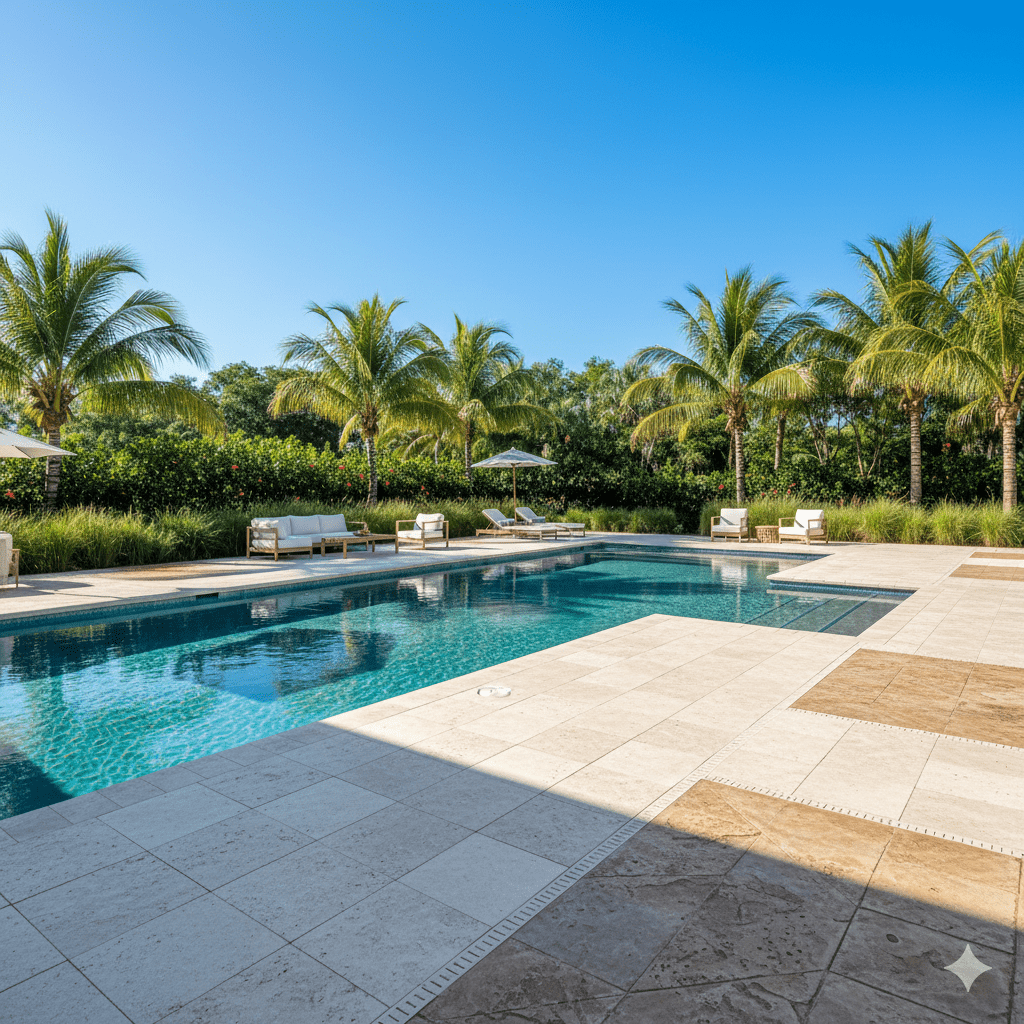
Best Pool Deck Materials for Florida’s Hot Climate
If you’re a Florida homeowner, you already know that your outdoor spaces take a serious beating from the sun. Between the blazing heat, intense UV rays, afternoon thunderstorms, and high humidity, your pool deck needs to be more than just pretty; it needs to perform. Choosing the best pool deck materials Florida homeowners can rely on means finding options that stay cool underfoot, resist moisture, and hold up year after year without constant maintenance.
This guide breaks down the top materials worth considering, so you can make a smart investment that keeps your backyard both beautiful and functional through Florida’s demanding seasons.
Why Material Choice Matters More in Florida
Florida’s climate is unlike most of the country. Surface temperatures on a pool deck can soar well above the ambient air temperature, sometimes reaching 140°F or more on a dark surface in direct sunlight. Add the near-constant moisture from pool splashing, rain, and humidity, and you’ve got conditions that quickly degrade the wrong materials while rewarding the right ones.
Beyond comfort and durability, safety is a major concern. Wet pool decks are an accident waiting to happen, which is why non-slip pool deck options should be a top priority for any Florida homeowner with kids, guests, or elderly family members in the mix.
With all of that in mind, here are the best materials to consider.
1. Travertine, The Gold Standard for Florida Pools
When it comes to travertine pool deck Florida installations, there’s a reason this natural stone dominates upscale backyards across the Sunshine State. Travertine is a porous limestone that has a natural ability to stay cool even under direct sunlight, a remarkable quality that most other hard surfaces simply can’t match.
Its natural texture also provides excellent traction when wet, making it one of the best non-slip pool deck options available. It won’t get unbearably hot underfoot, it drains well due to its porous nature, and it carries a timeless elegance that complements both modern and Mediterranean-style Florida homes.
The main consideration with travertine is cost; it sits at a higher price point than concrete or pavers, and it does require periodic sealing to protect against staining and moisture penetration. That said, a well-maintained travertine deck can last decades, making it one of the wisest long-term investments among all pool patio materials Florida homeowners have available.
2. Porcelain Pavers, Modern, Durable, and Heat-Smart
Porcelain pavers have surged in popularity over the last several years, and for good reason. Manufactured to mimic the look of natural stone or wood, they offer a sleek, contemporary aesthetic without the maintenance demands of organic materials.
What makes porcelain a strong contender for heat-resistant pool decking is its dense, non-porous surface. It doesn’t absorb water, which means it resists mold, mildew, and the kind of cracking that freeze-thaw cycles cause, though Florida doesn’t have to worry much about that last one. Lighter-colored porcelain pavers especially reflect solar radiation rather than absorbing it, keeping surface temperatures significantly lower than darker alternatives.
Porcelain is also scratch-resistant, fade-resistant, and easy to clean. Its smooth yet textured finish (when properly chosen) can satisfy non-slip pool deck options requirements as well. Just make sure to select a paver with a slip-resistance rating appropriate for wet environments.
3. Brushed or Textured Concrete, Affordable and Versatile
Poured concrete remains one of the most popular pool patio materials Florida residents choose, largely because of its affordability and versatility. Plain concrete, however, is not ideal; it absorbs heat aggressively and becomes dangerously slippery when wet.
The key is in the finish. Brushed concrete, exposed aggregate, or stamped concrete with a textured surface can dramatically improve both safety and thermal performance. Applying a light-colored coating or paint further helps with heat reflection. Concrete overlays and cool deck coatings, products specifically designed to reduce surface temperatures, are also worth considering and can be applied to existing slabs.
For budget-conscious homeowners who want a customizable look, properly finished concrete with the right sealant and coating system can serve as reliable heat-resistant pool decking that handles Florida’s climate reasonably well.
4. Natural Stone Pavers, Timeless and Tough
Beyond travertine, other natural stones like limestone, sandstone, and slate make excellent choices for Florida pool decks. Limestone in particular shares many of travertine’s heat-reflective properties and tends to be slightly more affordable. Its natural, earthy tones blend beautifully with Florida’s lush landscaping.
Like travertine, natural stone pavers are among the best non-slip pool deck options when finished with a natural or honed texture rather than a polished one. They do require sealing and occasional maintenance, but their durability and visual appeal are hard to beat. Among all the pool patio materials Florida pools can feature, natural stone consistently earns praise for its longevity and classic look.
5. Wood and Composite Decking, Great for Shaded Areas
Traditional wood decking is not recommended for areas in direct Florida sunlight, it warps, splinters, fades, and can become dangerously slippery when wet. However, composite decking (made from a blend of wood fiber and recycled plastic) performs significantly better and offers a warm, natural aesthetic that hard stone can’t replicate.
Composite is best suited for partially shaded pool areas or raised deck sections rather than fully sun-exposed surrounds. Look for products rated for high-UV environments, and choose lighter colors to minimize heat absorption. While not the top pick for heat-resistant pool decking in full-sun applications, composite holds its own in the right setting.
Making the Right Choice for Your Florida Pool
When evaluating the best pool deck materials Florida has to offer, it ultimately comes down to your budget, aesthetic preferences, and how much maintenance you’re willing to commit to. Here’s a quick summary to guide your decision:
- Travertine: Best overall; naturally cool, non-slip, and beautiful.
- Porcelain Pavers: Best for low maintenance with a modern look.
- Textured Concrete: Best for budget-friendly versatility.
- Natural Stone: Best for timeless elegance and durability.
- Composite Decking: Best for shaded zones and a warmer aesthetic.
Whatever material you choose, prioritize light colors to reflect heat, ensure proper drainage to manage Florida’s frequent rains, and always opt for a textured or treated surface that meets non-slip pool deck options standards. Your pool deck should be a place where your family relaxes and plays safely, not a surface you dread stepping on barefoot in July.
Invest wisely, and your Florida pool deck will reward you with years of comfort, style, and worry-free enjoyment.
0 Comments